Popular Animation TV Shows on Tub Tv - Page 351
All Services
Free Services
 Netflix
 Amazon Prime Video
 Apple iTunes
 Apple TV Plus
 Disney Plus
 Google Play Movies
 Paramount Plus
 Hulu
Hulu
 HBO Max
 YouTube
 fuboTV
 Peacock
 Peacock Premium
 Amazon Video
 The Roku Channel
 AMC+
AMC on Demand
AMC+
AMC on Demand
 Kocowa
 Hoopla
 The CW
 Vudu
Vudu
 Starz
Starz
 Showtime
 PBS
PBS
 Pantaflix
 FXNow
FXNow
 Tubi TV
 Kanopy
 Comedy Central
 Crunchyroll
 Microsoft Store
 Redbox
 Sun Nxt
 ABC
ABC
 DIRECTV
 Crackle
 Fandor
 Plex
Plex
Netflix
Amazon Prime Video
Apple iTunes
Apple TV Plus
Disney Plus
Google Play Movies
Paramount Plus
Hulu
HBO Max
YouTube
fuboTV
Peacock
Peacock Premium
Amazon Video
The Roku Channel
AMC+
AMC on Demand
Kocowa
Hoopla
The CW
Vudu
Starz
Showtime
PBS
Pantaflix
FXNow
Tubi TV
Kanopy
Comedy Central
Crunchyroll
Microsoft Store
Redbox
Sun Nxt
ABC
DIRECTV
Crackle
Fandor
Plex

Clue Club
1976
Clue Club
1976
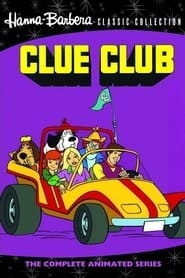
star 4.8Clue Club is a 30-minute Saturday morning animated series produced by Hanna-Barbera Productions from August 14, 1976 to September 3, 1977 on CBS. Clue Club only had one season’s worth of first-run episodes produced, which were shown on Saturday mornings on CBS. In the fall of 1977, cut-down versions of the half-hour episodes of Clue Club appeared under the new title Woofer & Wimper, Dog Detectives to showcase the show's basset and bloodhound which aired as a segment on the CBS Saturday morning package program The Skatebirds from September 10, 1977 to January 28, 1978. When The Skatebirds was cancelled in early 1978, Woofer & Wimper, Dog Detectives re-appeared as a segment alongside The Robonic Stooges on their half-hour show, also on CBS. The full-length versions of Clue Club returned to CBS on Sunday mornings from September 1978 to September 1979, concluding the show’s original network run. After a mid-1980s revival on USA Cartoon Express, it has since resurfaced on Cartoon Network and Boomerang.Inspector Black Cat
1984
Inspector Black Cat
1984
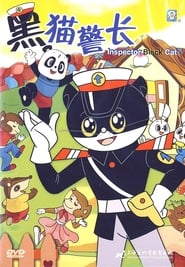
star 8.4The wit and brave black Cat sheriff led his police officers to solve cases of the forest one after another, protecting the various animals in the forest to live a peaceful life.Shuffle! Memories
2007
Shuffle! Memories
2007
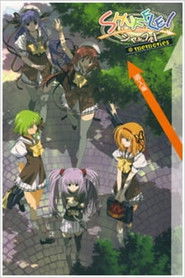
star 5A recap of the Shuffle world, set ten years in the future. Gods, Demons, and Humans freely visit the other worlds as if traveling overseas, and romance is in the air. Demons, Gods, And Humans together have been falling in love and creating new families, breaking down the wall that once seperated them. Past memories are visited by Rin Tsuchimi and the events that occured between him and Lisianthus, Nerine, Kaede, Asa, and Primula.Belfort & Lupin
2025
Belfort & Lupin
2025
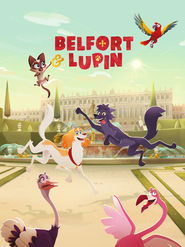
star 9Lupin’s street-smarts combined with Belfort’s aristocratic know-how make them an unstoppable pair! They both have an insatiable thirst for mischief and adventure. Together, they explore every nook and cranny of the Palace and join forces with animals they meet.Fire Emblem
1996
Fire Emblem
1996
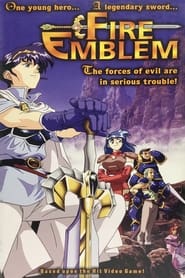
star 7Forced into exile by the sudden betrayal of an ally, Prince Marth leads a retinue of loyal knights across the continent, targeting enemy factions and gathering powerful new allies on the way to reclaiming their kingdom.Berry Bees
2019
Berry Bees
2019
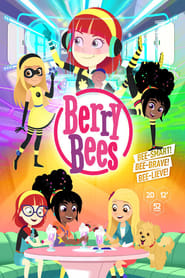
Bobby, Lola and Juliette are three extraordinary 10-year-old girls who lead seemingly normal lives. However, the trio work undercover as the "Berry Bees" for the Bee Intelligence Agency (B.I.A. for short), a secret agency that selected them to carry out special espionage missions. The girls, all code-named after some kind of berry, get gadgets from the head of the bureau, Mrs. Berry, every episode. Most of the time, the girls have to thwart the evil plans of returning villains like Tara Bytes, Mirage and the Greenthumbs. At the end of each episode, the villain escapes the confusion of fighting with the girls for one more day while things return to normal.Temple the Balloonist
1977
Temple is a lovely girl who enjoys music. One day she climbs on board a balloon and is excited by the aerial journey, until she realizes she's drifting away from her home. While she's distraught, she is encouraged by a drummer boy and animals who play music for her and help her find her way back home.Natsunagu!
2020
Natsunagu!
2020
star 5.2Natsuna Kunugi, a university student in Tokyo, visits Kumamoto in search of friends who she could not contact following the Kumamoto earthquakes. There, she meets local people who are full of compassion and uniqueness, including the energetic junior high school student, Izumi. A heartfelt coming-of-age story begins.Mankatsu
2004
The King of Fighters: Another Day
2005
star 7.6The four episodes are set in Southtown, the imaginary city well known to all fans as the stage of numerous death matches throughout the KOF series. Many past heroes of the saga make their appearance here, and the four plots intertwine to create a large-scale drama, that is also linked to the story of KOF Maximum Impact 2.Animusic
2001
Animusic
2001
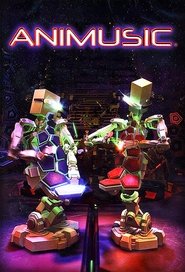
star 10Animusic is an American company specializing in the 3D visualization of MIDI-based music. Founded by Wayne Lytle, it is incorporated in New York and has offices in Texas and California. The initial name of the company was Visual Music, changed to Animusic in 1995. The company is known for its Animusic compilations of computer-generated animations, based on MIDI events processed to simultaneously drive the music and on-screen action, leading to and corresponding to every sound. Unlike many other music visualizations, the music drives the animation. While other productions might animate figures or characters to the music, the animated models in Animusic are created first, and are then programmed to follow what the music "tells them" to. 'Solo cams' featured on the Animusic DVD shows how each instrument actually plays through a piece of music from beginning to end.Young Samson & Goliath
1967
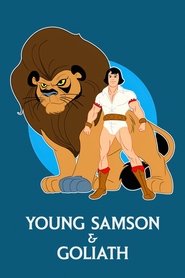
star 5.8Samson & Goliath is an animated television series produced by Hanna-Barbera Productions for NBC, where it debuted on September 9, 1967. Primarily sponsored by General Mills, who controlled the distribution rights through its agency Dancer Fitzgerald Sample, Samson & Goliath was retitled Young Samson in April 1968 to avoid confusion with the stop-motion Christian television series Davey and Goliath. Twenty-six 12-minute episodes of the series were produced; Samson & Goliath cartoons were paired with other General Mills-sponsored shows such as Tennessee Tuxedo and Go Go Gophers to form a full half-hour for their original network broadcasts.Young Samson was later shown in syndication with The Space Kidettes as The Space Kidettes and Young Samson, distributed by The Program Exchange.Watt's Up, Girl?
2023
Watt's Up, Girl?
2023
Liang Xigua is a poor young man struggling to make a living in the cracks of the city. One day, his old refrigerator, which had been with him for many lonely summers, took on a human form and intervened in his life. They confront each other over food, struggle to make ends meet, drag each other down, and support each other, resulting in lots of ludicrous daily stories. Xigua gradually realizes that he is not the only one who has awakened the life of the appliance.Pop Secret
2006
Pop Secret
2006
star 10The Pop Secret, a group of three pre-teens named Mia, Kali, and Loli, are the most popular in the galaxy. While their fans admire their glossy and sparkly exterior, they are unaware that these seemingly superficial girls are actually skilled secret agents.Nano Invaders
2014
Nano Invaders
2014
star 10Nano Invaders follows the eye-popping adventures of Hikaru, 11, who is dragged into a series of battles between two rival alien clans. One day Hikaru tries on a bracelet that belongs to his classmate Mimi and he turns into a monster. Mimi’s family is a special scouting unit from planet Anima. When alien invaders from a rival planet Damon attack the city, Hikaru joins force with Mimi’s family to fight back. The battle gets on the TV, making Hikaru and the aliens instant heroes. Simple-minded Hikaru is happy to see his dream come true, not knowing that Mimi’s family is plotting to take over the earth too!A Gentle Noble's Vacation Recommendation
2026
When Lizel mysteriously finds himself in a city that bears odd similarities to his own but clearlyisn't, he quickly comes to terms with the unlikely truth: this is an entirely different world. Even so, laid-back Lizel isn't the type to panic. He immediately sets out to learn more about this strange place, and to help him do so, hires a seasoned adventurer named Gil as his tour guide and protector. Until he's able to find a way home, Lizel figures this is a perfect opportunity to explore a new way of life adventuring as part of a guild. After all, he's sure he'll go home eventually... might as well enjoy the otherworldly vacation for now!Little Big Nose
1983
Little Big Nose
1983
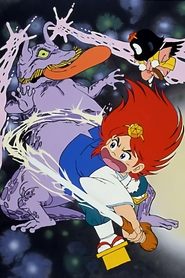
Tenmaru is the prince of the monster world who has accidentally let out to the human world, 108 atrocious monsters that were sealed in. In order to return them, he went to the human world with his follower.Transformers: BotBots
2022
star 5.1When the lights go out at the mall, the BotBots come out to play! Meet a fun-loving crew of everyday objects that morph into robots at closing time.Reporter Blues
1991
Reporter Blues
1991
star 4.3Reporter Blues is an Italian-Japanese cartoon/anime television series created by Marco Pagot and Gi Pagot and directed by Kenji Kodama. It consists of 52 half-hour episodes. The first season was aired in France in 1991. The second season was aired in 1996. The show was co-produced by RAI and TMS Entertainment.The Adventures of Spot
1987
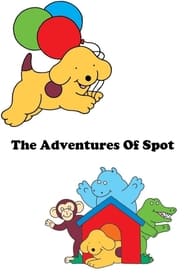
star 6.3The adventures of Spot, a little yellow puppy and his family and friends.