Popular Comedy TV Shows on Tub Tv - Page 62
All Services
Free Services
 Netflix
 Amazon Prime Video
 Apple iTunes
 Apple TV Plus
 Disney Plus
 Google Play Movies
 Paramount Plus
 Hulu
Hulu
 HBO Max
 YouTube
 fuboTV
 Peacock
 Peacock Premium
 Amazon Video
 The Roku Channel
 AMC+
AMC on Demand
AMC+
AMC on Demand
 Kocowa
 Hoopla
 The CW
 Vudu
Vudu
 Starz
Starz
 Showtime
 PBS
PBS
 Pantaflix
 FXNow
FXNow
 Tubi TV
 Kanopy
 Comedy Central
 Crunchyroll
 Microsoft Store
 Redbox
 Sun Nxt
 ABC
ABC
 DIRECTV
 Crackle
 Fandor
 Plex
Plex
Netflix
Amazon Prime Video
Apple iTunes
Apple TV Plus
Disney Plus
Google Play Movies
Paramount Plus
Hulu
HBO Max
YouTube
fuboTV
Peacock
Peacock Premium
Amazon Video
The Roku Channel
AMC+
AMC on Demand
Kocowa
Hoopla
The CW
Vudu
Starz
Showtime
PBS
Pantaflix
FXNow
Tubi TV
Kanopy
Comedy Central
Crunchyroll
Microsoft Store
Redbox
Sun Nxt
ABC
DIRECTV
Crackle
Fandor
Plex

Number 96
1972
Number 96
1972
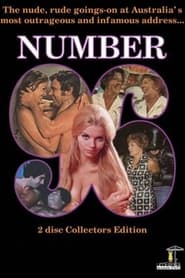
star 3.5Number 96 was a popular Australian soap opera set in a Sydney apartment block. Don Cash and Bill Harmon of the Cash Harmon Television production company, produced the series for Network Ten, which requested a Coronation Street-type serial, and specifically one that explored adult subjects. The premise, original story outlines, and the original characters were devised by David Sale who also wrote the scripts for the first episodes and continued as script editor for much of the show's run. The series proved to be a huge success, running from 1972 until 1977. Number 96 was so popular it spawned a feature film version, filmed in December 1973. Number 96 was known for its sex scenes and nudity, somewhat risque at the time, and for its comedy characters. The series was the first Australian soap opera to feature an openly gay character.Fanboy and Chum Chum
2009
Fanboy and Chum Chum
2009
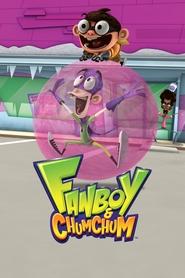
star 5.8Fanboy and Chum Chum are fans of all things science fiction and fantasy, and wear wild superhero costumes with their underwear on the outside. Their lives are filled with adventure, from Fanboy's teacher turning into a zombie to an ice monster operating the Frosty Freezy Freeze machine. Their pal Kyle usually tags along on their escapades. Kyle is a real wizard, but Fanboy and Chum Chum are oblivious to his mystical powers, although they live in a world of fantasy.The Comic Strip Presents...
1982
star 7.4The Comic Strip is a group of British comedians, who came to prominence in the 1980s. They are known for their television series The Comic Strip Presents... which was labelled as an example of alternative comedy. The core members are Adrian Edmondson, Dawn French, Rik Mayall, Nigel Planer, Peter Richardson, Jennifer Saunders and Alexei Sayle with frequent appearances by Keith Allen, Robbie Coltrane and others.Ikkyū-san
1975
Ikkyū-san
1975
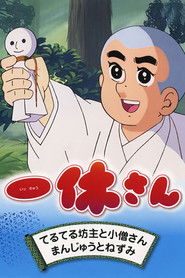
star 7.4The mischievous adventures of a young Ikkyū during his stay at Ankoku Temple. He relies on his intelligence and wit to solve all types of problems, from distraught farmers to greedy merchants.The Bunglers
1977
The Bunglers
1977
star 7.8Os Trapalhões was a Brazilian comedy group and also a Brazilian television series created by Wilton Franco. Its members were Dedé Santana, Zacarias, Mussum and their leader Didi Mocó, that was played by Renato Aragão. The name Trapalhões is derived from the Portuguese verb atrapalhar, which means the opposite of helping, to do something the wrong way or to Those that confuse. The name is translated "Tramps" in English DVD subtitles. It was aired by Rede Globo from 1977 to 1999. On March 18, 1990, Zacarias died due to respiratory failure, but the group and the series didn't come to an end until July 29, 1994, when Mussum died due to an unsuccessful heart transplant.En mode Salvail
2013
En mode Salvail
2013
star 2What to expect: interviews, musical performances, a fierce band, surprising stories and most of all, guests who are more than happy to play along and follow Éric Salvail on his beautifully crazy tangents!Derry Girls
2018
Derry Girls
2018
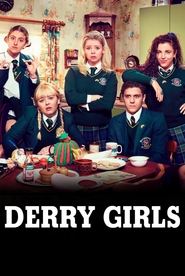
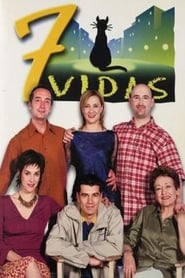
star 8.1Amidst the political conflict of Northern Ireland in the 1990s, five secondary school students square off with the universal challenges of being a teenager.7 vidas
1999
Ah! My Goddess
2005
Ah! My Goddess
2005
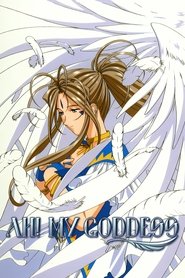
star 7.2Keiichi Morisato is looking forward to university life. But in reality, he has no luck in anything, and he has trouble with clubs, love, etc. The truth is that he has an unlucky star above his head. One day, Keiichi is stuck watching the dorm while his sempai are away, and has a mountain of chores to do to boot. But Keiichi is a good-natured person, and is set about doing his duties. As he is about to finish his final chore, he makes a phone call to his sempai. But the words that came through the receiver are, 'Goddess Help Line.' Shortly afterwards, a beautiful goddess named Belldandy appears in front of him from the mirror of his room.Our Story
2017
Our Story
2017
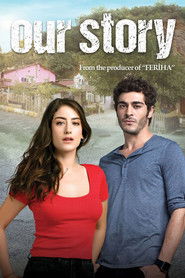
star 7.8Filiz is a young girl who has been forced to take care of her five younger siblings since her mother left them. Her father Fikri is an alcoholic man who causes different problems for the family now and again. Despite the fact that they are struggling to survive in a very poor neighborhood of Istanbul, the six siblings try to keep each other happy. Filiz believes that there is no place for love in her life until she meets Barış, a young man who does anything for Filiz and her family, just to win Filiz's heart. Adaptation of the world-famous series "Shameless"Harvey Birdman, Attorney at Law
2000
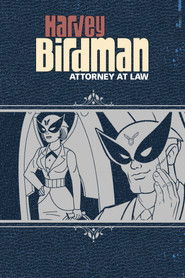
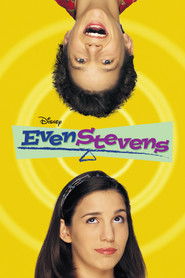
star 7.9Harvey Birdman, Attorney at Law features ex-superhero Harvey T. Birdman of Birdman and the Galaxy Trio as an attorney working for a law firm alongside other cartoon stars from 1960s and 1970s Hanna-Barbera cartoon series. Similarly, Harvey's clients are also primarily composed of characters taken from Hanna-Barbera cartoon series of the same era. Many of Birdman's nemeses featured in his former cartoon series also became attorneys, often representing the opposing side of a given case.Even Stevens
2000
Even Stevens
2000
star 7The Stevens are a middle-class family living in Sacramento, CA. Husband and father Steve is a successful attorney. Wife and mother Eileen is a state Senator. Their oldest child Donnie ia a high-school sports legend. Ren, an 8th-grader, is just about the perfect daughter. She makes the best grades, she's popular, she does volunteer work and other extracurricular tasks by the score. Her brother Louis, in the 7th grade, is her opposite. He likes to sleep late, he's messy, his grades are not good, he's frequently in detention and he seems to take nothing seriously. But he is serious about finding something of his own that he can do to put himself on a par with the rest of his overachieving family. Though he and Ren occasionally soften their attitudes toward each other, at any given moment the're likely to be fighting like mongoose and cobra.Penn Zero: Part-Time Hero
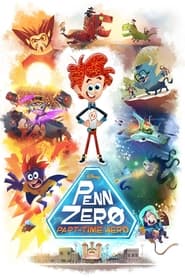
2014
star 7.2Penn Zero is not your average kid - every day, he's zapped into another dimension with his friends to save the world.Mieruko-chan
2021
Mieruko-chan
2021
star 8.1She can see dead people…she just chooses to ignore them. That’s Miko’s plan, anyway, with horrifying (and sometimes hilarious) results.PriPara
2014
PriPara
2014
star 7.7Laala Manaka is a 5th-grader at Paprika Academy. Like most girls, she admires the world of PriPara, a sport that tests idol girls on song, dance, and fashion. Unfortunately for her, her school does not allow elementary school students to participate in PriPara. However, through miraculous circumstances, Laala passes the audition to become a PriPara idol.DON'T TOY WITH ME, MISS NAGATORO
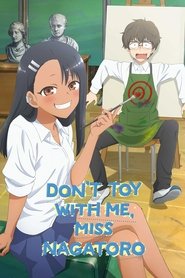
2021
star 8.2"A girl in a lower grade just made me cry!" One day, Senpai visits the library after school and becomes the target of a super sadistic junior! The name of the girl who teases, torments, and tantalizes Senpai is "Nagatoro!" She's annoying yet adorable. It's painful, but you still want to be by her side. This is a story about an extremely sadistic and temperamental girl and you'll feel something awaken inside of you.Drunk History
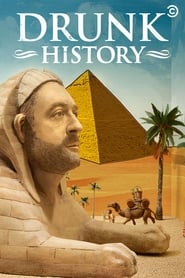
2013
Drunk History
2013
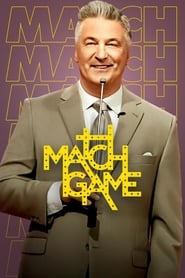
star 6.8Historical reenactments from A-list talent as told by inebriated storytellers. A unique take on the familiar and less familiar people and events from America’s great past as great moments in history are retold with unforgettable results.Match Game
2016
Match Game
2016
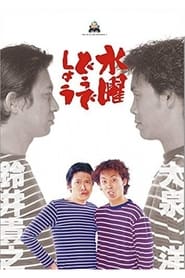
star 6.4A modern reboot of the classic 70s game show that features two contestants attempting to match the answers of six celebrities in a game of fill-in-the-blank.How do you like Wednesday?
1996
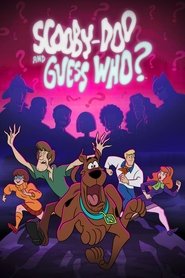
star 7.7How do you like Wednesday? was a Japanese television variety series that aired on the HTB network in Hokkaidō, Japan, and on other regional television networks in Japan. The program debuted on HTB on October 9, 1996. The series was one of the first local variety programs to be produced on Hokkaido; prior to this series' launch, local variety programs in Hokkaidō were virtually non-existent. The program also had a significant influence on other local programs in other regions in Japan, most notably Kwangaku! in Kansai and Nobunaga in Tokai. The series achieved a record 18.6% viewing share on December 8, 1999, the highest share for a late-night program on a local TV station. Production of the weekly regular series ended in September 2002, though new limited-run series were produced on average of every 18 months; the latest series was shown on HTB in late 2005, eight episodes in length. Most of the series have been rerun under the names of Dōdeshō Returns and Suiyō Dōdeshō Classic.Scooby-Doo and Guess Who?
2019
star 8The Mystery Inc. gang solve bigger mysteries while also encountering many memorable celebrities.