Popular Crime TV Shows on Tub Tv - Page 225
All Services
Free Services
 Netflix
 Amazon Prime Video
 Apple iTunes
 Apple TV Plus
 Disney Plus
 Google Play Movies
 Paramount Plus
 Hulu
Hulu
 HBO Max
 YouTube
 fuboTV
 Peacock
 Peacock Premium
 Amazon Video
 The Roku Channel
 AMC+
AMC on Demand
AMC+
AMC on Demand
 Kocowa
 Hoopla
 The CW
 Vudu
Vudu
 Starz
Starz
 Showtime
 PBS
PBS
 Pantaflix
 FXNow
FXNow
 Tubi TV
 Kanopy
 Comedy Central
 Crunchyroll
 Microsoft Store
 Redbox
 Sun Nxt
 ABC
ABC
 DIRECTV
 Crackle
 Fandor
 Plex
Plex
Netflix
Amazon Prime Video
Apple iTunes
Apple TV Plus
Disney Plus
Google Play Movies
Paramount Plus
Hulu
HBO Max
YouTube
fuboTV
Peacock
Peacock Premium
Amazon Video
The Roku Channel
AMC+
AMC on Demand
Kocowa
Hoopla
The CW
Vudu
Starz
Showtime
PBS
Pantaflix
FXNow
Tubi TV
Kanopy
Comedy Central
Crunchyroll
Microsoft Store
Redbox
Sun Nxt
ABC
DIRECTV
Crackle
Fandor
Plex

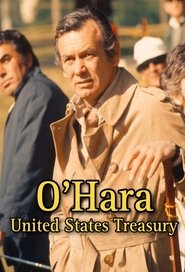
O'Hara, U.S. Treasury
1971
star 5.5O'Hara, U.S. Treasury is an American television crime drama starring David Janssen and broadcast by CBS during the 1971-72 television season. Jack Webb's Mark VII Limited packaged the program for Universal Television. Webb and longtime colleague James E. Moser created the show; Leonard B. Kaufman was the producer. The series was produced with the full approval and cooperation of the United States Department of the Treasury.Raid
2017
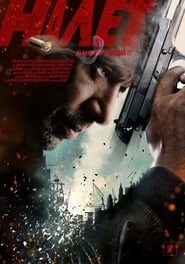
Raid
2017
star 7In the Kaliningrad remand prison, Major Andrei Ryzhov commits suicide, accused of exceeding his authority. Four of his colleagues - Oleg Kaplan, Pavel Karpenko, Oksana Golikova and Fyodor Vachevsky - are confident of the innocence of their former leader and, in order to restore his good name, begin their own investigation of the incident.Odds
2022
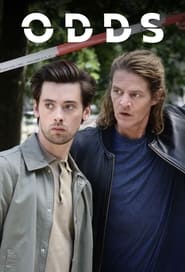
Odds
2022
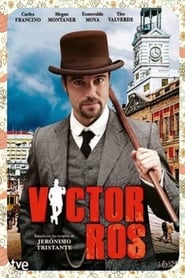
star 7.5Two completely different men prove to be the perfect team to unravel unsolvable crimes.Victor Ros
2015
The Wolf Warriors
2021
The Wolf Warriors
2021
In the 1920s and 1930s, marksman Ma Gaitian is tricked into working with a pro-Qing group colluding with Japanese spies. After discovering their true intentions, he fights to stop the Japanese plans.The XYY Man
1976
The XYY Man
1976
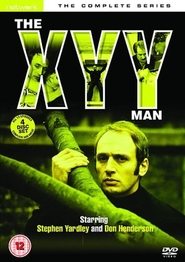
star 6The XYY Man began life as a series of novels by Kenneth Royce, featuring the character of William 'Spider' Scott, a one-time cat-burglar who leaves prison aiming to go straight but finds his talents still to be very much in demand by both the criminal underworld and the British secret service. Scott has an extra "y" chromosome that supposedly gives him a criminal predisposition - although he tries to go straight, he is genetically incapable of doing so. Royce's original books were : The XYY Man; Concrete Boot; The Miniatures Frame; Spider Underground and Trap Spider, though he returned to the character in the 80s with The Crypto Man and The Mosley Receipt. Regular characters included Scott's long-suffering girlfriend Maggie Parsons; British secret service head Fairfax; Detective Sergeant George Bulman, the tenacious policeman who wants nothing more than to see Scott back behind bars; journalist Ray Lynch; gay photographer Bluie Palmer and KGB chief Kransouski. In 1976 the first of Royce's novels was transferredThe Spectator
2023
The Spectator
2023
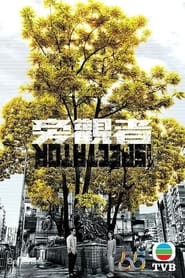
star 9Policewoman Yiu Chi-yue is a natural born Highly Sensitive Person. She brings chocolate, salty lemon water and a brain with an “on-off switch” with her whenever she investigates cases. Her senses are heightened when she drinks salty lemon water that arouses her keen awareness of clues at the crime scene. Through touching the dead body, gathering evidence and her senses, she empathizes with the victim and reconstructs the sequence of events. Since Chi-yue met restaurant boss Wong Mik-kei, the duo are no longer “spectators”. Perpetrators at large are killed one after another. Chi-yue covertly challenges some serial killer on several occasions, and their true identity is gradually uncovered. Chi-yue realizes the two of them have conflicting standpoints even though they are like-minded, causing her to face the conundrum of making life choices. In the meantime, Mik-hei astonishingly makes some decision for her.To Ayrio mas Anikei
2021
To Ayrio mas Anikei
2021
Good Cop
2012
Good Cop
2012
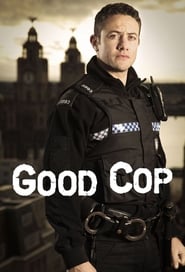
star 7.7A dutiful Liverpool beat cop discovers what he is truly capable of after his partner is brutally murdered in a targeted attack by a local gang.Police Fan
2012
Police Fan
2012
star 8Fan Dangyu, the head of a small local police station, deals with challenging neighborhood issues and earns the trust of villagers with the help of his loyal friends. As personal and professional challenges arise, he faces increasing pressures in his efforts to serve his community.A Season in Purgatory
1996
True story about a kid from rich family with political ties who covers up a suspicious death of a young woman. This comes back to haunt him later.Stained
2019
Stained
2019
star 5.5Inspector Bo Fei Fung is suspected of being involved in criminal activities and betraying the police force after her husband Lau Wai Yi mysteriously disappears and becomes a prime suspect of corruption as a police detective himself. Through a series of cases based on real high-profile crimes from Hong Kong, she has to prove her innocence to fellow detective Kei Tak Sing and solve the mystery behind her husband's disappearance.Sierra
1974
Sierra
1974
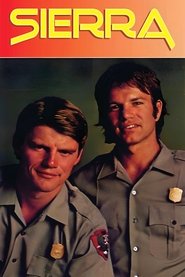
star 5Sierra is a short-lived 1974 television crime drama series focusing on the efforts of National Park Service rangers to enforce federal law and to effect wilderness rescues. The program aired on NBC and was packaged by Jack Webb's Mark VII Limited for Universal Television. John Denver wrote the show's theme song. Robert A. Cinader, executive producer of Mark VII's Emergency!, handled this program also; Bruce Johnson produced.King of Shumava: Phantom of the Dark Region
2022
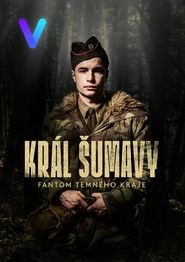
star 6.6It is the spring of 1948. The joy of peace has not yet faded, and both East and West are already afraid of World War III. Both worlds are separated from each other by the deep forests of Šumava. Twenty-four-year-old cook Josef Hasil serves in the kitchen of the National Security Corps in Zvonková. Wild boy. He had already experienced the war in a German labor camp and as a link between partisans. Now he longs above all for fun, adventure, freedom. The last thing he cares about is politics.Government Crime Investigation Agent Zaizen Jotaro
2006
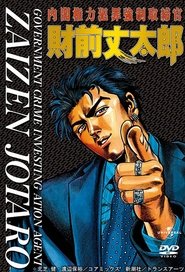
star 10After Japan's economic bubble burst the country slowly recovered, but dirty politicians still make deals with dirty businessmen so that they can both profit from the hard work of others. Keiichi Suzuki, head of Ōshika Construction, and Seijiro Matsuzaka, one of the members of parliament, have a deal going on that allows Ōshika Construction to use fewer materials in their projects while still letting their buildings get approved for business use. Unfortunately for them, the Government Crime Investigation Agency, the Japanese government-approved but independently-run equivalent to the FBI, is already on the move. Jotaro Zaizen, a long-thought-dead police officer, is the agent on the Ōshika case and gathers a group of people who have reasons to fight Suzuki and Matsuzaka. To help combat the GCIA, though, Suzuki hires the Haoukokuryu-kai, a yakuza group.Ryan Caulfield: Year One
1999
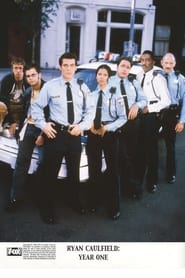
star 4Ryan Caulfield: Year One is an American crime drama that aired from October 15, 1999 to October 22, 1999. The series original title was going to be The Badland, and it appearred in the 1999 Fall Preview of TV Guide under that name.The Hunt
2016
The Hunt
2016
star 2A year and a half after her husband's assassination by a criminal gang, a death threat looms over Tamara. Her best friend Boris is also a police officer. Driven by a desire to solve the murder and his secret love for Tamara, he starts an investigation.Yokoyama Hideo Suspense
2010
There are four episodes based on short stories by mystery novelist Yokoyama Hideo. Each episode depicts a stand-alone murder mystery.