Top Rated Fantasy Movies - Page 329
All Services
Free Services
 Netflix
 Amazon Prime Video
 Apple iTunes
 Apple TV Plus
 Disney Plus
 Google Play Movies
 Paramount Plus
 Hulu
Hulu
 HBO Max
 YouTube
 fuboTV
 Peacock
 Peacock Premium
 Amazon Video
 The Roku Channel
 AMC+
AMC on Demand
AMC+
AMC on Demand
 Kocowa
 Hoopla
 The CW
 Vudu
Vudu
 Starz
Starz
 Showtime
 PBS
PBS
 Pantaflix
 FXNow
FXNow
 Tubi TV
 Kanopy
 Comedy Central
 Crunchyroll
 Microsoft Store
 Redbox
 Sun Nxt
 ABC
ABC
 DIRECTV
 Crackle
 Fandor
 Plex
Plex
Netflix
Amazon Prime Video
Apple iTunes
Apple TV Plus
Disney Plus
Google Play Movies
Paramount Plus
Hulu
HBO Max
YouTube
fuboTV
Peacock
Peacock Premium
Amazon Video
The Roku Channel
AMC+
AMC on Demand
Kocowa
Hoopla
The CW
Vudu
Starz
Showtime
PBS
Pantaflix
FXNow
Tubi TV
Kanopy
Comedy Central
Crunchyroll
Microsoft Store
Redbox
Sun Nxt
ABC
DIRECTV
Crackle
Fandor
Plex

Castle Erotica
2002
Castle Erotica
2002
star 3.9When two sexy American tourists run out of money while traveling in Italy, they find themselves working at an enchanted castle where guests come to unleash their secret passions. Gabriela and Julia sense something strange going on and once the secret is revealed, they find they have the power to play cupid with the lives of their guests. This is one European getaway that will change their lives forever…Geharha: The Dark and Long-Haired Monster
2009
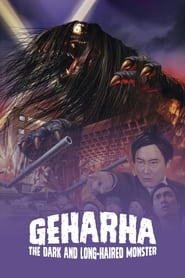
star 7.4A fishing boat is attacked at sea by a gigantic, hairy monster. After examining the sole survivor (Kanji Tsuda), scientific adviser Dr Murakami (Shiro Sano) suspects the culprit is a “Keukegen spectre”, a shaggy supernatural beast from Japanese folklore. The announcement leads reporter Hideo Akihara (Ken Osawa) to a forest shrine dedicated to the Keukegen Geharha, where he finds several worshipers and learns that an ancient seal containing the monster has been broken.The Lords of Magick
1989
The Lords of Magick
1989
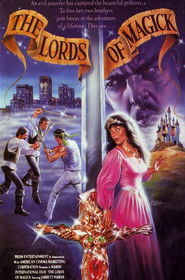
star 3A pair of sorcerer brothers from 10th-century England are sent to modern-day California on a quest to rescue a princess.Die sechs Schwäne
2012
Die sechs Schwäne
2012
star 5.9On her 18th birthday, Constanze encounters a highly guarded secret. She discovers in amazement that she has six brothers, who have been transformed into snow-white swans by a careless word from their father on the day of Constanze's birth. Constanze is stunned when suddenly the six swans appear. They explain to her sister that only she alone can curse the curse: for six years Constanze could not speak a single word and has to sew shirts made of stinging nettles. The shirts will be able to turn the swans back into people.First Fall
2013
First Fall
2013
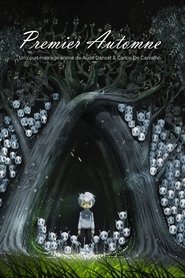
star 7.6Abel lives in the winter and Apolline lives in the summer. Isolated in their "natures", they never met each other. They are not even supposed to meet. So when Abel crosses the border and discovers Apolline, curiosity is overwhelming. Their encounter soon becomes more complicated than they could imagine. Both of them will have to learn compromise to protect the other...Demonstone
1990
Demonstone
1990
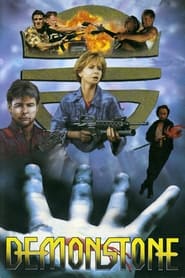
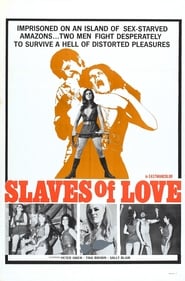
star 4.1Two U.S. Marine investigators looking into a series of grisly murders in Manila discover that the crimes are tied to an amulet with a 400-year-old curse on it that has unleashed supernatural forces.Slaves of Love
1969
Slaves of Love
1969
star 3.8Crazy bit of nonsense in which guys' planes are drawn down from the sky so that they can be taken and used as sex slaves by a group of 'chicks with guns' whose mini dresses don't quite cover their backsides.The Childhood of Krishna
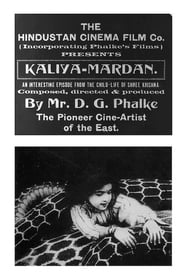
1919
star 5.1The playmates of Krishna are insulted by a female villager who splashes water on them. They take revenge by stealing butter from her house. When they are beaten up by the woman, they again take revenge with the aid of Krishna. He receives a gift of fruit for his help but gives it away. Krishna then enters the room of a wealthy merchant and his wife at night and ties the man's beard to his wife's hair. These exploits lead to a large crowd complaining of Krishna's antics to his foster parents.Tale of the Vienna Woods
1934
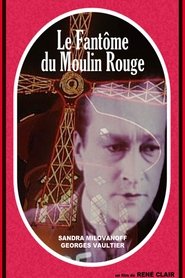
star 5.8The animated adventure of a fawn and a satyr who is only animate during daylight.The Phantom of the Moulin-Rouge
1925
star 6.1A young man, unsuccessful in love, manages to leave his body and tours Paris, disembodied and invisible, playing practical jokes: a row of coats walks off from a hotel cloakroom; an unattended taxi drives itself away; a row of top hats appears on the pavement.Lucky Loser
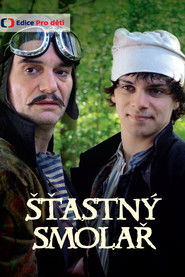
2012
Lucky Loser
2012
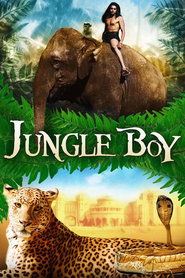
star 5.5Young Filip is cursed with terrible luck ever since his father dared to outwit Lady Fortune herself, and to make matters worse, Filip falls hopelessly in love with Fortune’s daughter, Hanička. Determined to win her heart and break his family’s jinx, he embarks on a fantastical journey around the world, where an unlikely alliance with a compulsive liar named Kdokoliv (“Anybody”) becomes his only hope in the struggle for Hanička’s love.Jungle Boy
1998
Jungle Boy
1998
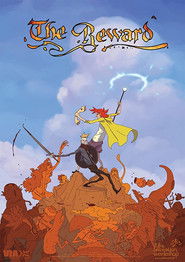
star 4.1A boy's life is changed forever when he becomes lost in the jungle and is raised by animals.The Reward
2013
The Reward
2013
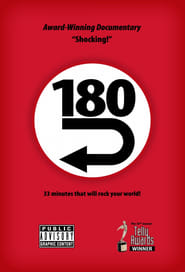
star 7Inspired by dreams of glory and fame, two young boys set out on the treasure hunt of their lives.180
2011
180
2011
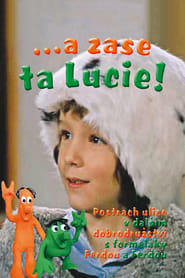
star 4.3The film begins by showing images of the Holocaust, and stating that Hitler sanctioned the killing of 11 million people. This is followed by Comfort interviewing people about Adolf Hitler; their responses indicate a lack of historical knowledge, although he also finds a neo-Nazi who claims to love Hitler. Comfort proposes a hypothetical situation to his interviewees, asking if they would kill Hitler if they had the opportunity at that time in history. He asks more hypotheticals dealing with what his interviewees might do in other circumstances related to the Holocaust. He then switches his topic to make similar comparisons to abortion within the United States and the right to life, personalizing his arguments to make comparisons between the Holocaust and abortion in order to place the interviewees on the spot. The documentary concludes with Comfort stating that over 50 million abortions have occurred to date; he calls this the "American Holocaust"....and again that Lucy!
1984
star 6.6A second part of a funny adventures of six years old Lucie and her two magic dolls.I Could See a Puma
2011
I Could See a Puma
2011
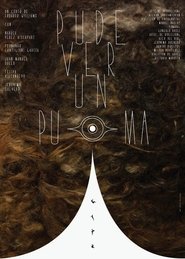
star 5The accident leads a group of young boys from the high roofs of their neighborhood, passing through its destruction, to the deepest of the earth.The Student of Prague
1935
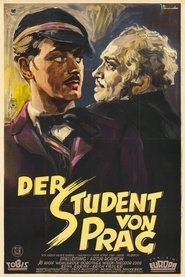
star 6.1Prague in the 1860s: Balduin is a popular, handsome student, the best fencer in town, in amicable rivalry with his friend Dahl for the affections of Lydia, the innkeeper's niece. While the students are celebrating Lydia's birthday, the opera singer Julia Stella arrives at the inn - and Balduin's life begins to unravel. He is immediately infatuated with the glamorous singer - but she is already kept by an admirer, the wealthy and foppish Baron Waldis. How can a poor student hope to compete? The mysterious Dr. Carpis, who also has ties to Julia and is jealous of the Baron, intervenes. But the price will be higher than Balduin can ever imagine. He risks his sanity and his life - perhaps his very soul - haunted by his own reflection.Demon of the Lute
1983
Demon of the Lute
1983
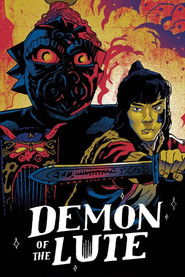
star 6.5From first-time director Lung Yi Sheng comes Demon Of The Lute, a 1983 fantasy swordplay epic featuring a ragtag group of heroes as they face off against a demonic force for evil! Chock full of fantastical characters blessed with otherworldly powers, enchanted weapons, and the remarkable ability to defy gravity at will, Demon Of The Lute is a comic book influenced wuxia sure to tickle the fancy of martial arts fans both young and oldChhota Bheem and the Curse of Damyaan
2012
star 8.4Centuries ago, Damyaan, a Sorcerer was granted a wish to be immortal by the Book of Magi with a rider/curse that he would be confined to the City of Sonapur. To escape from this confinement and to unleash his dark arts over the world, Damyaan lures Raja Indravarma with a map with the directions to the City of Gold. The only way Damyaan can be defeated is to destroy him with the Book of Magi.Les chants de Maldoror
1978
star 6.4A “reading film” of delirious image and text, Les chants de Maldoror takes its title and inspiration from Comte de Lautréamont’s 1869 proto-Surrealist poetic novel which, for instance, describes beauty as the chance encounter of a sewing machine and an umbrella on an operating table. In the novel’s six cantos, a young misanthrope indulges in depraved and destructive acts. Unexpected encounters abound, with turtles and birds joining Terayama’s regular cast of snails and dogs to wander over books and bare torsos. Feverish video processing posterizes, inverts and overlays images that are further colored by sound—pushing the limits of his literary adaptation. Terayama wrote that the only tombstone he wanted was his words, but, as Les chants de Maldoror demonstrates, words need not be confined to carved monuments or bound hardcopies.