Top Rated History Movies - Page 155
All Services
Free Services
 Netflix
 Amazon Prime Video
 Apple iTunes
 Apple TV Plus
 Disney Plus
 Google Play Movies
 Paramount Plus
 Hulu
Hulu
 HBO Max
 YouTube
 fuboTV
 Peacock
 Peacock Premium
 Amazon Video
 The Roku Channel
 AMC+
AMC on Demand
AMC+
AMC on Demand
 Kocowa
 Hoopla
 The CW
 Vudu
Vudu
 Starz
Starz
 Showtime
 PBS
PBS
 Pantaflix
 FXNow
FXNow
 Tubi TV
 Kanopy
 Comedy Central
 Crunchyroll
 Microsoft Store
 Redbox
 Sun Nxt
 ABC
ABC
 DIRECTV
 Crackle
 Fandor
 Plex
Plex
Netflix
Amazon Prime Video
Apple iTunes
Apple TV Plus
Disney Plus
Google Play Movies
Paramount Plus
Hulu
HBO Max
YouTube
fuboTV
Peacock
Peacock Premium
Amazon Video
The Roku Channel
AMC+
AMC on Demand
Kocowa
Hoopla
The CW
Vudu
Starz
Showtime
PBS
Pantaflix
FXNow
Tubi TV
Kanopy
Comedy Central
Crunchyroll
Microsoft Store
Redbox
Sun Nxt
ABC
DIRECTV
Crackle
Fandor
Plex

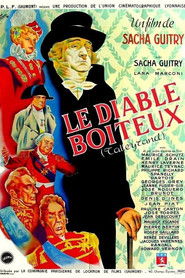
The Devil Who Limped
1948
The Devil Who Limped
1948
star 6.4The film is a 125-minute, black-and-white biography of French priest and diplomat Charles Maurice de Talleyrand-Périgord (1754–1838), who served for 50 years under five different French regimes: the Absolute Monarchy, the Revolution, the Consulate, the Empire, and the Constitutional Monarchy. Its title comes from one of the main historical nicknames for Talleyrand, that he shares with demon king Asmodeus and English poet Lord Byron.Swastika
1974
Swastika
1974
star 6.7Comprised of video shot during the Nazi regime, including propaganda, newsreels, broadcasts and even some of Eva Braun's colorized personal home movies, we explore the way in which the Third Reich infiltrated the lives of the German population, from 1933 to 1945.The Samurai I Loved
2005
The Samurai I Loved
2005
star 7.3A young samurai stuck at the bottom of the hierarchical order attempts to rescue his childhood sweetheart from an evil clan lord after learning of a plot to kill her and her infant child. Bunshiro Maki is a skilled swordfighter who's lethal with a blade, yet still can't rise through the ranks of the system. After his father is accused of plotting against his clan and forced to commit ritual suicide, his longtime love Fuku is sent to Edo to become the clan lord's concubine. A few years later, Fuku has bore the clan lord a son. When Maki learns that the clan has hatched a plan to kill Fuku and her son to secure succession to the throne, he recruits two childhood friends to help thwart the diabolical plot.Portrait of the Fighter as a Young Man
2010
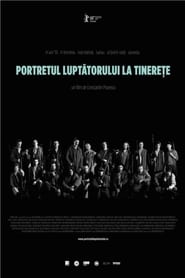
star 7.1When the Soviet Army marched into Romania in 1944, a part of the Romanian population went “into the mountains” – a diverse assortment of nationalists and fascists, liberals, apolitical farmers and members of the middle-class, who were affected by the Communists’ expropriations. Over a thousand armed resistance groups took refuge in the inaccessible forests of the Carpathian Mountains where they waited in vain for the support of the Western Allies. One of them was led by Ion Gavrilă-Ogoranu, who managed to remain undetected until 1976 when he was arrested. This film depicts the daily existence of this group. It tells the story of a struggle that became an end in itself, as the enemy was constantly in pursuit and arrest meant torture and often liquidation. Hungry and emotionally withdrawn, the group of young men got entangled in a partisan war that could not be won, lost in the landscape of the South Carpathians, accompanied by a vigilant secret police, the Securitate.Dersimiz: Atatürk
2010
Dersimiz: Atatürk
2010
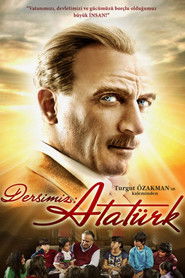
star 5.4Tarihci Dede is giving information to a couple of children about Mustafa Kemal Atatürk's success and his way to shape todays Turkey.The Source
1999
The Source
1999
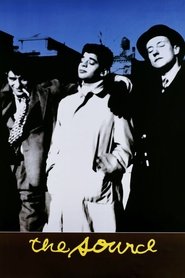
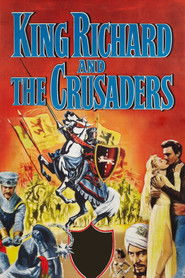
star 5.2Traces the Beats from Allen Ginsberg and Jack Kerouac's meeting in 1944 at Columbia University to the deaths of Ginsberg and William S. Burroughs in 1997. Three actors provide dramatic interpretations of the work of these three writers, and the film chronicles their friendships, their arrival into American consciousness, their travels, frequent parodies, Kerouac's death, and Ginsberg's politicization. Their movement connects with bebop, John Cage's music, abstract expressionism, and living theater. In recent interviews, Ginsberg, Burroughs, Kesey, Ferlinghetti, Mailer, Jerry Garcia, Tom Hayden, Gary Snyder, Ed Sanders, and others measure the Beats' meaning and impact.King Richard and the Crusaders
1954
star 6.3Based on Sir Walter Scott's The Talisman, this is the story of the romantic adventures of Christians and Muslims during the battle for the Holy Land in the time of King Richard the Lionheart.Blaise Pascal
1972
Blaise Pascal
1972
star 7.4In this evocative, atmospheric biography, Roberto Rossellini brings to life philosopher and mathematician Blaise Pascal, who, amid religious persecution and ignorance, believed in a harmony between God and science.Who Killed Nancy?
2009
Who Killed Nancy?
2009
star 5On October 12th, 1978, New York Police discovered the lifeless body of a young woman, slumped under the bathroom sink in a hotel room. She was Nancy Spungen, an ex-prostitute, sometimes stripper, heroin addict, and girlfriend of Sex Pistols' bassist Sid Vicious.Time of Violence
1988
Time of Violence
1988
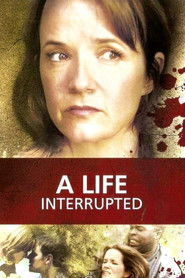
star 7.6In the 17th century, a Bulgarian Christian region is selected by the Ottoman rulers to serve as an example of conversion to Islam. A Janissary who was kidnapped from the village as a boy is sent to force the reluctant inhabitants to convert. The Turkish governor seeks a peaceful solution, but ultimately torture, violence, and rebellion break out.A Life Interrupted
2007
A Life Interrupted
2007
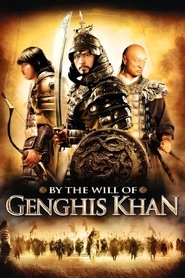
star 5.6After Debbie Smith was raped, she didn't take the law into her own hands. She wrote the law... Based on a true story. In 1989, Debbie Smith was living a quiet life as a housewife with her police officer husband, Rob and their two kids, but one day it's all shattered. While her husband slept upstairs, Debbie was dragged from her kitchen in broad daylight and brutally raped in the woods. After going through the dehumanizing rape-kit, she waited with fear and paranoia. Six years later, her rapist was caught through a chance DNA test. After learning how many rape-kits go untested and how long women wait to get justice, Debbie makes it her mission so no more women will suffer the long wait to get justice.By the Will of Chingis Khan
2009
star 4.7Three childhood friends. Three sworn brothers. One was initiated into the sacrament and grew up to be a great shaman. The other two followed the path of war and the nation recognised them as leaders. But only one of them was to become the ruler of the entire steppe. He was chosen by the Eternal Blue Sky and the Sky itself put him on a trial. Love for a woman will make him a warrior. Allegiance to the law will lead him to fratricide. Striving for peace will force him to start war. The council of nine tribes, speaking nine tongues, proclaimed him the sovereign and gave him the name of an ancient deity - Genghis Kahn.Life Is Ours
1936
Life Is Ours
1936
star 6.3A propaganda film of the communist party of France, showing how the comrades help the proletariat against the capitalists.Native Land
1942
Native Land
1942
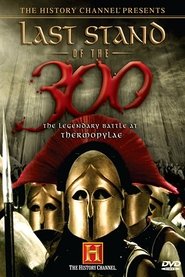
star 6.2By the start of World War II, Paul Robeson had given up his lucrative mainstream work to participate in more socially progressive film and stage productions. Robeson committed his support to Paul Strand and Leo Hurwitz’s political semidocumentary Native Land. With Robeson’s narration and songs, this beautifully shot and edited film exposes violations of Americans’ civil liberties and is a call to action for exploited workers around the country. Scarcely shown since its debut, Native Land represents Robeson’s shift from narrative cinema to the leftist documentaries that would define the final chapter of his controversial film career.Last Stand of the 300
2007
star 7.1This is the true and astounding saga of the Spartans at Thermopylae. It is among the greatest tales of war ever recounted. All the glory and grit of these warriors' last stand is captured in this exceptional documentary. It is almost impossible to understand how 300 Spartans managed to hold off the million-man Persian army for even a moment, much less seven days. To a man they paid with their lives but their stunning Last Stand assured that their sacrifice would resonate throughout history. Transporting dramatizations and incisive graphics put you in the heat of the battle and show the lay of the land. The complications and strategies of the conflict are revealed through careful analysis, and critical moments are reconstructed to show exactly what happened. Discover what the Spartans were fighting for, what made them capable of such heroics and what drove them to such sacrifice.Der Bockerer II - Österreich ist frei
1996
star 6.7Vienna, 1947. Bockerer and his wife Binerl have survived the war, though his butcher's shop was destroyed by bombs. Karl Bockerer opens up a new establishment in the center of the city. Post-war Vienna is divided into four zones in which the Allies run things and ensure that law and order prevails. This is the story of two lovers: Gustl, just returned form a POW camp, and the Russian interpreter Elena. Bockerer becomes the patron of their love. Elena's father was executed by Stalin, and the only way she can escape a similar fate is to marry an Austrian. Bockerer "buys" a husband for Elena and, full of tricks as ever, he succeeds in pulling the wool over the Russian occupier's eyes.Now or Never!
2024
Now or Never!
2024
star 2.5On March 15, 1848, a young firebrand poet, Sándor Petöfi ignites the Hungarian Revolution with his passionate 'National Song', prompting the Austrians to dispatch a ruthless secret agent to assassinate him and suppress the uprising.Razzennest
2022
Razzennest
2022
star 5.8South African enfant terrible filmmaker and artiste-cineaste Manus Oosthuizen meets with Rotten Tomatoes-approved indie film critic Babette Cruickshank in an Echo Park sound studio. With key members of Manus's crew joining, they record an audio commentary track for his new elegiac feature documentary Razzennest. But the session goes down a different path... cazzart! The ultimate elevation of arthouse horror, just not as you might expect.Aurora's Sunrise
2023
Aurora's Sunrise
2023
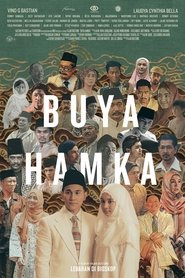
star 8.3The story of how Aurora Mardiganian (1901-94), a survivor of the Armenian genocide perpetrated by the Ottoman Empire (1915-17), became a Hollywood silent film star.Buya Hamka Vol. 1
2023
Buya Hamka Vol. 1
2023
star 6.2Discover the life of renowned Muslim scholar Buya Hamka, from his humble West Sumatra origins to his political achievements.