Top Rated History Movies - Page 174
All Services
Free Services
 Netflix
 Amazon Prime Video
 Apple iTunes
 Apple TV Plus
 Disney Plus
 Google Play Movies
 Paramount Plus
 Hulu
Hulu
 HBO Max
 YouTube
 fuboTV
 Peacock
 Peacock Premium
 Amazon Video
 The Roku Channel
 AMC+
AMC on Demand
AMC+
AMC on Demand
 Kocowa
 Hoopla
 The CW
 Vudu
Vudu
 Starz
Starz
 Showtime
 PBS
PBS
 Pantaflix
 FXNow
FXNow
 Tubi TV
 Kanopy
 Comedy Central
 Crunchyroll
 Microsoft Store
 Redbox
 Sun Nxt
 ABC
ABC
 DIRECTV
 Crackle
 Fandor
 Plex
Plex
Netflix
Amazon Prime Video
Apple iTunes
Apple TV Plus
Disney Plus
Google Play Movies
Paramount Plus
Hulu
HBO Max
YouTube
fuboTV
Peacock
Peacock Premium
Amazon Video
The Roku Channel
AMC+
AMC on Demand
Kocowa
Hoopla
The CW
Vudu
Starz
Showtime
PBS
Pantaflix
FXNow
Tubi TV
Kanopy
Comedy Central
Crunchyroll
Microsoft Store
Redbox
Sun Nxt
ABC
DIRECTV
Crackle
Fandor
Plex

The Plague in Florence
1919
star 6.1Suddenly appearing in Florence, an evil seductress causes Cesare, the city's ruler, and his son to both fall madly in love with her. The son, killing his father before an order to torture the woman can be carried out, then turns the city's churches into dens of sexual debauchery. Acts of evil and corruption continue unabated until the arrival of Death, who brings with her a horrible plague which she is about to loose upon the city.Nixon by Nixon: In His Own Words
2014
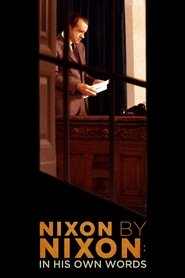
star 7.2From 1971 to 1973, Richard Nixon secretly recorded his private conversations in the White House. This film chronicles the content of those tapes, which include Nixon's conversations on the war in Vietnam, the Pentagon Papers leak, his Supreme Court appointments, and more--while also exposing shocking statements he made about women, people of color, Jews, and the media.The Last Days of Pompeii
1908
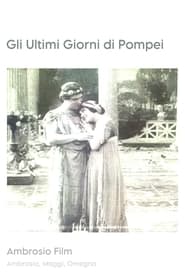
star 4.9Pompeii 79AD, mere days before the Vesuvian eruption. Glaucus and Jone are in love with each other. Arbaces, the Egyptian High Priest, is determined to conquer Jone. Glaucus purchases Nydia, the blind and long-suffering slave. Nydia falls in love with Glaucus and asks Arbaces for his help. He gives her a potion to make Glaucus fall in love with her-- In fact, a poison which will cause violent insanity.Between Pancho Villa and a Naked Woman
1996
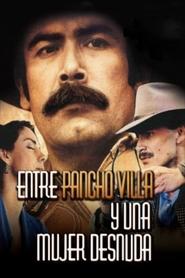
star 5.2Gina, a modern business woman in her late forties, has a lover named Adrian, a journalist, who she sees once in a while just to have sex. They are both attracted to the historic figure of Pancho Villa: he admires his power while she admires his virility. As Gina helps Adrian to write a book about Villa, she discovers the similarity between Villa's relation to women to that of Adrian and hers, and that Villa's revolution never included her, nor the rest of the female half of the human species. Can the love of a woman and a man survive machismo?Bethune: The Making of a Hero
1993
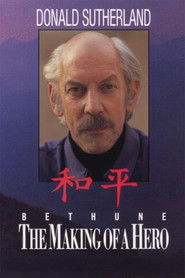
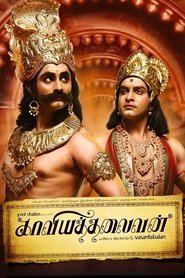
star 5True story of Norman Bethune, a medical doctor who fought for justice in China during Mao's rise to power.Kaaviya Thalaivan
2014
Kaaviya Thalaivan
2014
star 7Two rival artists at Sivadas Swamigal's drama troupe compete in everything they do. While one of them goes on to become successful, the other fails in life.Helmut Schmidt - Questions of life
2013
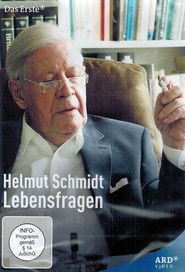
star 7.2On December 23, 2013, former Federal Chancellor Helmut Schmidt will be 95 years old. As the second Social Democratic head of government in the Federal Republic of Germany, he shaped the country like few other chancellors. Even 30 years after the end of his time in government, he is still a highly esteemed expert whose advice and opinions are in demand. He is one of the most popular chancellors among the population and is held in the highest esteem by his party; even his political opponents at the time pay him the greatest respect.A Season in Hell
1971
A Season in Hell
1971
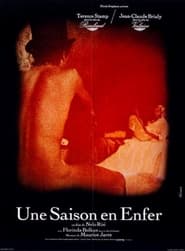
star 5.1The tumultuous life of Arthur Rimbaud, the cursed poet, who completed his masterwork at the age of twenty, became an arms dealer and died at thirty-seven; and his passionate relationship with Paul Verlaine, full of wanderings, storms and falling out.Serial Killer Culture
2014
star 6.1Serial Killer Culture examines the reasons why artists and collectors are fascinated by serial killers.Queen of Underworld
1991
Queen of Underworld
1991
star 4.8Popular Hong Kong actress Amy Yip plays Sister Har -- a seminal figure in 1960s and '70s Hong Kong nightlife -- in this biographical film that follows the scenester's rise and fall from the upper echelons of society to the glamour and excess of Hong Kong's teeming underworld. A truly fascinating portrait of the allure and excess that were part of the fabric of Asia's favorite playground.Four Women in a Harem
1965
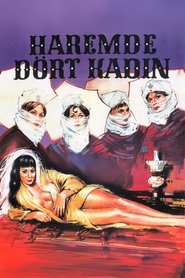
star 4.5Sadık Pasha is a pleasure-loving and pious pasha who lives in a luxurious Ottoman mansion with his three wives. The balance of the mansion, already full of intrigue with three women, is completely disrupted when he wants to take a fourth wife, thinking that he needs to continue his lineage because he has no children.The White Warrior
1959
The White Warrior
1959
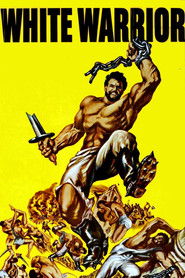
star 5.1The story of Hadji Murad, a 19th-century Chechen chieftain who led his warriors in a fight against the invading forces of the Russian Czar.Death of Yazdgerd
1982
Death of Yazdgerd
1982
star 7.8Bahram Beyzai's poetic imagining of the circumstances that led to the death of Yazdgerd III, the last of the Sassanid kings of Iran. His death in 651, during the Arab invasions that brought Islam to this Zoroastrian realm, was mysterious: his corpse was discovered in a mill, but the cause of his death—and the whereabouts of his remains—are unknown.Twenty Six Days in the Life of Dostoevsky
1981
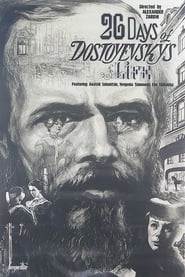
star 4.5Twenty-Six Days in the Life of Dostoyevsky was entered on February 16th at the 1981 Berlin Film Festival to commemorate the 100th anniversary of Dostoyevsky's death on February 9th, 1881, and won a "Best Actor" award for Anatoly Solonitsyn as Dostoyevsky. Solonitsyn was a favorite actor in Andrei Tarkovsky's films, and this was to be his penultimate role. This brief imaginary period in the famed Russian writer's life encapsulates one of his darker moments in 1866. At that time he was still a relatively unknown writer whose first widely acclaimed work, Crime and Punishment, was just on the horizon. His life was at a very low ebb as he struggled with debts he could not pay, and as he fought depression over the loss of his wife to tuberculosis, and the death of his brother, who was very close to him. His first literary journal had to be scrapped because of political reasons, and the second venture needed funding.The Way Home
1981
The Way Home
1981
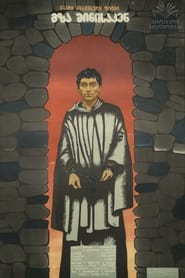
star 4.4The film is set in southern Georgia during Ottoman control, where inhabitants, who were driven from their homes due to enemy invasions, try to return home through different means. One of these inhabitants is the young scholar Antimoz.How Good to See You Alive
1989
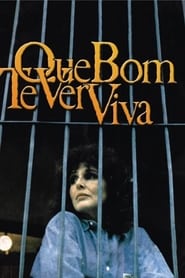
star 7.2Four years after a military coup overthrew the Brazilian government in 1964, all civil rights were suspended and torture became a systematic practice. Using a mix of fiction and documentary this extraordinary film is a searing record of personal memory, political repression and the will to survive. Interviews with eight women who were political prisoners during the military dictatorship are framed by the fantasies and imaginings of an anonymous character, portrayed by actress Irene Ravache.Race d'Ep!
1979
Race d'Ep!
1979
star 4.4"Race d’Ep!" (which literally translates to "Breed of Faggots") was made by the “father of queer theory,” Guy Hocquenghem, in collaboration with radical queer filmmaker and provocateur Lionel Soukaz. The film traces the history of modern homosexuality through the twentieth century, from early sexology and the nudes of Baron von Gloeden to gay liberation and cruising on the streets of Paris. Influenced by the groundbreaking work of Michel Foucault on the history of sexuality and reflecting the revolutionary queer activism of its day, "Race d’Ep!" is a shockingly frank, sex-filled experimental documentary about gay culture emerging from the shadows.Old Czech Legends
1953
Old Czech Legends
1953
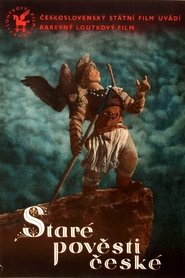
star 6.4A monumental piece of art bringing the heroes of the ancient Czech myths back to life. The picture consists of seven parts: Cech the Forefather, Bivoj, Libuse, Premysl, Girls War, Horymir, Lucka War.Love Under the Crucifix
1962
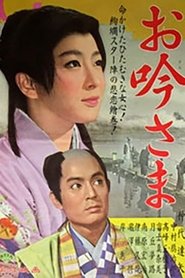
star 6.9A tea master and his daughter Ogin are both Christians in feudal Japan. Ogin falls in love with a married feudal prince who shares her faith. When the Shogun bans Christianity, the situation worsens.Songs for After a War
1976
star 6.5A particular reading of the hard years of famine, repression and censorship after the massacre of the Spanish Civil War (1936-39), through popular culture: songs, newspapers and magazines, movies and newsreels.