Top Rated History Movies - Page 198
All Services
Free Services
 Netflix
 Amazon Prime Video
 Apple iTunes
 Apple TV Plus
 Disney Plus
 Google Play Movies
 Paramount Plus
 Hulu
Hulu
 HBO Max
 YouTube
 fuboTV
 Peacock
 Peacock Premium
 Amazon Video
 The Roku Channel
 AMC+
AMC on Demand
AMC+
AMC on Demand
 Kocowa
 Hoopla
 The CW
 Vudu
Vudu
 Starz
Starz
 Showtime
 PBS
PBS
 Pantaflix
 FXNow
FXNow
 Tubi TV
 Kanopy
 Comedy Central
 Crunchyroll
 Microsoft Store
 Redbox
 Sun Nxt
 ABC
ABC
 DIRECTV
 Crackle
 Fandor
 Plex
Plex
Netflix
Amazon Prime Video
Apple iTunes
Apple TV Plus
Disney Plus
Google Play Movies
Paramount Plus
Hulu
HBO Max
YouTube
fuboTV
Peacock
Peacock Premium
Amazon Video
The Roku Channel
AMC+
AMC on Demand
Kocowa
Hoopla
The CW
Vudu
Starz
Showtime
PBS
Pantaflix
FXNow
Tubi TV
Kanopy
Comedy Central
Crunchyroll
Microsoft Store
Redbox
Sun Nxt
ABC
DIRECTV
Crackle
Fandor
Plex

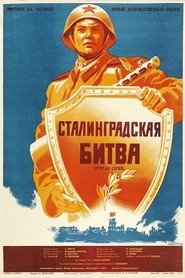
The Battle of Stalingrad
1949
star 3.4A 1949 two-part Soviet epic war film about the Battle of Stalingrad, directed by Vladimir Petrov. The script was written by Nikolai Virta.The Path of the Dragon
1998
star 6.4Produced and directed by Walt Missingham who, in 1983, became the first non-Chinese to practice Kung Fu at the Shaolin Temple, this authoritative and informative programme uses rarely seen archive footage to trace both the history of martial arts and the phenomenal impact Bruce Lee had on this culture. Narrated by Lee's daughter, Shannon Lee Keasler.Yellow Jack
1938
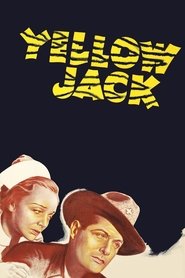
Yellow Jack
1938
star 5.6A fairly accurate historical account of Walter Reed's search for the cause of "Yellow Jack" or Yellow Fever and those who risked their lives in the pursuit.L'Affaire Seznec
1993
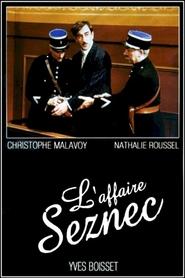
L'Affaire Seznec
1993
star 6.8Guillaume Seznec and Pierre Quéméneur join forces to sell cars to the Soviets. It was then that the latter suddenly disappeared, while driving with the former about 30 kilometers from Paris. The body will never be found. Seznec quickly became the main suspect and was sent to prison for life, even though nothing clearly indicated that he was the culprit.Tchaikovsky
1970
Tchaikovsky
1970
star 4.9The film is dedicated to the great Russian composer Pyotr Tchaikovsky (1840-1893). It tells of the last twenty years of the great master’s life, of his friendship with Baroness von Meck, an outstanding woman of her time, who for many years was Tchaikovsky’s guardian angel. The film also includes retrospections of the composer’s childhood and adolescent years, with Tchaikovsky’s life poetically recounted against the background of fragments from his operas and ballets performed by the best Russian musicians.The Mothers of Plaza de Mayo
1985
star 6.11985 Argentine documentary film directed by Susana Blaustein Muñoz and Lourdes Portillo about the Mothers of the Plaza de Mayo.Max and Helene
2015
Max and Helene
2015
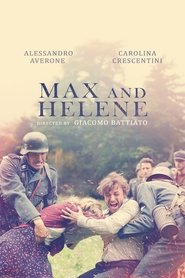
star 5.6Love, passion, and murder haunt a passionate romance in this drama. When the young soldier meets Helene, a torrid affair begins. 15 years after the war has ended, Max finds out that the love of his life was murdered in a concentration camp, setting off on a relentless manhunt for vengeance.Paradesi
2013
Paradesi
2013
star 7.6Before independence during the 1940's depicts the lives of poor carefree villagers who are lured to work in tea plantation farms and how they are forced to live rest of their lives as slaves with no traces of hope and freedom.Grace Kelly
1983
Grace Kelly
1983
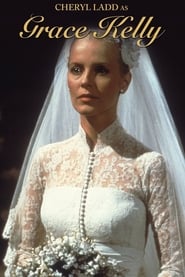
star 6.2The fairy tale story of the actress who became a princess is told in this biography that traces her rise from Philadelphia socialite to Hollywood movie star.Peter the First, Part II
1938
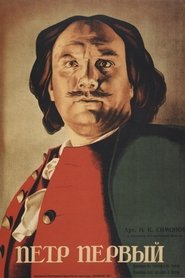
star 3.9Depicts Russian Tsar Peter the First's conquest over the Swedes and his son Aleksey's plot to overthrow him.Koch
2013
Revue
2008
Revue
2008
star 7As he did with his critically-acclaimed "Blockade," a documentary re-creation of the WWII siege of Leningrad, which received its NY theatrical premiere in March 2007, filmmaker Sergei Loznitsa has once again scoured the Russian film archives for "Revue," selecting excerpts from newsreels, propaganda films, TV shows and feature films that present an evocative portrait of Soviet life during the 1950s and 1960s. With scenes taken from the length and breadth of the “Soviet Motherland,” "Revue" illustrates industry and agriculture, political life, popular culture, and technology. The film’s fascinating flow of disparate scenes representing typical Soviet life of the period is, seen from today’s perspective, alternately poignant, funny, and tragicTitanic: 100 Years in 3D
2012
star 6.9100 years after an iceberg defeated the 882-foot luxury liner on its maiden voyage, scientists and historians are still exploring the Titanic. Armed with modern camera technology, submersibles were sent down to the ship's final resting place with the hope of capturing HD 3D visuals of the wreckage, in order to support or even confirm theories about the damage that took the boat down. Now, History Channel has brought some of that footage home in this 45-minute TV special, presented in 3D so that future generations can see it for themselves.The Wonderful Lies of Nina Petrovna
1929
star 7This silent-screen classic, like many others produced near the end of the silent era, was both a theatrical extravaganza boasting an original orchestral score and an item which languished in obscurity for many years. When Carlo Piccardi took what was left of the score by Maurice Jaubert and re-created it, the existing footage was restored and paired with a new orchestral performance which was shown in Paris in 1988. The film's story concerns the travails of a woman who has been living quite comfortably as the mistress of a colonel in the Tsar's army in Russia. However, she eventually encounters a penniless young lieutenant and falls madly in love with him, as he does with her. Despite her best intentions of remaining with the colonel, and his intention to avoid trouble with his fellow soldiers, they cannot forswear this relationship, and tragedy is the inevitable result. The title refers to a moving incident in the story, and translates as "the wonderful lie of Nina Petrovna."Back to Your Arms
2010
Back to Your Arms
2010
star 61961. Father and daughter, separated during World War II, are trying to meet in Berlin. He comes to Berlin from Soviet Lithuania, she comes from the USA. Even if the Berlin Wall has not been built yet, the Cold War is coming close to its apogee. Political and geographical situation, that seemed to be favorable in the beginning, turns out to be deceptive. After his arrival, the father is looked after by KGB intelligence agents. They, using him as bait, are trying to lure the daughter to the east side. Affected by the citie's atmospehere that's pervated with distrust, she is afraid to cross the West Berlin boundary. Trying to save each other from the possible trap, father and daughter are ready to give up the idea of the so much desired meeting...Story of the Golden Boot
1961
star 6.2Set in the Middle Ages the film tells the story of a wonder child, the little sculptor Wawrzek, who goes to work for a great master, Wit Stwosz. The story culminates in the unveiling of Stwosz's greatest masterpiece, the Altar of St. Mary's Church in Cracow.The Satin Slipper
1986
The Satin Slipper
1986
star 7.2During the century of the Spanish Gold, Doña Prouhèze, wife of a nobleman, deeply loves Don Rodrigo, who is forced to leave Spain and go to America. Meanwhile Prouhèze is sent to Africa to rule the city of Mogador. Ten years later Rodrigo leaves America and travels to Africa in search of Prouhèze to find out that she died and eventually meeting her daughter.Diary of a Provincial Girl
2003
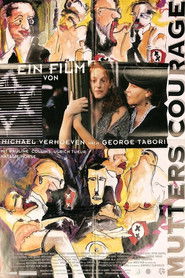
star 6.8The day-to-day life of a young girl in the town of Diamantina, Brazil, on the end of 19th Century, based on real life diaries.My Mother's Courage
1995
My Mother's Courage
1995
star 5.1The deportation of 4000 Jews from Budapest to Auschwitz in July 1944, as told by George Tabori, and how the narrator’s mother escaped it, owing to coincidence, courage and some help from where you’d least expect it.