Top Rated History Movies - Page 312
All Services
Free Services
 Netflix
 Amazon Prime Video
 Apple iTunes
 Apple TV Plus
 Disney Plus
 Google Play Movies
 Paramount Plus
 Hulu
Hulu
 HBO Max
 YouTube
 fuboTV
 Peacock
 Peacock Premium
 Amazon Video
 The Roku Channel
 AMC+
AMC on Demand
AMC+
AMC on Demand
 Kocowa
 Hoopla
 The CW
 Vudu
Vudu
 Starz
Starz
 Showtime
 PBS
PBS
 Pantaflix
 FXNow
FXNow
 Tubi TV
 Kanopy
 Comedy Central
 Crunchyroll
 Microsoft Store
 Redbox
 Sun Nxt
 ABC
ABC
 DIRECTV
 Crackle
 Fandor
 Plex
Plex
Netflix
Amazon Prime Video
Apple iTunes
Apple TV Plus
Disney Plus
Google Play Movies
Paramount Plus
Hulu
HBO Max
YouTube
fuboTV
Peacock
Peacock Premium
Amazon Video
The Roku Channel
AMC+
AMC on Demand
Kocowa
Hoopla
The CW
Vudu
Starz
Showtime
PBS
Pantaflix
FXNow
Tubi TV
Kanopy
Comedy Central
Crunchyroll
Microsoft Store
Redbox
Sun Nxt
ABC
DIRECTV
Crackle
Fandor
Plex

Oxygen
2010
Oxygen
2010
star 5.7Oxygen is a free re-enactment of a real case: a man who tried to cross the Danube illegally using an oxygen cylinder, to escape the communist Romania.Die Affäre Borgward
2018
Die Affäre Borgward
2018
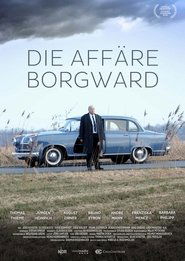
star 6The name of car manufacturer Carl F. W. Borgward is still synonymous with the West German Wirtschaftswunder. For hundreds of thousands the "Isabella" from Borgward is the first car after the war while Borgward secures thousands of jobs in Bremen. But in 1961, the company of the passionate constructor goes surprisingly broke.Seven Miles to Nakayama
1962
star 6.3When a corrupt magistrate rapes Oshima, Masa (Raizō Ichikawa) avenges her by killing the officer, becoming thereby a fugitive, haunted and grief-stricken by the fact that Oshima committed suicide. Going underground in the gambling world, perpetually hiding from the law, Masa eventually meets a young woman named Onaka, who looks exactly like Oshima. Tales having two look-alike heroines are a commonplace in Japanese period films, a plot affectation inherited from the kabuki theater. Based on a novel by Shin Hasegawa, Nakayama shichiri was already twice filmed in 1930, one version directed by Namio Ochiai, and from which less than 40 minutes survive, the other directed by Kyotaro Namiki. Both are silent films, preserved by the Makino film institute.Subedar Joginder Singh
2018
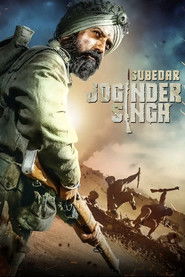
star 7.3It is a biographical feature film on India's Highest Wartime Gallantry Award - Param Vir Chakra winner Subedar Joginder Singh. He fought three wars (as per records) for India before achieving martyrdom in the Sino-Indian War of 1962 while commanding a platoon in North Eastern Frontier Agency (NEFA) (Now Arunachal Pradesh). The story portrays his character and motivation in the scene of battle.Battle of Xiangjiang River
2017
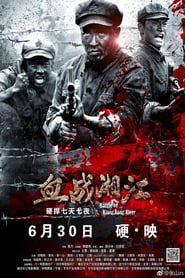
star 6From November 27, 1934 to December 1, the Red Army fought with the Kuomintang army in Xing'an County, Quanzhou County and Guanyang County in the territory of Guangxi province for 5 days, finally, the Red Army through Xiangjiang in the border of Quanzhou County and Xing'an County, they broke through the blockade of the Kuomintang army.I Am an American
1944
I Am an American
1944
star 5.3The history of a Polish family and its contributions to the war effort throughout American history.The Gospel of Luke
2015
The Gospel of Luke
2015
star 8.3THE GOSPEL OF LUKE, more than any other, fits the category of ancient biography. Luke, as "narrator" of events, sees Jesus as the "Savior" of all people, always on the side of the needy and the deprived. Narrated in the NIV by British actor Richard E. Grant and in the KJV by Sir Derek Jacobi, this epic production featuring specially constructed sets and the authentic countryside of Morocco has been critically acclaimed by leading religious scholars as a unique and highly authentic telling of the Jesus story.The Red and the Black
1985
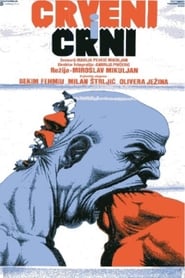
star 5This film is the true story of the creation of Labin Republic in 1921. When Italy annexed Istria, Labin area that is very rich in coal became strategically important for the new government. Domestic Croatian and Slovene population were disappointed by the method of the Kingdom of Yugoslavia of selling foreigners. Accumulated social problems and the growing terror of Italians lead to great miners' strike, led by favorite union leader Ivan Pipan. The strikers will be join young miner Ive Blazina, who as commander of the Red Guard workers struggles for the mining republic and the love of beautiful Mary Brezac. The sudden intervention of the Italian army destroys their dreams, and resigned Pipan surrenders. But not everyone agrees with his behavior.Wir sind doch Schwestern
2018
star 2.7Hiltrud Janssen soon achieves what only a few people in her life are able to do: she celebrates her 100th birthday. It's just a shame that she fell out with her younger sister Betty many years ago. Back then, Betty worked as a housekeeper for the influential CDU politician Heinrich Verhoeven and had an affair with him. Verhoeven was accused of adultery, but Betty was able to convince her sister Hiltrud to make a false statement. Verhoeven was acquitted and Hiltrud never spoke to Betty again. Hiltrud and Betty's sister Martha, now 98 years old, thought the 100th birthday was the perfect occasion to reconcile the estranged sisters and arranged a meeting.Owl Mountain
2018
Owl Mountain
2018
star 8Radio Free Europe, BBC, and Voice of America can only rarely get through the Iron Curtain and Soviet mufflers to Lithuania, a country torn by a war between the local resistance movement and the Soviet regime that is forced onto Lithuanian people by bayonets of the Russian army. Everybody who tries to resist the Soviet rule is either terrorized or executed or exiled to Siberia. He is one of the local high-school students who witness the local armed resistance to the Soviet occupation and ultimately decide to join it by taking a gun into their hands. He collects documents and all possible kinds of evidence that prove daunting crimes of the Kremlin. He soon becomes a legend among his peers. To girls, he is John Wayne the Hollywood Icon. Guys see him as an insurmountable obstacle and an invincible rival in matters of love.Julius Caesar Revealed
2018
star 8Mary Beard is on a mission to uncover the real Julius Caesar, and to challenge public perception, exploring Caesar's surprising legacy.Benito Mussolini
1962
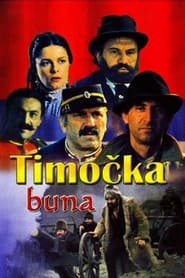
The Timok Rebellion
1983
The Timok Rebellion
1983
star 5.7In 1883 Milan Obrenovic, arrogant and despotic king of Serbia, felt threatened by the militia segments of his army. In order to remove that threat he disbanded militia. However, people of Timok Valley decide not to surrender their arms to the regular troops. The movie was made for the 100th anniversary of the event.El Che
1997
Do It
2000
Do It
2000
star 6.3Odyssey of the fortune-teller Daniele von Arb who, aged sixteen, joined the revolutionary underground and made the headlines as a top Swiss terrorist.The Voice That Thrilled the World
1943
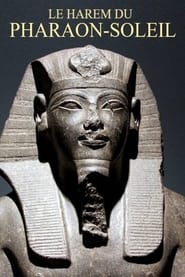
star 5.3This short traces the history of sound in the movies, beginning with French scientist Leon Scott's experiments in 1857. Featured are snippets from early sound pictures.Le Harem du Pharaon-Soleil
2017
star 7.7January 2011: a team from the University of Basel makes two spectacular discoveries. The first was a previously unknown tomb, which was given the number KV64 and contained two mummies. It had originally been created at the time of Amenhotep III for a princess of the 18th dynasty and was reused a few centuries later for the burial of a noblewoman of the 22nd dynasty. Right next to it is the already known burial site KV40, where the Basel researchers have now carried out excavations for the first time. They discovered dozens of mummies - an unusual find in the Valley of the Kings, where most tombs were built for just one pharaoh. Initially, the archaeologists estimated the number of dead at 30, but after months of collaboration with evolutionary scientist Frank Rühli from the University of Zurich, they came to the conclusion that there must actually be more than 90. Who were these women?Chinese Chariots Revealed
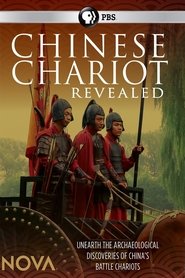
2017
star 8For over 1,000 years, chariots were indispensable weapons in ancient China. The art of chariot driving and special warfare were used there for longer than anywhere else. Their contribution to the unification of the Chinese empire is undisputed. New archaeological discoveries reveal how the Chinese developed and perfected this sophisticated weapon. In the Bronze Age, over 3,000 years ago, chariots and other war equipment arrived in China from Central Asia via the Hexi Corridor. In addition to trade and new alliances, their spread was mainly due to the Zhou dynasty's incessant military campaigns against rebellious vassal states and the constant attacks by the mobile cavalries of its northern neighbors. Manned with spearmen or archers, the chariots were a decisive weapon in battle.Gramsci 44
2016
Gramsci 44
2016
star 5Between 1926 and 1927, the Italian intellectual and Communist political figure Antonio Gramsci spent 44 days imprisoned on the island of Ustica, off the northern coast of Sicily. Together with his fellow prisoners, he founded a school. This unique institution was open to all, welcoming people of all ages and social backgrounds, even the illiterate. Ustica still remembers this revolutionary school. Ustica, remote and neglected, still waits patiently at the harbor, hoping that the boat from the mainland will come.