Top Rated History Movies - Page 324
All Services
Free Services
 Netflix
 Amazon Prime Video
 Apple iTunes
 Apple TV Plus
 Disney Plus
 Google Play Movies
 Paramount Plus
 Hulu
Hulu
 HBO Max
 YouTube
 fuboTV
 Peacock
 Peacock Premium
 Amazon Video
 The Roku Channel
 AMC+
AMC on Demand
AMC+
AMC on Demand
 Kocowa
 Hoopla
 The CW
 Vudu
Vudu
 Starz
Starz
 Showtime
 PBS
PBS
 Pantaflix
 FXNow
FXNow
 Tubi TV
 Kanopy
 Comedy Central
 Crunchyroll
 Microsoft Store
 Redbox
 Sun Nxt
 ABC
ABC
 DIRECTV
 Crackle
 Fandor
 Plex
Plex
Netflix
Amazon Prime Video
Apple iTunes
Apple TV Plus
Disney Plus
Google Play Movies
Paramount Plus
Hulu
HBO Max
YouTube
fuboTV
Peacock
Peacock Premium
Amazon Video
The Roku Channel
AMC+
AMC on Demand
Kocowa
Hoopla
The CW
Vudu
Starz
Showtime
PBS
Pantaflix
FXNow
Tubi TV
Kanopy
Comedy Central
Crunchyroll
Microsoft Store
Redbox
Sun Nxt
ABC
DIRECTV
Crackle
Fandor
Plex

Die Bubi Scholz Story
1998
star 2.7Dramatic life of Gustav "Bubi" Scholz, who rose from post-war obscurity and a background in black market dealings to become a celebrated European boxing champion in the late 1940s. Charismatic and widely admired, he quickly became a national icon. But as the spotlight fades and his victories grow distant, Scholz’s personal life begins to unravel, leading him into a downward spiral of addiction and emotional turmoil.Who Killed Walter Benjamin…
2005
star 6Philosopher Walter Benjamin (1892-1940), a German Jew, flees Germany in 1932, during the turmoil preceding Adolf Hitler's definitive rise to power. On September 26, 1940, he dies in Portbou, a small village on the French-Spanish border. The unexplained end of a man who managed to avoid a horrible fate just to face death in very mysterious circumstances.Golden Gate Girls
2013
Golden Gate Girls
2013
star 5.5The film traces the life and times of Esther Eng, a San Francisco native known as Hong Kong’s first “directress.” She directed 10 Cantonese talkies.The Story of David
1976
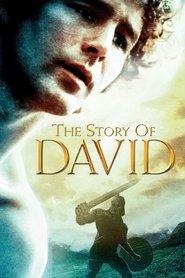
The Story of David
1976
star 3The "David and Goliath" legend is presented as credibly as possible, while David's later disastrous romance with Bathsheba is handled with taste and decorum. Also in the cast are Anthony Quayle as King Saul, and Terence Hardiman as Bathsheba's unfortunate warrior husband Uriah.Romance of Louisiana
1937
Carl Peters
1941
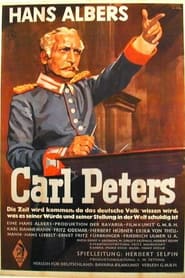
Carl Peters
1941
star 5National-Socialist propaganda film that serves to memorialize one of the early representatives of colonialism: the German philologist Carl Peters. He is, at the end of the 1900′s, a noted advocate of the establishment of a German colony. Without support from Germany, he struggles on his own account against the English in East Africa. Later he is named Reichskommissar and promotes the expansion of a German colony. But Jewish and Social-Democrat opponents order him back to Germany and force him to resign.Whatever Love Means
2005
Whatever Love Means
2005
star 2.7Strap in for a rollercoaster ride through the emotional worlds of love and royalty in an original WE Channel movie exploring the enduring, 30-year romance shared between Prince Charles and Camilla Parker-Bowles. Decades before the fairy tale wedding of Prince Charles and Lady Diana, the young prince and his longtime sweetheart found their growing love tragically clipped by the many demands of royalty and the sometimes rough waters of romance. Though he had previously exchanged vows with the glamorous Diana, Prince Charles never truly forgot about Parker-Bowles, and in this film Anglophiles and royalty scholars alike will finally learn the truth behind one of the highest profile romances in modern history.Race to Freedom: The Underground Railroad
1994
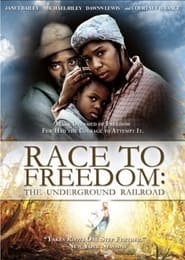
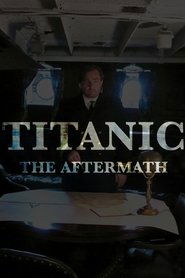
star 5.3A number of slaves risk their lives to escape their masters with their only help coming from the famous secret slave escape network.Titanic: The Aftermath
2012
star 6Explores what happened after the Titanic sank: the lives the disaster affected and the changes it brought to sea travel.Gaston's War
1997
Gaston's War
1997
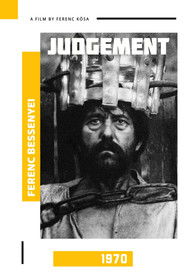
star 2.7Gaston Vandermeerssche is a young, resourceful Flemish action hero of the Belgian resistance during World War II: he coaches surviving allied pilots trough occupied Belgium and France to Spain so they can regain England, each time a dangerous adventure as their poor mastery of local languages and customs add to the ever-present risks of trying to outsmart the Nazi troops and Gestapo agents. After a mess-up in the coordination from London he himself gets caught by the dreaded secret police for ruthless interrogation...Judgement
1970
Judgement
1970
star 4.7The film is a historic parable about the topicality of revolution. 1514. The peasants' uprising is over, Dózsa has been arrested. Werbőczy tries to get the imprisoned peasant leader deny the revolution and offers him the lives of his people in exchange.Río Negro
1977
Río Negro
1977
star 5Tirso Fabre, a militiaman and member of the Black River co-operative farm, and Chano Carrillo, a counterrevolutionary hiding behind his front as a Castro sympathizer, receive the news in different ways, in line with their antagonistic ideological positions.Que nos quiten lo bailao
1983
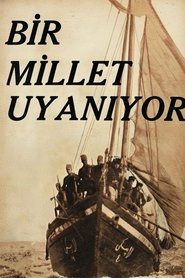
star 5A story of loves, abductions, sultans, eunuchs, dancers, pumpkins, children's cars, parades, barbarians, virgins ... All these elements are the pretext of a cinematographic spectacle, the motive of an authentic Mediterranean party, between the historical parody and the musical magazine.Bir Millet Uyanıyor
1932
Bir Millet Uyanıyor
1932
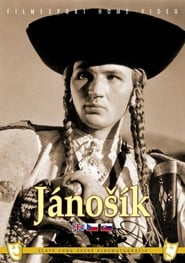
star 7.3The events begin on March 15, 1920. The captain Davut, who belongs to the Kuvva-i Milliye in Anatolia, and the commander Tilki join the alliance that first presses the Akbas Ammunition and transfers the ammunition to the Kuvva-i Milliye on a received code.Jánošík
1936
Jánošík
1936
star 5Jánošík has been topic of many Slovak and Polish legends, books and films. According to the legend, he robbed nobles and gave the loot to the poor. The legend were also known in neighboring Silesia, the Margraviate of Moravia and later spread to the Kingdom of Bohemia. The actual robber had little to do with the modern legend, whose content partly reflects the ubiquitous folk myths of a hero taking from the rich and giving to the poor. However, the legend was also shaped in important ways by the activists and writers in the 19th century when Jánošík became the key highwayman character in stories that spread in the north counties of the Kingdom of Hungary (present Slovakia) and among the local Gorals and Polish tourists in the Podhale region north of the Tatras.Sternstunde ihres Lebens
2014
star 7Bonn 1948. The member of parliament and lawyer Elisabeth Selbert fights tirelessly for the inclusion of the sentence "Men and women have equal rights" in the Basic Law of the future Federal Republic of Germany. Despite the opposition she encounters during sessions in the Parliamentary Council , there is _she does not stop and stubbornly sticks to her plan . Selbert experiences a grandiose triumph when her application is included in the new Basic Law under Article 3, Paragraph 2 . In doing so , she lays the foundation for what has now been a 65-year political and social debate on the subjectEqual rights.The Stolen Battle
1972
The Stolen Battle
1972
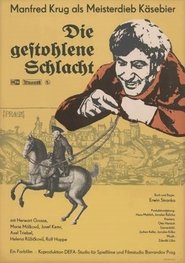
star 6.5In 1757, the second year of the Seven Years' War, Frederick II the Great stands at the gates of Prague. He has been trying to take the city for weeks, as the enemy commander Duke Charles of Lorraine is inside. Frederick has just defeated him, but the tide could soon turn against the Prussians, as new Austrian troops are approaching. None other than the famous master thief Andreas Christian Käsebier is to sneak into Prague to open the gates from the inside. As a reward, the king promises him freedom. Käsebier accepts the offer because he is tempted to steal an entire city. But by chance, Käsebier learns that the king wants to betray him. After a successful battle, he is put back behind bars for life. This doesn't suit the master thief at all, especially as he has just fallen in love with Katka in Prague.Opération Lune: L'épave cachée du Roi-Soleil
2013
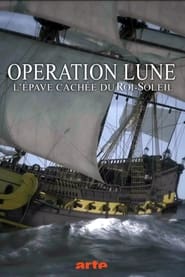
star 5Louis XIV's ship La Lune was wrecked off Toulon in November 1664. The ship was returning from an expedition to the Barbary Coast with nearly one thousand people on board, simple seamen or nobles of the highest rank. Discovered by a submarine in 1993, the wreck lies in 90 metres of water. In a state of magificent preservation, like some underwater Pompei, she will, starting in 2012, be the subject of an exceptional archeological investigation, bringing together history and robotics, the expertise of archeologists and the passion for the deep.