Top Rated History Movies - Page 413
All Services
Free Services
 Netflix
 Amazon Prime Video
 Apple iTunes
 Apple TV Plus
 Disney Plus
 Google Play Movies
 Paramount Plus
 Hulu
Hulu
 HBO Max
 YouTube
 fuboTV
 Peacock
 Peacock Premium
 Amazon Video
 The Roku Channel
 AMC+
AMC on Demand
AMC+
AMC on Demand
 Kocowa
 Hoopla
 The CW
 Vudu
Vudu
 Starz
Starz
 Showtime
 PBS
PBS
 Pantaflix
 FXNow
FXNow
 Tubi TV
 Kanopy
 Comedy Central
 Crunchyroll
 Microsoft Store
 Redbox
 Sun Nxt
 ABC
ABC
 DIRECTV
 Crackle
 Fandor
 Plex
Plex
Netflix
Amazon Prime Video
Apple iTunes
Apple TV Plus
Disney Plus
Google Play Movies
Paramount Plus
Hulu
HBO Max
YouTube
fuboTV
Peacock
Peacock Premium
Amazon Video
The Roku Channel
AMC+
AMC on Demand
Kocowa
Hoopla
The CW
Vudu
Starz
Showtime
PBS
Pantaflix
FXNow
Tubi TV
Kanopy
Comedy Central
Crunchyroll
Microsoft Store
Redbox
Sun Nxt
ABC
DIRECTV
Crackle
Fandor
Plex

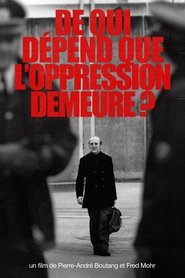
De qui dépend que l’oppression demeure ?
1975
star 10On May 21, 1975, the trial of the members of the Red Army Faction (also known as the Baader-Meinstein Gang) began. Four members appeared before the Stuttgart court to answer for the attacks that had been raging for five years in the young Federal Republic of Germany. The documentary, whose title is borrowed from Berthold Brecht's In Praise of Dialectics, recounts the conditions of the trials and detention of the Baader-Meinstein Gang members and the disqualification of Klaus Croissant as their lawyer.They Chose Algeria
2007
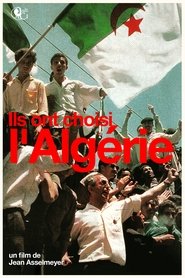
They Chose Algeria
2007
star 10Many of them participated in the struggle for Algerian independence. There are "those who believed in heaven", priests, Christians committed against torture, friends of the "natives", there are "those who did not believe in it", communist activists, students, progressive intellectuals, others remained in this country because they could not imagine living anywhere other than in this land of all passions. They are European and chose to stay in Algeria after independence, most of them opted for Algerian nationality. The film is another vision of the history of Algeria from the end of the fifties to the present day, told by these Europeans filmed at home, or in the context of their activities, illustrated by unpublished archive documents.Liberation Diaries
2025
Liberation Diaries
2025
star 8The end of World War II brings Europe a new political system, reshapes national and personal identities. Three women from Milan, Paris and Berlin report on the days of liberation in their diaries. Their personal stories expand the historical picture and make LIBERATION DIARIES a chronicle of female self-empowerment, resistance and resilience.Muñiz, The Argentinian In The Algerian Revolution
2020
star 10Roberto Muniz, nicknamed "Mahmoud the Argentinian," was a revolutionary fighter who joined the National Liberation Army in 1959 to support the Algerian cause in the war of independence against France. He joined a clandestine group that manufactured weapons and ammunition to be transported to Algeria to support the revolution that began in 1954. After the war, the Algerian government invited the mujahid to stay, an offer he accepted to begin a new life as an employee of Sonnelgaz and a member of the General Union of Algerian Workers (UGTA), accompanied by his wife Alfonsa, a textile union activist who came from Argentina to join this North African adventure.Bernadette of Lourdes: The Musical
2025
star 7Bernadette Soubirous, just 14 years old, goes by the river near the Massabielle cave. It is there that, for the first time, a “lady dressed in white” appears to her. Accused of lying, Bernadette’s revelation initially provokes mistrust and tensions in her family, drawing the wrath of civil and ecclesiastical authorities. The rumor spreads. Pilgrims begin to converge. Lourdes goes down in History.They Joined the Front
2012
star 10In this film, four key witnesses, who live in Algeria today, as full-fledged Agerians, show us what this colonization was really like, so "beneficial" that they themselves perceived it as the oppression of one people by another. Three of them, who today would be called "pieds noirs," in other words, those Europeans to whom France, the occupying power, gave the best land, taken from the indigenous populations, work, and exclusive rights, not shared by the entire population, lived rather well compared to the majority of the "natives." The fourth was far from all that and lived in Argentina. Annie Steiner, Felix Colozzi, Pierre Chaulet, and Roberto Muniz explain to us what led them to show solidarity with the struggle of the weak, the humiliated, and to risk their freedom and their lives by committing to liberate Algeria.Jack Nicholson: The Joker Is Wild
2004
star 2The life and times of famous Jack Nicholson include his 30-years relationship with Anjelica Houston and find out his sister is his real mother.Labake Olododo
2025
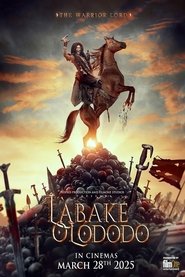
Labake Olododo
2025
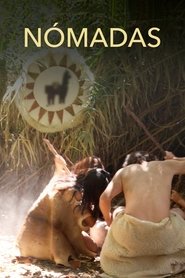
star 10Set against the rich backdrop of Yoruba tradition, a courageous woman rises against oppression in her community. As she fights for justice, she must navigate political schemes, betrayal, and the weight of tradition.Nómadas
2024
Time of Hurtle
2025
Time of Hurtle
2025
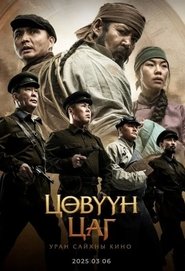
star 8In 1911, Bogd Khan, with the help of his trusted spy Natsag, declares Mongolia’s independence. However, by 1928, the rise of the Comintern introduces a new threat. Under the guise of eliminating Baruuntan influence, the Comintern forces its control over Mongolia, shutting down religious monasteries and seizing private property. Riots erupt, forcing many to flee as the country descends into chaos. Natsag’s family, once secure, is swept into this storm, facing a personal and political unraveling as Mongolia enters its dark time.Salvation History: A Sock Puppet Journey
2022
star 10A vibrant cast of sock puppets takes the audience on a whimsical yet heartfelt journey through Salvation History, from Creation to the age of the Catholic Church.Rosans, Bitter Honey
2011
Rosans, Bitter Honey
2011
star 10In 1963, Rosans, a village in the Hautes-Alpes region depopulated by the rural exodus, welcomed Harkis (military soldiers) forced to leave Algeria for supporting France during the Algerian War. Around thirty families settled in a camp below Rosans. Nearly half a century after their arrival, first- and second-generation Harkis and native Rosanais recount their experiences of this culture clash, often painful, sometimes happy. Language barriers, religious differences, living in barracks for 14 years, and unemployment were all obstacles to overcome in order to be accepted and then achieve mutual enrichment. Enriched with archive footage to explain the historical context of the time, the film seeks above all to express feelings and unspoken words.Spruce Forest
2025
Spruce Forest
2025
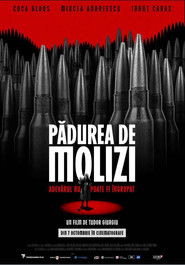
The Spruce Forest explores one of the darkest pages in Romanian history. Inspired by the drama of Fântâna Albă on April 1, 1941, the film reconstructs the fate of a Romanian community in Bessarabia, massacred in a desperate attempt to find refuge from the Soviet occupation. The testimony of a survivor of this genocide becomes the backdrop against which archival images and his wife's memories of Siberia are superimposed, in a dizzying game of mirrors that questions the notion of historical truth and reveals forgotten traumas with potentially devastating consequences in the present.The Mayflower Voyagers
1988
star 5The Peanuts gang tells the story of the 1620 Mayflower voyage from England to the new world detailing the hardships they faced, how the Natives helped them survive, and ending the following autumn in a feast of Thanksgiving.The Deadline
2025
The Deadline
2025
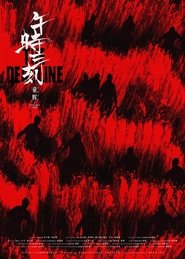
star 7China's first one-shot, period action drama. The story tells of a group of death row prisoners waiting for the arrival of "Autumn Queen" during the Five Dynasties and Ten Kingdoms period. They were given a chance to survive that was almost equivalent to "beheading" - breaking through the enemy siege to light a beacon for help. This was obviously a road of no return, but they had no choice...