Top Rated History Movies on Amazon Video - Page 125
All Services
Free Services
 Netflix
 Amazon Prime Video
 Apple iTunes
 Apple TV Plus
 Disney Plus
 Google Play Movies
 Paramount Plus
 Hulu
Hulu
 HBO Max
 YouTube
 fuboTV
 Peacock
 Peacock Premium
 Amazon Video
 The Roku Channel
 AMC+
AMC on Demand
AMC+
AMC on Demand
 Kocowa
 Hoopla
 The CW
 Vudu
Vudu
 Starz
Starz
 Showtime
 PBS
PBS
 Pantaflix
 FXNow
FXNow
 Tubi TV
 Kanopy
 Comedy Central
 Crunchyroll
 Microsoft Store
 Redbox
 Sun Nxt
 ABC
ABC
 DIRECTV
 Crackle
 Fandor
 Plex
Plex
Netflix
Amazon Prime Video
Apple iTunes
Apple TV Plus
Disney Plus
Google Play Movies
Paramount Plus
Hulu
HBO Max
YouTube
fuboTV
Peacock
Peacock Premium
Amazon Video
The Roku Channel
AMC+
AMC on Demand
Kocowa
Hoopla
The CW
Vudu
Starz
Showtime
PBS
Pantaflix
FXNow
Tubi TV
Kanopy
Comedy Central
Crunchyroll
Microsoft Store
Redbox
Sun Nxt
ABC
DIRECTV
Crackle
Fandor
Plex

KJV: The Making of the King James Bible
2011
Award-winning director Jerry Griffith brings to life the fascinating history of this great work, along with its impact for us today.The Greely Expedition
2011
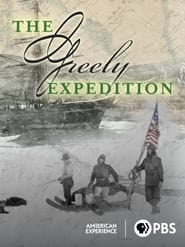
From PBS and American Experience - Using scientific accounts, diaries, photographs and letters, this film reveals how poor planning, personality clashes, questionable decisions and pure bad luck conspired to turn a noble scientific mission into a human tragedy.Rambam - The Story of Maimonides
2005
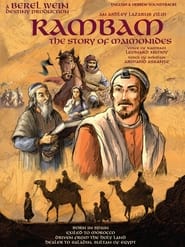
Rambam was born in Cordova, Spain in the 12th century. Known as the "Nesher Gadol" the "Great Eagle" - Rambam had the unique ability to see and perceive, with insight and clarity, the "big picture" - and man's relationship to the Divine. He was the first philosopher to unify - and reconcile the rational - with the reality of God. The legacy he left behind is astounding.The Sallie House - Gateway to the Paranormal
2010
In 1906 a legend was born in Atchison, Kansas in what is now known as the Sallie House. A young girl died in excruciating pain on the operating table and now forever haunts this accursed and evil dwelling. Join internationally renown psychic Robbie Thomas and EVP specialist, Michael Esposito as they embarkJust Like the Men
2020
Just Like the Men
2020
Just Like the Men is an original silent film written in 1914 by Ella Higginson, a novelist, poet laureate, and campaign manager for Frances Axtell. Their campaign was a success making Axtell one of the first women in Washington State to be sworn into legislative office. 100+ years later, this screwball-comedy offers a glimpse of women's first entrance into politics, just in time for the 2020 centennial of women's suffrage.We Were Kings (Burma's Lost Royals)
2018
In 1885 the British army invaded Burma and deposed its King. He died in exile, ending a thousand years of monarchy. The royal family vanished, and the country was plunged into war and the longest military dictatorship of modern times. But after a century of silence they are back, and they're on a journey to bring the family - past and present - back together. Filmed through three years of seismic change in Burma, this is the story of a family and a country emerging from the darkness.In The Shadow of Gold Mountain
2004
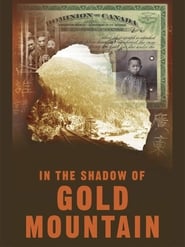
Filmmaker Karen Cho travels from Montreal to Vancouver to uncover stories from the last survivors of the Chinese Head Tax and Exclusion Act, a set of laws imposed to single out the Chinese as unwanted immigrants to Canada from 1885 to 1947. Through a combination of history, poetry and raw emotion, this documentary sheds light on an era that shaped the identity of generations.Murder At Cinema North
2020
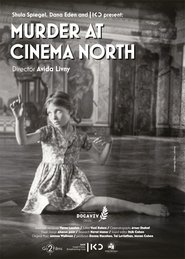
A young Holocaust survivor who descends into crime; an Italian-Jewish engineer who wants to see a movie; a German Christian who forgives her husband’s murderer because of her Buddhist faith; and a Jewish woman who carries on an affair with a Nazi and exposes members of the resistance so that she and her children may survive: their fates intersect when two bullets are fired into a queue of people waiting to see “A Man Escaped” at Tel Aviv’s Cinema North in 1957.The Emperor's Lost Harbour
2011
In the heart of a metropolitan city of 15 million people and among the construction of a new billion-dollar transportation network, an archaeological sensation has been discovered: the ancient harbour of Theodosious, lost from the history books for over 1000 years.Women and Soldiers
1955
Women and Soldiers
1955
Donne e soldati was an example of a ‘decentralised’ production, far from Rome, something that for the most part Italian cinema didn’t fully succeed in achieving until the 1990s. . In many ways the film, which is both Picaresque and anti-heroic, was too far ahead of its time, and it is often considered the precursor to Monicelli’s L’armata brancaleone. This time out, Ferreri takes the reins as producer of the ill-fated undertaking (the two directors will never make another film); however, Donne e soldati, apart from marking Ferreri’s estrangement from Italian cinema for a number of years, today appears to display earthy and carnivalesque elements that will subsequently influence certain aspects of the Milanese director’s vision.Investigating Operation Condor
2003
In the name of the struggle against terrorism, a special operation - code named CONDOR - was conducted in the 1970s and '80s in South America. Its target were left-wing political dissidents, the organized labor and intellectuals. Condor soon became a network of military dictatorships supported by the U.S. State Department, the CIA, and Interpol.The Secret Mona Lisa
2012
The Secret Mona Lisa
2012
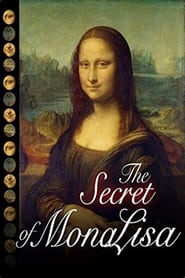
The Mona Lisa by the Italian Renaissance artist Leonardo da Vinci is the most famous painting in the world. What is the secret behind the "real" Mona Lisa? It draws legions of visitors to the Louvre in Paris to contemplate her enigmatic expression. In this "detective story," historians tell us how Leonardo developed the painting and uncover the long-hidden identity of the smiling woman.Pyramid Builders: New Clues
2019
Over the past few decades, significant discoveries have been made on the very site where the pyramids were built. But now, hundreds of kilometers from the pyramids themselves, we are gaining more insight into just how they were built. Two teams of Egyptologists, one based in the middle of the desert, the other located on the Red Sea coast, are currently discovering more about the Egypt of Khufu’s time, than at the foot of the pyramids. What they found help them figure out how ancient Egyptians worked. This film has been shot from within, immersed for several weeks within these 2 archaeological missions. Authentic archaeological experiments have been filmed in real time, revealing ancient techniques and methods, unlocking certain secrets of these ancient great builders.In Search of a Lost Princess
1999
In 1918 Tsar Nicholas II of Russia, his wife, son and four daughters were summarily assassinated. In 1992 the bodies were unearthed only to discover that the remains of two family members were missing - Alexei and Anastasia. Persistent rumors of Anastasia's escape have circulated after her death. This documentary examines the possibility that Anastasia may have survived the brutal assassination.River of Hope
2020
River of Hope
2020
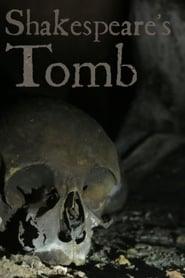
"River of Hope" tells the story of how a former slave Mary Barnes Cabell and her children helped found the first college for African Americans in West Virginia. Based on true events.Shakespeare's Tomb
2016
Shakespeare's Tomb
2016
Historian Dr. Helen Castor explores the mysteries surrounding Shakespeare’s burial place. Will the first- ever scientific investigation discover why his tombstone's only inscription is a curse against any man who ‘moves my bones’? - PBSReturn to Hardwick
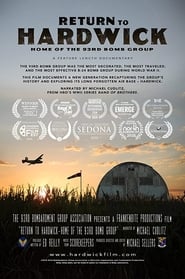
2019
Return to Hardwick
2019
Sons, daughters and grandchildren of the greatest generation travel to England to uncover the history of a disappearing World War II air base.Secrets of the Dead: Graveyard of the Giant Beasts
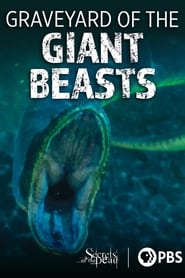
2016
A mining operation in Cerrejon, Northern Colombia revealed a treasure trove of fossils from animals that lived ten million years after the KT extinction that killed the dinosaurs. Surprisingly, enormous reptiles were dominate. Scientists investigate who was the apex predator of the era - Titanoboa, a quarter ton giant snake five times bigger than the largest anaconda, or a similarly giant crocodilian with an incredibly deadly bite force. —David FossSrimadvirat Veerabrahmendra Swami Charitra
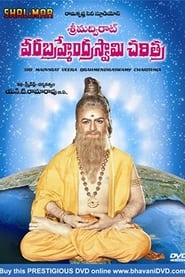
1984
The story is based on the life of Pothuluri Veerabrahmam (N. T. Rama Rao), a well-known saint and astrologer of the 17th century. A brief life of Gautama Buddha, Ramanuja, Adi Shankara and Vemana (all essayed by NTR) are shown at the beginning of the film.Dunkirk: The Battle for France
1989
The heroic rescue of the stranded British expeditionary force from the beaches of Nothern France is now the stuff of legend. How was it that a catastrophic defeat was turned into one of British history's great victories?