Top Rated Documentary Movies on Apple iTunes - Page 110
All Services
Free Services
 Netflix
 Amazon Prime Video
 Apple iTunes
 Apple TV Plus
 Disney Plus
 Google Play Movies
 Paramount Plus
 Hulu
Hulu
 HBO Max
 YouTube
 fuboTV
 Peacock
 Peacock Premium
 Amazon Video
 The Roku Channel
 AMC+
AMC on Demand
AMC+
AMC on Demand
 Kocowa
 Hoopla
 The CW
 Vudu
Vudu
 Starz
Starz
 Showtime
 PBS
PBS
 Pantaflix
 FXNow
FXNow
 Tubi TV
 Kanopy
 Comedy Central
 Crunchyroll
 Microsoft Store
 Redbox
 Sun Nxt
 ABC
ABC
 DIRECTV
 Crackle
 Fandor
 Plex
Plex
Netflix
Amazon Prime Video
Apple iTunes
Apple TV Plus
Disney Plus
Google Play Movies
Paramount Plus
Hulu
HBO Max
YouTube
fuboTV
Peacock
Peacock Premium
Amazon Video
The Roku Channel
AMC+
AMC on Demand
Kocowa
Hoopla
The CW
Vudu
Starz
Showtime
PBS
Pantaflix
FXNow
Tubi TV
Kanopy
Comedy Central
Crunchyroll
Microsoft Store
Redbox
Sun Nxt
ABC
DIRECTV
Crackle
Fandor
Plex

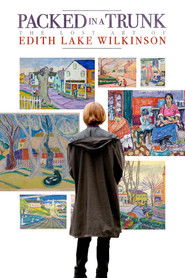
Packed In A Trunk: The Lost Art of Edith Lake Wilkinson
2015
star 7.6The story of artist Edith Lake Wilkinson, a painter who was committed to an asylum in 1924 and never heard from again. All her worldly possessions were packed into trunks and shipped to a relative in West Virginia where they sat in an attic for 40 years. Edith's great-niece, Emmy Award winning writer and director Jane Anderson, grew up surrounded by Edith's paintings, thanks to her mother who had gone poking through that dusty attic and rescued Edith's work. The film follows Jane in her decades-long journey to find the answers to the mystery of Edith's buried life, return the work to Provincetown and have Edith's contributions recognized by the larger art world.A New High
2015
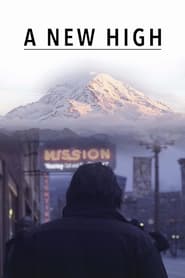
A New High
2015
star 7.2In the heart of downtown Seattle, a diverse group of men and women will come together to climb out of homelessness and drug addiction through an unorthodox recovery program that uses mountain climbing as a means of rehabilitation. After one year of intense physical and mental conditioning, the team will attempt to summit one of the most dangerous mountains in the country, Mt. Rainier.10 Billion: What's On Your Plate
2015
star 6.7How can we best meet every earth citizens need for healthy food facing our limited resources? Regarding the almost 10 billion humans living on earth by 2050, we have to decide now how we want to shape the future of agriculture.No Place to Hide: The Rehtaeh Parsons Story
2015
star 7When Rehtaeh Parsons was 15 years old, she went to a party that would define her remaining teenage years. She was sexually attacked and had no memory of it, until photographic evidence spread through social media. The resulting humiliation and bullying the Nova Scotia teen received led to her tragic suicide less than two years later. News of her death reverberated worldwide, a stunning demonstration of the power of images and social networks to amplify the extent of rape culture and effects of depression. Now, her parents and those who knew her reassemble the pieces of Parsons’s life in their courageous quest to make accountable the systems that failed to protect her. With the support of Anonymous, an online campaign and public pressure, they forced the Nova Scotian government and RCMP to address the case and bring the perpetrators to justice. Parsons’s story epitomizes the immense capacity of new tools in these nascent years of social networking.A Sinner in Mecca
2015
A Sinner in Mecca
2015
star 5.8For a gay filmmaker, filming in Saudi Arabia presents two serious challenges: filming is forbidden in the country and homosexuality is punishable by death. For filmmaker Parvez Sharma, however, these were risks he had to assume as he embarked on his Hajj pilgrimage, a journey considered the greatest accomplishment and aspiration within Islam, his religion. On his journey Parvez aims to look beyond 21st-century Islam’s crises of religious extremism, commercialism and sectarian battles. He brings back the story of the religion like it has never been told before, having endured the biggest jihad there is: the struggle with the self.PlantPure Nation
2015
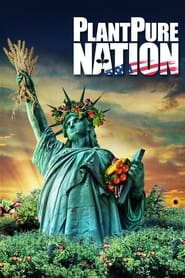
PlantPure Nation
2015
star 7.9Three people try to start a pilot program to document the health benefits of a plant-based diet.Secret of Water
2015
Secret of Water
2015
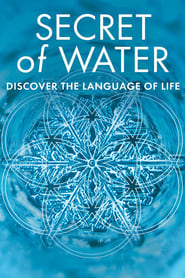
star 4.7Water – a living substance, the most common and least understood. It defies the basic laws of physics, yet holds the keys to life. Known to ancients as a transmitter to and from the higher realms, water retains memory and conveys information to DNA. However, water can die if treated poorly. Influences such as sound, thoughts, intention, as well as toxins such as chlorine, structure water’s molecular arrangement– affecting all it comes in contact with. Prominent scientists help reveal the secret of water, allowing us to use this amazing element to heal ourselves and our planet. The movie features Nassim Haramein, Patrick Flanagan, Dr. Masaru Emoto, Konstantin Korotkov, Lynne McTaggart, and Larry Dossey.Tell Spring Not to Come This Year
2015
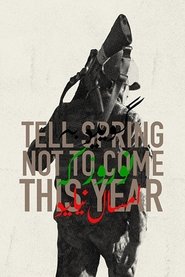
star 6.8When NATO troops withdrew from Afghanistan, the Afghan National Army (ANA) took over control of Helmand Province, an extremely dangerous region where attacks by Taliban fighters are the order of the day. Security, much less peace, would seem to be unattainable; it is even difficult to find a common language in a country where everyone mistrusts each other. The directors of this film accompanied an ANA company during a year of frontline duty in Helmand. The soldiers are paid irregularly, there are not enough supplies and their equipment is substandard. They cannot fight a war with the equipment left behind by the ISAF.Meet the Hitlers
2014
Meet the Hitlers
2014
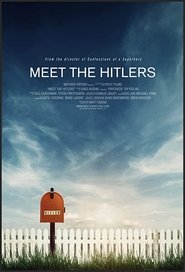
star 5.5What would it be like if your last name was Hitler? Director Matt Ogens seeks that answer by intimately portraying a diverse group of individuals with that same unfortunate name.Breaking a Monster
2015
Breaking a Monster
2015
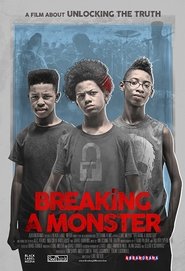
star 3.2As seventh-graders, band members of Unlocking The Truth spend their weekends playing metal music in Times Square—often to substantial crowds. After signing with a 70-year-old manager, they are soon on their way to a $1.8 million record deal.Station to Station
2014
Station to Station
2014
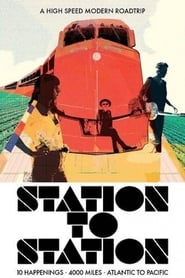
star 6.8Sending a burning arrow into the stunting effects that the compartmentalization of culture has on how creativity manifests, visual artist Doug Aitken embarked on an experiment exploring a less materialistic and more nomadic direction of art creation, exhibition, and participation. Station to Station involved a train that crossed North America housing a constantly changing creative community including artists, musicians, and curators, who collaborated in the creation of recordings, artworks, films, and 10 unique happenings, across the country.Return to the Wild: The Chris McCandless Story
2014
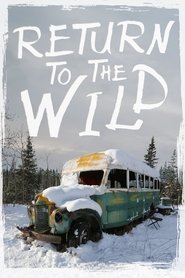
star 6.2Twenty years ago, a young American hiker named Chris McCandless, the accomplished son of successful middle class parents, was found dead in an abandoned bus in the Alaskan wilderness and became the subject of the best-selling book and movie “Into the Wild.” Now, PBS retraces Chris McCandless’ steps to try to piece together why he severed all ties with his past, burnt or gave away all his money, changed his name and headed into the Denali Wilderness. McCandless' own letters, released for the first time, as well as new and surprising interviews, probe the mystery that still lies at the heart of a story that has become part of the American literary canon and compels so many to this day.A Field Full of Secrets
2014
star 4.7Charles Maxwell makes his directorial debut with this documentary about crop-circles and the intelligence behind them.The Price We Pay
2014
The Price We Pay
2014
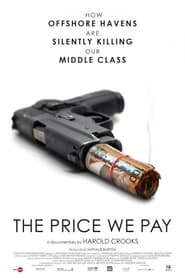
star 6.4A documentary on the history and present-day reality of big-business tax avoidance, which has seen multinationals depriving governments of trillions of dollars in tax revenues by harboring profits in offshore havens.Nixon by Nixon: In His Own Words
2014
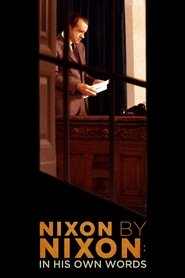
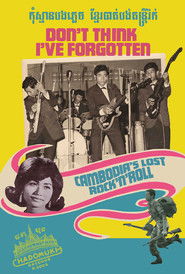
star 7.2From 1971 to 1973, Richard Nixon secretly recorded his private conversations in the White House. This film chronicles the content of those tapes, which include Nixon's conversations on the war in Vietnam, the Pentagon Papers leak, his Supreme Court appointments, and more--while also exposing shocking statements he made about women, people of color, Jews, and the media.Don't Think I've Forgotten: Cambodia's Lost Rock and Roll
2014
star 7.7Through the eyes, words and songs of its popular music stars of the 50s, 60s, and 70s, Don't Think I've Forgotten: Cambodia's Lost Rock and Roll examines and unravels Cambodia's tragic past, culminating in the genocidal Khmer Rouge's dismantling of the society and murder of 2,000,000 of its citizens.Serial Killer Culture
2014
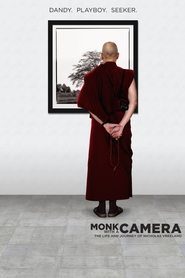
star 6.1Serial Killer Culture examines the reasons why artists and collectors are fascinated by serial killers.Monk with a Camera
2014
Monk with a Camera
2014
star 7.2Nicholas Vreeland walked away from a worldly life of privilege to become a Tibetan Buddhist monk. Grandson of legendary Vogue editor Diana Vreeland and apprentice of photographer Irving Penn, Nicholas' life changed drastically upon meeting one of the Dalai Lama's teachers. Soon thereafter, he gave up his glamorous life to live in a monastery in India, ultimately returning to his roots in photography to help his fellow monks rebuild their monastery.Town Bloody Hall
1979
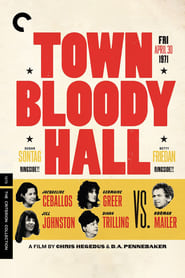
Town Bloody Hall
1979
star 5.3Norman Mailer and a panel of feminists — Jacqueline Ceballos, Germaine Greer, Jill Johnston, and Diana Trilling — debate the issue of Women's Liberation.Silvered Water
2014
Silvered Water
2014
star 6.6Shot by a reported “1,001 Syrians” according to the filmmakers, SILVERED WATER, SYRIA SELF-PORTRAIT impressionistically documents the destruction and atrocities of the civil war through a combination of eye-witness accounts shot on mobile phones and posted to the internet, and footage shot by Bedirxan during the siege of Homs. Bedirxan, an elementary school teacher in Homs, had contacted Mohammed online to ask him what he would film, if he was there. Mohammed, working in forced exile in Paris, is tormented by feelings of cowardice as he witnesses the horrors from afar, and the self-reflexive film also chronicles how he is haunted in his dreams by a Syrian boy once shot to death for snatching his camera on the street.