Top Rated Documentary Movies on Free Services - Page 290
All Services
Free Services
 Netflix
 Amazon Prime Video
 Apple iTunes
 Apple TV Plus
 Disney Plus
 Google Play Movies
 Paramount Plus
 Hulu
Hulu
 HBO Max
 YouTube
 fuboTV
 Peacock
 Peacock Premium
 Amazon Video
 The Roku Channel
 AMC+
AMC on Demand
AMC+
AMC on Demand
 Kocowa
 Hoopla
 The CW
 Vudu
Vudu
 Starz
Starz
 Showtime
 PBS
PBS
 Pantaflix
 FXNow
FXNow
 Tubi TV
 Kanopy
 Comedy Central
 Crunchyroll
 Microsoft Store
 Redbox
 Sun Nxt
 ABC
ABC
 DIRECTV
 Crackle
 Fandor
 Plex
Plex
Netflix
Amazon Prime Video
Apple iTunes
Apple TV Plus
Disney Plus
Google Play Movies
Paramount Plus
Hulu
HBO Max
YouTube
fuboTV
Peacock
Peacock Premium
Amazon Video
The Roku Channel
AMC+
AMC on Demand
Kocowa
Hoopla
The CW
Vudu
Starz
Showtime
PBS
Pantaflix
FXNow
Tubi TV
Kanopy
Comedy Central
Crunchyroll
Microsoft Store
Redbox
Sun Nxt
ABC
DIRECTV
Crackle
Fandor
Plex

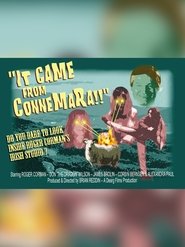
It Came From Connemara!
2014
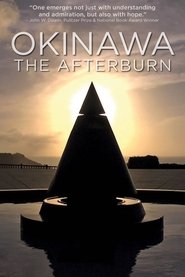
star 4.5The incongruous tale of when legendary Hollywood B-movie producer Roger Corman created a studio in Connemara, Ireland in the mid-1990s.Okinawa: The Afterburn
2015
star 1On April 1, 1945, the United States military launched its invasion of the main island of Okinawa, the start of a battle that was to last 12 weeks and claim the lives of some 240,000 people. This film depicts the Battle through the eyes of Japanese and American soldiers who fought each other on the same battlefield, along with Okinawa civilians who were swept up in the fighting. The film also depicts the history of discrimination and oppression forced upon Okinawa by the American and Japanese governments. Carrying up to the current controversy over the construction of a new base at Henoko, the film explores the root causes of the widespread disillusionment and anger expressed by many Okinawans. This ambitious documentary was directed by the American John Junkerman, long-term resident of Japan and Oscar-nominated documentary filmmaker. Okinawa: The Afterburn is a heartfelt plea for peace and an expression of deep respect for the unyielding spirit of the Okinawa people.The Missing Ingredient
2015
star 7Desperate to save his failing business, a Manhattan restaurateur ruffles more than a few feathers when he makes the controversial decision to put up the iconic zebra wallpaper made world famous by the now shuttered Upper East Side institution Gino's.Don't Look Down
2016
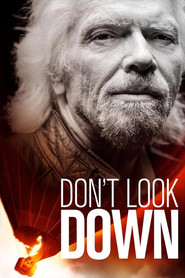
Don't Look Down
2016
star 6Don’t Look Down is the untold story behind Sir Richard Branson’s daring attempts to cross the Atlantic and Pacific in the mid 80s and early 90s in the world’s largest hot air balloon. Daniel Gordon captures the intensity and passion of the team that was involved in this ambitious project, as well as the first-hand account from Branson himself. Branson remembers details of his journey with remarkable sharpness and clarity. It’s as if the perilous adventure he embarks upon, with engineer, and Balloonist, Per Lindstrand, just occurred.Night School
2016
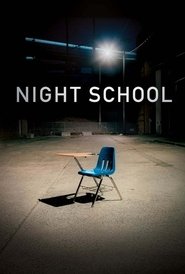
Night School
2016
star 7Indianapolis has one of the lowest high school graduation rates in the country. Night School follows three adult students living in the city’s more impoverished neighborhoods as they attempt to earn their diplomas while juggling other difficult responsibilities and realities. Through their stories, the filmmakers explore many issues that low-income Americans deal with, including unjust minimum wage and working conditions, arbitrary legal hindrances, and race and gender inequality.Puccini
1984
Puccini
1984
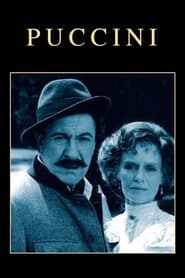
star 1In Torre del Lago, by Lake Massaciuccoli, Puccini is writing "The Girl of the Golden West" when his wife Elvira accuses him of a dalliance with their maid, Doria Manfredi, a young women from town. Although the maestro is frequently unfaithful, he denies the affair; Elvira insists she's right and publicly hounds Doria. Between scenes in this domestic drama that turns tragic, we watch a Scottish company rehearse and stage "Turandot," Puccini's last opera. The film finds parallels between the two stories and suggests that in the opera, Puccini expresses love for his wife and guilt in Doria's fate. Three local gentlemen provide a spoken chorus as Puccini's score plays throughout.Declaration of Independence
2003
star 10Famous actors and actresses read the Declaration of Independence of the United States.City of Trees
2015
City of Trees
2015
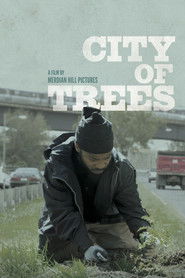
star 8During the Great Recession, joblessness exceeds 20 percent east of the Anacostia River in Washington, DC. City of Trees follows the intimate stories of Charles, Michael and James, three long-term unemployed residents struggling to gain employment through 'shovel ready' green projects. When stimulus dollars run out, short term idealism clashes with day-to-day survival in the struggle to find a sense of purpose and place in a recovering economy.Watchers 6: The Secret Cosmic War
2013
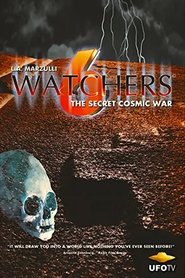
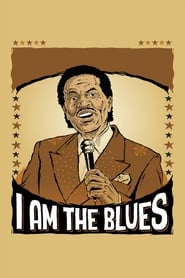
star 5Marzulli and his team travel to Peru to investigate giants and elongated skulls. Other subjects are also explored.I Am The Blues
2016
I Am The Blues
2016
star 6A musical journey through the swamps of the Louisiana Bayou, the juke joints of the Mississippi Delta and Moonshine soaked BBQs in the North Mississippi Hill Country. Visiting the last original blues devils, many in their 80's, still living in the deep south, working without management and touring the Chitlin' Circuit. Let Bobby Rush, Barbara Lynn, Henry Gray, Carol Fran, Lazy Lester, Bilbo Walker, RL Boyce, Jimmy 'Duck' Holmes, Lil Buck Sinegal, LC Ulmer and their friends awaken the blues in all of us.Straightlaced: How Gender's Got Us All Tied Up
2009
star 1A powerful documentary about the lives of teens and young adults as seen through the gender lens. Approaching society's ideas and ideals of gender through clothes, sexuality, sports, dance, safety, consumerism and emotion, the film addresses the complexities of conceptions of masculinity and femininity for Generation Z.Pyongyang Diaries
1998
Pyongyang Diaries
1998
star 1This documentary records Hoaas' personal encounter with the closed society of North Korea. As with her earlier work, Hoaas approaches her film as a cumulation of fragments encompassing different perspectives that together offer a point of entry into a complex society. Her diary-style narration signals her limited personal perspective into this culture, especially given the brief filming period and her difficulty in breaking through the facade of the showcase version of Korea insisted upon by her official guides. Hoaas' restricted visual access, and her reluctance to present over-familiar images of the hardship and depravation informed her decision to use this narrative device to frame her film within the context of the famine crisis that began in 1997 following the failure of crops caused by two consecutive years of heavy flooding.Starving the Beast: The Battle to Disrupt and Reform America’s Public Universities
2016
star 5This documentary examines the on-going power struggle on college campuses across the nation as political and market-oriented forces push to disrupt and reform America’s public universities. The film documents a philosophical shift that seeks to reframe public higher education as a ‘value proposition’ to be borne by the beneficiary of a college degree rather than as a ‘public good’ for society. Financial winners and losers emerge in a struggle poised to profoundly change public higher education. The film focuses on dramas playing out at the University of Wisconsin, University of Virginia, University of North Carolina, Louisiana State University, University of Texas and Texas A&M.Ninnoc
2015
Ninnoc
2015
star 6Why do you have to do what everyone else does and why does everyone have to look the same? Ninnoc struggles when she is in a group. She doesn't just want to adapt to the others, but she's also afraid of being excluded. Can you deviate in a group? Or will you then end up alone?Sabena Hijacking: My Version
2015
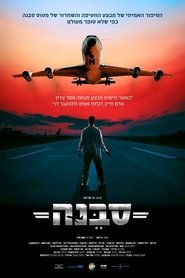
star 9.5The Palestinian terror group Black September had hijacked the craft and separated passengers into groups of Jews and non-Jews. They declared that they would blow up the plane if Israel did not release hundreds of Palestinians serving prison terms for charges of terrorism.Stray Dawg
2011
Stray Dawg
2011
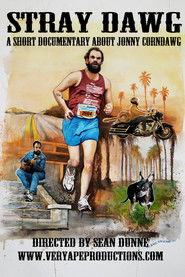
star 5Meet Jonny Corndawg, the underground country-music legend. A born-and-bred Virginian, Jonny has played on five continents in as many years, and every state in the lower 48. Now Jonny has given himself over, heart and heel, to the world of Running. Jonny let us follow him on a tour down the California coast as he braved injury and isolation on his quest to complete the Surf City USA Marathon in Huntington Beach, CA.UnSlut: A Documentary Film
2015
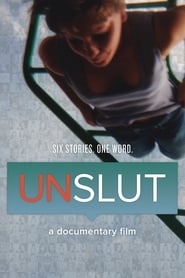
star 10In 2013, seventeen-year-old Rehtaeh Parsons took her own life. The Halifax teenager had been gang-raped a year and a half earlier by her classmates and labeled a "slut" as a result. Despite transferring schools many times, she could not escape constant cyber harassment and in-person bullying. Rehtaeh's is not the only story like this to make headlines in recent years. Why is the sexual shaming of girls and women, including sexual assault victims, still so prevalent in the United States and Canada?Over Ireland
1998
Over Ireland
1998
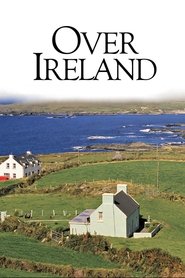
star 8.5Get rare views of Ireland in this unique video tour of the Emerald Isle featuring expert cinematography from an accomplished aerial production team and an original musical score. See the Cliffs of Moher, Dubline, Kilkenny Castle, Trinity College and more!Boatlift
2011
Boatlift
2011
star 8From the midst of 9/11, one of the darkest moments in American history, comes this inspiring and relatively unknown story. When the twin towers fell, hundreds of thousands of people ran to the water's edge. They soon realized that Manhattan is, indeed, an island. And that they were trapped. Within moments, an armada of every vessel that could get to the city's seawall spontaneously organized. Dashing into the teeth of danger, hundreds of boats pulled together and, without any formal planning, military or otherwise, they pulled off an ad-hoc sea evacuation that became the largest in history. Their story of courage and resolve reminds us of the powerful spirit that rose among us, on that fateful day. Narrated by Tom Hanks. Directed by Eddie Rosenstein.The Real Story of Christmas
2010
star 6.8Did you know that the quaint custom of Christmas caroling actually began with drunk and rowdy revelers threatening people door to door looking for food and liquor? Early versions of the heartwarming legend of Santa Claus described him as a horrible devil named Krampus who beat and kidnapped naughty children. In America during the 17th and 18th Centuries, celebrating Christmas was against the law! There's a lot to tell about the history of Christmas, and a lot you may not know. Along the way, meet Ebenezer Scrooge and George Bailey, The Grinch and Rudolph, and learn the true origins of our Christmas traditions. So grab some eggnog and a slice of fruitcake as HISTORY unwraps THE REAL STORY OF CHRISTMAS.