Top Rated Documentary Movies on Free Services - Page 404
All Services
Free Services
 Netflix
 Amazon Prime Video
 Apple iTunes
 Apple TV Plus
 Disney Plus
 Google Play Movies
 Paramount Plus
 Hulu
Hulu
 HBO Max
 YouTube
 fuboTV
 Peacock
 Peacock Premium
 Amazon Video
 The Roku Channel
 AMC+
AMC on Demand
AMC+
AMC on Demand
 Kocowa
 Hoopla
 The CW
 Vudu
Vudu
 Starz
Starz
 Showtime
 PBS
PBS
 Pantaflix
 FXNow
FXNow
 Tubi TV
 Kanopy
 Comedy Central
 Crunchyroll
 Microsoft Store
 Redbox
 Sun Nxt
 ABC
ABC
 DIRECTV
 Crackle
 Fandor
 Plex
Plex
Netflix
Amazon Prime Video
Apple iTunes
Apple TV Plus
Disney Plus
Google Play Movies
Paramount Plus
Hulu
HBO Max
YouTube
fuboTV
Peacock
Peacock Premium
Amazon Video
The Roku Channel
AMC+
AMC on Demand
Kocowa
Hoopla
The CW
Vudu
Starz
Showtime
PBS
Pantaflix
FXNow
Tubi TV
Kanopy
Comedy Central
Crunchyroll
Microsoft Store
Redbox
Sun Nxt
ABC
DIRECTV
Crackle
Fandor
Plex

Red Light Go
2005
Red Light Go
2005
star 8As if their day jobs weren't dangerous enough, the hardest of hard-core New York City bike messengers seek out even more thrills in their off time by organizing wild-and-wooly street races. This documentary follows a small group of these riders. The result is an intimate portrait of the madmen (and women) who risk life and limb in a series of harrowing races, culminating in the annual Halloween night Alleycat race through rush-hour traffic.The Animals Film
1981
The Animals Film
1981
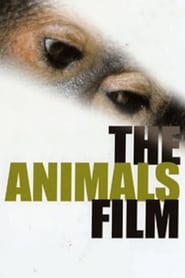
star 9The film offers a comprehensive examination of the exploitation of animals in modern society.Inside the Firestorm
2010
Inside the Firestorm
2010
star 0.5The story of Australia’s worst peacetime disaster On 7th February 2009, Australia suffered its worst peacetime disaster ‘Black Saturday’ claimed 173 lives, left more than 7,000 homeless and destroyed close to half a million hectares of Victorian bushlandBelzec
2005
Belzec
2005
star 8Although it was in full operation for less than one-year, Belzec was a very efficiently run Concentration Camp were over 600,000 Jews were slaughtered. As the Russian army was drawing closer and closer to the camp, the Nazi dismantled Belzec and eradicated virtually all the evidence that the camp ever existed. This documentary tells the story of Belzec and reminds the world "never forget".Rio Breaks
2009
Rio Breaks
2009
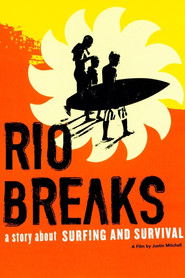
star 10RIO BREAKS is more than just a film about surfing. It follows the story of two best friends, Fabio and Naama, as they navigate their way between the pitfalls of life in the slums and the joys of surfing on their favorite beach. Their goal: to win the contest and become professional surfers. Thirteen-year-old Fabio and 12-year-old Naama live at Favela do Pavao, an enormous slum near Arpoador Beach, in Rio de Janeiro, Brazil. Pavao is home to Commando Vermelho (CV), or Red Command, one of Rio's most heavily armed drug gangs. It's the Red Command who sets the rules and regulates life in the community. Their presence is ubiquitous, with armed soldiers constantly patrolling the hills and regulating the various points of sale. Fabio lives in an area of the favela called Vietnam, the poorest and most violent part of the slum.Botero Born in Medellin
2008
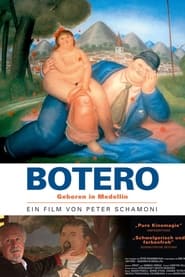
star 1To mark the artist Fernando Botero's 75th birthday, Peter Schamoni made a documentary film about his moving life. Fernando Botero is immediately recognizable by his colourful and exuberant works. Schamoni convinces us that, behind the cliché of the naïve, Fernando Botero is an artist who also devotes himself to serious and profound themes. Schamoni not only accompanies Botero to Tuscany, where he creates his sculptures, and to his Parisian painter's studio. The film also takes us on a journey to Colombia, where Schamoni lets the viewer take part in the world in which the artist lives and works, in the highs and lows of his life.Depeche Mode: The Dark Progression
2009
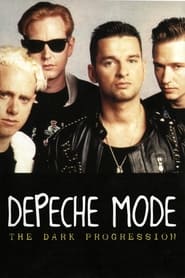
star 1Unauthorized by (and therefore completely independent from) Depeche Mode themselves or their record company, Depeche Mode: The Dark Progression is a new documentary following the development and career of popular electronic band Depeche Mode, from their interest in New Romanticism at the start of their career through the darkness and urban industrial themes that permeated their albums, to the departure of Alan Wilder in 1995 and more. Packed with interviews with all the band members, contributions from their friends, colleagues, and contemporaries , rare performances by Depeche Mode, archive footage, video clips, location shots, and news reports, Depeche Mode: The Dark Progression is a "must-have" for Depeche Mode fans. Some tracks are also included, such as "Just Can't Get Enough", "People Are People", "Stripped", "Never Let Me Down Again", "Strangelove", "Personal Jesus", "Enjoy the Silence", "Walking In My Shoes", "I Feel You", and more.Plunder: The Crime of Our Time
2009
star 6Plunder: The Crime of Our Time is a hard-hitting investigative film by Danny Schechter. The "News Dissector" explores how the financial crisis was built on a foundation of criminal activity uncovering the connection between the collapse of the housing market and the economic catastrophe that followed.Jesus in India
2008
Jesus in India
2008
star 7A seeker's quest across 4000 miles of India in search of answers about where Jesus was during the "Hidden Years" from ages 12 to 30.Monumental: David Brower's Fight for Wild America
2004
star 6From the moment David Brower first laid eyes on the beauty of the Yosemite Valley, he wanted to the fight to preserve the American wilderness for future generations. The story of a true American legend, Monumental documents the life of this outdoorsman, filmmaker and environmental crusader, whose fiery dedication and activism not only saved the Grand Canyon (among other accomplishments) but also transformed the Sierra Club into a powerful national political force, giving birth to the modern environmental movement. Seen through Brower's own eyes - he was an accomplished filmmaker, and his stunning footage is included here-- a 1956 raft trip down Glen Canyon, before its damming, evokes the awful sadness of losing public land we've failed to protect. And in period footage of Brower's early rock-climbs (done in sneakers, with hemp ropes) and of his training in the 10th Mountain Division (who defeated the Nazis in the high Alps).America Betrayed
2008
America Betrayed
2008
star 6Writer/director Leslie Carde finds her villain in the US Army Corps of Engineers, an agency whose primary aim is supposed to be that of protecting the nation's citizenry from potential disasters caused by the structural failure of dams, bridges, levees, buildings etc. Instead, the Corps, in cahoots with the many politicians and congressmen who work right along with it, has been found, over and over again, to be derelict in its duties - guilty of negligence, of employing harmful cost-cutting measures, of having misplaced priorities, of engaging in outright deception, and of brokering sweetheart deals with pet contractors. The movie is unsparing in its treatment of the Corps, and Carde clearly views it as her own personal mission to hold that organization accountable for the many acts of criminal malfeasance it has engaged in over the years.Pearl Harbor: A Day of Infamy
2004
star 4On the morning of December 7, 1941, a surprise attack by Japanese naval aviation against the American held island of Oahu and Pearl Harbor thrust the United States into World War II. This story details one of the most momentous events in American history and a crucial turning point in the 20th century. Most importantly, it is a story of the people who were there, told through eyewitness accounts of American and Japanese veterans, some of whose stories have never been told. This is a story of perseverance and heroism in the face of overwhelming odds. This is the story of Pearl Harbor.Sputnik Mania
2007
Sputnik Mania
2007
star 7Fifty years ago, at the height of the Cold War, the USSR launched Sputnik, the first satellite to orbit the earth, bringing America to its knees in awe - then fear. Initially thrilling as a marvel of science, Sputnik was soon viewed by America a weapon of mass destruction.Jimi Hendrix: The Last 24 Hours
2004
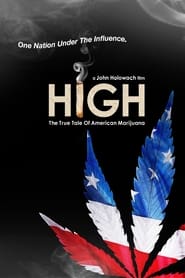
star 8In this documentary film, the final day in the short life of the guitar god Jimi Hendrix is reconstructed using theories swirling around a CIA hit list, Mafia debt, and police surveillance.High: The True Tale of American Marijuana
2008
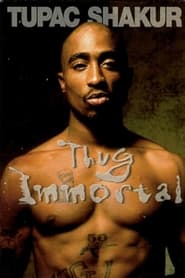
star 6Beyond the hysteria of Reefer Madness and past the deceptive lessons of "Just Say No", HIGH exposes the true story of America's war on drugs. Using government statistics, expert interviews and a large dose of humor, HIGH takes a fresh look at this hot but relevant topic.Tupac Shakur: Thug Immortal
1997
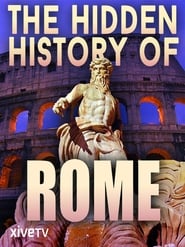
star 2THUG IMMORTAL is an intimate look at Tupac's life told through never-before-seen footage and interviews with his close friends, revealing an artist who grew up a thug, but one who soon tired of that lifestyle and its trappings, revealing a Tupac far different from the one most of America knows.The Hidden History of Rome
2002
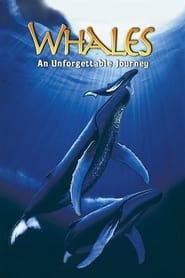
star 5Rome was famed for the decadence of its ruling class, however, what about the ordinary citizens of these ancient cultures? How did they lead their day to day lives in an age when the average life expectancy was little more than forty? Did they believe in the Pagan Gods? What were their sex lives like? What did they do for entertainment? How ordinary Romans lived is, for the most part ...Whales: An Unforgettable Journey
1997
star 6Scientists visit the remote surface and undersea locations to study various species of whales in their natural habitat.Sergio Dondoli's Happy Life
2025
The boundless joy and unabashed passion of master gelato-maker Sergio Dondoli take center stage in this exuberant tribute to the delights of food, creativity, and a life well-lived. 'Sergio Dondoli's Happy Life' chronicles the rise of Dondoli and his world-famed Tuscan gelateria. What emerges is a portrait of a man who started from the humblest beginnings yet found a way to cultivate sweetness in all its forms through his life's work.