Top Rated Documentary Movies on Free Services - Page 458
All Services
Free Services
 Netflix
 Amazon Prime Video
 Apple iTunes
 Apple TV Plus
 Disney Plus
 Google Play Movies
 Paramount Plus
 Hulu
Hulu
 HBO Max
 YouTube
 fuboTV
 Peacock
 Peacock Premium
 Amazon Video
 The Roku Channel
 AMC+
AMC on Demand
AMC+
AMC on Demand
 Kocowa
 Hoopla
 The CW
 Vudu
Vudu
 Starz
Starz
 Showtime
 PBS
PBS
 Pantaflix
 FXNow
FXNow
 Tubi TV
 Kanopy
 Comedy Central
 Crunchyroll
 Microsoft Store
 Redbox
 Sun Nxt
 ABC
ABC
 DIRECTV
 Crackle
 Fandor
 Plex
Plex
Netflix
Amazon Prime Video
Apple iTunes
Apple TV Plus
Disney Plus
Google Play Movies
Paramount Plus
Hulu
HBO Max
YouTube
fuboTV
Peacock
Peacock Premium
Amazon Video
The Roku Channel
AMC+
AMC on Demand
Kocowa
Hoopla
The CW
Vudu
Starz
Showtime
PBS
Pantaflix
FXNow
Tubi TV
Kanopy
Comedy Central
Crunchyroll
Microsoft Store
Redbox
Sun Nxt
ABC
DIRECTV
Crackle
Fandor
Plex

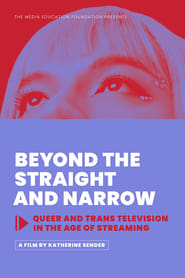
Beyond the Straight and Narrow
2023
How did the rise of LGBTQ visibility, political progress, and digital technologies in the 2000s come together to offer the abundance of complex queer and transgender representations we see today? Media scholar Katherine Sender shows how LGBTQ visibility and political progress have combined with new digital media technologies and television platforms to produce an increasingly complex range of queer and transgender representations.To Be Destroyed
2024
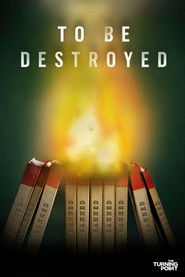
To Be Destroyed
2024
A 30-minute documentary on book banning and censorship that follows author Dave Eggers as he investigates why a Rapid City, SD school board wanted to ban his book.Dirt in the Diamond
2023
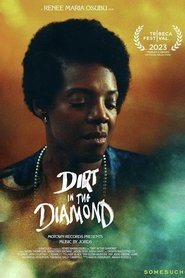
Dirt in the Diamond
2023
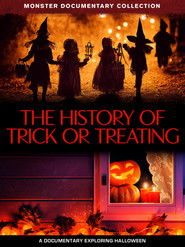
Set in 1970's London, Dirt in the Diamond explores the duality of grief and celebration within the mourning period of Jamaican culture.The History Of Trick Or Treating
2023
Trick-or-treating is a traditional Halloween custom for children and adults in many countries around the world. This documentary explores Halloween with The History Of Trick Or Treating.Mythical Monsters
2023
Mythical Monsters
2023
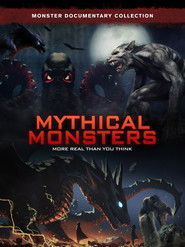
The kraken, griffins, dragons, and even the chupacabra... Are they real? Or merely the product of legends and folklore? Follow us as we delve deep into the facts in this terrifying journey with Mythical Monsters.Immortals
2024
Immortals
2024
Immortals is an experimental documentary short film shot in 8mm that explores the introspection of an artist, Bettina Szabo. The film delves into her relationship with her sense of belonging, her body, her imagination, and nature. Sometimes one must lose oneself to find oneself better, and burn everything down to start anew on a solid foundation.theEYE: William Turnbull
2005
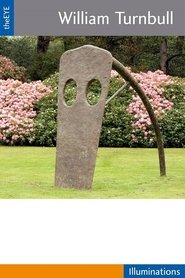
William Turnbull is one of Britain’s most distinguished sculptors and painters. In the late 1940s he studied art in London and then spent time in Paris, and ever since he has rigorously explored a limited number of archetypal forms as well as the fundamentals of art’s languages. Over more than fifty years William Turnbull has returned again and again to the head and the mask, to the standing figure and the horse, as well as to possibilities of pared-down, often monochromatic painting. His simple objects, which draw on both primitive and classical ideas, often combine presence and poetry in unique ways.theEYE: Vong Phaophanit
2006
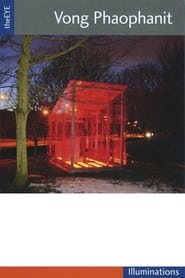
Vong Phaophanit showed his strikingly seductive Neon Rice Field when he was nominated for the Turner Prize in 1993. Like much of his rich and complex work since then, this installation exhibits a strong interest in language and light, in the painterly qualities of ephemeral materials and in ideas of cultural displacement. He was born in Laos, educated in France and has worked mostly in Britain since the early 1990s. Much of his work now is commissioned for architectural and environmental settings, including Outhouse in Liverpool. Created like many of his large-scale sculptures with fellow artist Claire Oboussier, this is a transparent glass house (with opaque windows) which serves as a flexible social space for the people who live in the surrounding tower blocks.theEYE: Stuart Brisley
2006
Stuart Brisley is perhaps best-known for his disturbing physical performances which pushed his body to extremes. But his work as an artist over four decades has embraced sculpture and installation, films and fictions, large-scale participatory projects and, most recently, the Web. Illustrated with archive footage and photographs, this profile of the artist explores his understandings of collaboration and community, of politics and the market, of humour and failure. At the centre of his diverse work are the essential qualities of what it means to be human.Space Masons And The Alien Conspiracy
2023
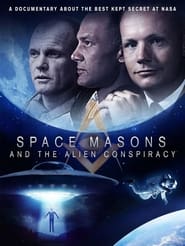
Buzz Aldrin, the second human to ever set foot on the moon, is not only an accomplished astronaut and engineer but also a member of the Freemasons, a centuries-old secret society that has been influencing the world's most powerful figures for centuries. In this episode of 'Freemasons,' we delve into the life and legacy of Buzz Aldrin, exploring his ties to the Masonic brotherhood and their influence on his life and career as an astronaut, particularly during his historic moon landing. Join us as we explore the fascinating world of Buzz Aldrin and the Masonic brotherhood, uncovering the hidden history that has been influencing the course of the world for centuries.Avatars Of The Astral Worlds: Transformation
2023
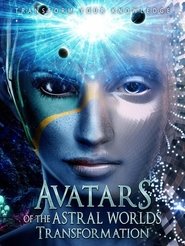
This documentary explores the idea of transformation and how different cultures have interpreted the concept throughout time. Take a look into something truly transformational in Avatars Of The Astral Worlds: Transformation.Cold Refuge
2023
Cold Refuge
2023
Cold Refuge is about the physical, psychological, and spiritual aspects of full immersion in the natural world: how, though it may seem counter-intuitive, swimming in cold water helps mitigate some of life’s most serious challenges. The film’s diverse film subjects include a wheelchair-bound, paralyzed swimmer who faces fear by diving off a high pier; a Black man who was told by whites when he was 13 that “Black people don’t swim” (it took him 30 years to try); a blind man who tethers himself to a sighted swimmer; a woman with aggressive breast cancer who “swims to chemo;” a lawyer who reduces courtroom stress in the open water; and a young woman who communes with her late mother in San Francisco Bay, where they both swam together. Along with swimmers’ stories of adversity and resilience, the film’s marine mammals, birds, artwork, and a variety of open-water locations create a visual meditation on what it means to escape our abstract digital world in favor of whMI6 Invisible Missions
2023
This documentary explores the history of MI6, the famous British intelligence agency made popular by the 007 franchise. Get ready for the impossible to become possible in MI6 Invisible Missions.theEYE: Karl Weschke
2006
theEYE: Karl Weschke
2006
Karl Weschke‘s impressive, complex paintings picture the human figure and the landscape, the everyday and the mythical. His subjects include dogs and drowned bodies, creatures from legends and, increasingly in recent years, the monumental ruins of ancient Egypt. For more than fifty years, he has explored the possibilities of painting and its relevance to an uncertain world. Produced alongside a retrospective at Tate St Ives, with additional paintings from British collections, this film profiles the artist in the Cornwall that has been his home since 1955. Filmed in and around his studio and in the coastal landscape that informs all of his work, Weschke speaks engagingly about his rich, remarkable life and about many of his most significant canvases. Like his work, the painter is serious, intense, spare – and yet also with an appealing streak of mischief.theEYE: Liliane Lijn
2005
theEYE: Liliane Lijn
2005
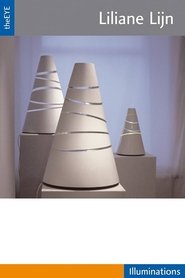
Science and Surrealism, ancient myths, Buddhism and feminism are among the frameworks of ideas important to Liliane Lijn’s art. In Paris at the end of the 1950s, in Greece and New York, and in England since 1966, she has worked with light, energy and movement, with archetypal shapes and unconventional materials to produce an art that is clear, complex and strikingly beautiful. Many of Liliane Lijn’s key drawings and sculptures are featured in this profile, which was filmed alongside an important reassessment of her work at the Mead Gallery. The Poem Machines and Koans of the 1960s and 1970s are considered as well as the ambitious “goddess” figures of more recent years.theEYE: Lisa Milroy
2006
theEYE: Lisa Milroy
2006
Lisa Milroy’s paintings are pleasurable and provocative, clear but complex, immediate and yet richly subtle. In 2001 many of her major works were brought together for an important exhibition at Tate Liverpool; this film, the first about her work, was made alongside that show. Her earliest works are depictions of everyday objects: shoes in serried ranks, collections of lightbulbs and household hardware. Later canvases explore the process of depicting images of people, blank facades of buildings, clichés of photographic landscapes. More recent work is looser and less apparently realist.theEYE: Joe Tilson
2006
theEYE: Joe Tilson
2006
Since the 1960s, when he was associated with British Pop Art, Joe Tilson has enjoyed international acclaim for the individuality and originality of his paintings, constructions, prints and multiples. All of his playful, engaging work is informed with ideas from literature, philosophy, ethnography and alchemy. Tilson’s early work focussed on mass-market consumerism and politics. But he was soon disenchanted with mechanical methods of production and his art in the 1970s and 1980s employed hand-worked wood and metal in intriguing ways. Shot in and around the artist’s studio in Cortona, Italy, this film was produced alongside Joe Tilson’s first British retrospective at London’s Royal Academy of Arts.theEYE: Gereon Krebber
2006
Gereon Krebber’s proposal for a monumental and expensive aluminium object called Tin won the 2003 Jerwood Sculpture Prize. Shot over more than a year, this film follows the creation, casting and placing of the final sculpture. Sitting in the elegant country house garden at Ragley Hall, Tin suggests a kitchen container or a hamburger and yet is at the same time defiantly abstract. Krebber is a young sculptor from Germany who studied at the Royal College of Art and now works in London. The surprising range of his work, and the processes which create it, are revealed here as he talks engagingly about how to create “seriously flippant” objects. His art, made with diverse materials including balloons and Cling Film as well as traditional media, has a unique deadpan humour. Its effect, the artist hopes, is to make you ”smile and shiver at the same time”.theEYE: Ian Hamilton Finlay
2005
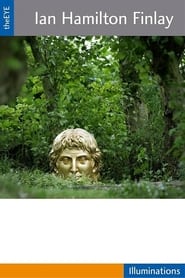
From previously barren moorland in the Pentland Hills near Edinburgh, Ian Hamilton Finlay has created a unique garden as an encompassing work of art. Little Sparta is a magical combination of culture and horticulture, poetry and planting, philosophy and myth. Ian Hamilton Finlay began his work at Little Sparta in the mid-1960s. With friends and collaborators, around a group of old farm buildings he has fashioned landscapes, streams, bridges, glades, lanes, bowers and more. Everywhere there are inscriptions and sculptures reflecting the artist’s preoccupations: the Enlightenment and the French Revolution, pre-Socratic philosophy, garden history, World War Two, the sea and fishing fleets, time and mortality.theEYE: Dalziel + Scullion
2006
Artists Dalziel + Scullion have worked together since 1993, based in the remote north east of Scotland. Using photography, video, sculpture, sound and installation, they have created a collection of work that is recognised for its distinctive vision and sensitivity to its context and the environment. They are well known for their site-specific works, which include important public commissions, such as Horn, the giant stainless steel sculpture sited on the M8 motorway, which intermittently broadcasts poetry, music and voices at passing cars. They reflect on how these works illustrate the contradiction between the strange hybrid of wilderness and the high-tech, man-made industrial installations found in the remote landscapes of Scotland. The point at which nature and culture intersect is a continuing theme throughout their work, despite a more recent shift in geographical focus.