Top Rated History Movies on Free Services - Page 47
All Services
Free Services
 Netflix
 Amazon Prime Video
 Apple iTunes
 Apple TV Plus
 Disney Plus
 Google Play Movies
 Paramount Plus
 Hulu
Hulu
 HBO Max
 YouTube
 fuboTV
 Peacock
 Peacock Premium
 Amazon Video
 The Roku Channel
 AMC+
AMC on Demand
AMC+
AMC on Demand
 Kocowa
 Hoopla
 The CW
 Vudu
Vudu
 Starz
Starz
 Showtime
 PBS
PBS
 Pantaflix
 FXNow
FXNow
 Tubi TV
 Kanopy
 Comedy Central
 Crunchyroll
 Microsoft Store
 Redbox
 Sun Nxt
 ABC
ABC
 DIRECTV
 Crackle
 Fandor
 Plex
Plex
Netflix
Amazon Prime Video
Apple iTunes
Apple TV Plus
Disney Plus
Google Play Movies
Paramount Plus
Hulu
HBO Max
YouTube
fuboTV
Peacock
Peacock Premium
Amazon Video
The Roku Channel
AMC+
AMC on Demand
Kocowa
Hoopla
The CW
Vudu
Starz
Showtime
PBS
Pantaflix
FXNow
Tubi TV
Kanopy
Comedy Central
Crunchyroll
Microsoft Store
Redbox
Sun Nxt
ABC
DIRECTV
Crackle
Fandor
Plex

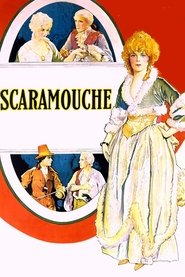
Scaramouche
1923
Scaramouche
1923
star 7.2A law student becomes an outlaw French revolutionary when he decides to avenge the unjust killing of his friend. To get close to the aristocrat who has killed his friend, the student adopts the identity of Scaramouche the clown.Ferdinando and Carolina
1999
star 6.1On his death bed in the 1820s, King Ferdinando I of Naples tries to escape the ghosts of his bloody kingship by remembering his younger days, when he was allowed to go hunting and have fun, and inventing love games. Then he was obliged to marry Mary Caroline of Austria, daughter of Empress Mary Theresa, in a political marriage: unexpectedly, they became happy lovers, until court power games divided them, and a different historical season arrived.The Edelweiss Pirates
2004
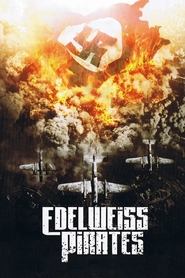
star 5.2Cologne towards the end of the Second World War. The city is in ruins, everyone is afraid, many are dead. It is a time of great inhumanity. Cologne’s young Edelweiss Pirates refuse to submit to the pressure of the Nazi regime. They fight with the Hitler Youth and scrawl anti-war propaganda on walls. Karl is an Edelweiss Pirate; his younger brother, Peter, is in the Hitler Youth movement. The two young men have been alone ever since their mother’s death in a bombing raid; their father is serving at the front, and their older brother, Otto, has been killed in action. Otto’s financée, Cilly, is doing her best to survive the war with her children. Carl is trying to help her.The Passion of Ayn Rand
1999
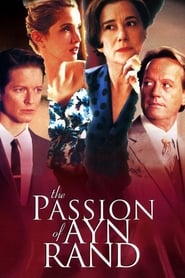
star 4.9Author Ayn Rand becomes involved with a much younger and married man, to the dismay of those close to her.The Mute Man of Sardinia
2022
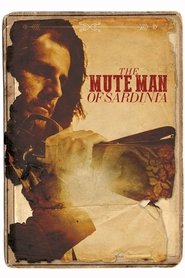
star 5.3Gallura, the mid-1800s. The feud between the Vasa and Mamia families – historically documented – is causing bloodshed in the region. Bastiano Tansu, a deaf-mute since birth, is one of its protagonists. Mistreated and marginalized since his childhood, after his brother Michele was murdered he joined forces with one of the two leaders of the factions, Pietro Vasa, and put at his service his fury and his amazing aim, becoming a highly feared assassin. The State and the Church try to stem the wave of terror and only after more than 70 deaths, the peace of Aggius arrives. At first, Bastiano finds peace in his love for a pastor's daughter, but in a violent and superstitious world that already labeled him the devil's son when he was just a boy, someone like him cannot be found innocent. Thus, he chooses to confront his own destiny.Hua Mulan
2020
The Day We Died
2020
The Day We Died
2020
star 5.5Film about the events surrounding the terrorist attacks in Copenhagen on February 14th and 15th 2015.Greyhound Attack
2019
Greyhound Attack
2019
star 4.9WWII drama from film-maker Christopher Forbes which follows American fighter pilots on a perilous mission into the skies of enemy territory.Adriana's Pact
2017
Adriana's Pact
2017
star 7.4Lissette's favorite aunt Adriana, who lives in Australia, is arrested in 2007 while visiting her family in Chile and accused of having worked for dictator Pinochet's notorious secret police, the DINA, and of having participated in the commission of state crimes. When Adriana denies these accusations, Lissette begins to investigate her story in order to film a documentary about her.The Bomb
2015
The Bomb
2015
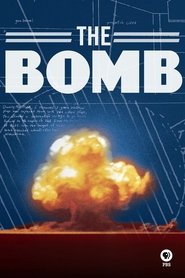
star 6.8Using masterfully restored footage from recently declassified images, The Bomb tells a powerful story of the most destructive invention in human history. From the earliest testing stages to its use as the ultimate chess piece in global politics, the program outlines how America developed the bomb, how it changed the world and how it continues to loom large in our lives. The show also includes interviews with prominent historians and government insiders, along with men and women who helped build the weapon piece by piece.Anomaly
2014
Anomaly
2014
star 6.6Set in the late 60's, broken relationships and an astronomical event intertwine the various narrative threads - an abstract interpretation of the historical Christmas narrative.Angels of Revolution
2014
Angels of Revolution
2014
star 5.8Five friends – a poet, an actor, a painter, an architect and a primitivist film director – are five red avant-garde artists who try to find the embodiment of their hopes and dreams in the young Soviet state. The Revolution is boiling up like a bottle with apple cider: winged service dogs and heart-shaped potatoes, dead Semashko, the People’s Commissar for Health, and cheerful angels, love for the Tsar and love for the young secretary Annushka, executions and pregnancies – everything is interlaced and inseparable!Castles in the Sky
2014
Castles in the Sky
2014
star 5.8England, while the storm clouds of Nazism menace Germany. Robert Watson Watt and a team of eccentric and brilliant meteorologists struggle to turn the mere idea of radar into a functional reality.1971
2014
1971
2014
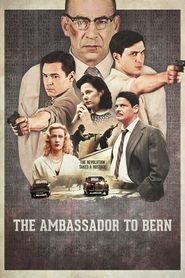
star 6.7Forty years before WikiLeaks and the NSA scandal, there was Media, Pennsylvania. In 1971, eight activists plotted an intricate break-in to the local FBI offices to leak stolen documents and expose the illegal surveillance of ordinary Americans in an era of anti-war activism. In this riveting heist story, the perpetrators reveal themselves for the first time, reflecting on their actions and raising broader questions surrounding security leaks in activism today.The Ambassador to Bern
2014
star 6.8A fictional account of the 1958 attack against the Hungarian embassy in Bern. Based on a true story about the aftermath of the 1956 Hungarian revolution.Prisoner of Honor
1991
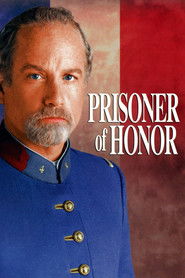
Prisoner of Honor
1991
star 6.2France, 1897. Colonel Georges Picquart challenges the French government when he discovers the obscure political maneuvers that led to the imprisonment of the Jewish Captain Alfred Dreyfus after being convicted of espionage in 1894.Quilombo
1984
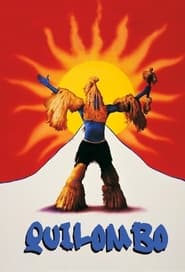
Quilombo
1984
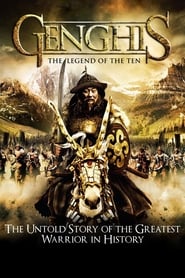
star 6.9Quilombo dos Palmares was a real-life democratic society, created in Brazil in the 17th century. This incredibly elaborate (and surprisingly little-known) film traces the origins of Quilombo, which began as a community of freed slaves. The colony becomes a safe harbor for other outcasts of the world, including Indians and Jews. Ganga Zumba (Toni Tornado) becomes president of Quilombo, the first freely elected leader in the Western Hemisphere. Naturally, the ruling Portuguese want to subjugate Zumba and his followers, but the Quilombians are ready for their would-be oppressors. The end of this Brave New World is not pleasant, but the followers of Zumba and his ideals take to the hills, where they honor his memory to this day. Writer/director Carlos Diegues takes every available opportunity to compare the rise and fall of Quilombo with the state of affairs in modern-day Brazil.Genghis: The Legend of the Ten
2012
star 5.4A little known fact is that Chinggis Khaan, better known as Genghis Khan, would collect orphans from his bloody battlefields and have his own mother raise them. These adopted brothers grew up to become his most loyal officials and advisers. Khaan organised his Mongol soldiers into groups according to the decimal system. Soldiers were arranged in units of 10 ("aravt"), 100 ("zuut"), 1,000 ("minghan") and 10,000 ("tumen"). Each unit had an appointed leader reporting to a larger unit. A 10-person "aravt" unit is ordered by Khaan to locate a skilled doctor who lives in a forest. En route, they discover an abandoned baby. He is in fact the child of an enemy warrior who gives pursuit, even though they have saved the child's life. Whilst protecting the child from attacks from enemy soldiers, the members of the "aravt" must also complete their mission. Through their actions, they demonstrate the benevolence and bravery of Mongol warriors as the final battle closes in.The Statue of Liberty
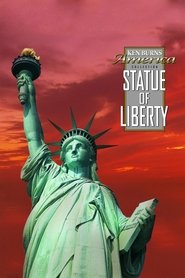
1985
star 6.7For more than 100 years, the Statue of Liberty has been a symbol of hope and refuge for generations of immigrants. In this lyrical, compelling and provocative portrait of the statue, Ken Burns explores both the history of America’s premier symbol and the meaning of liberty itself. Featuring rare archival photographs, paintings and drawings, readings from actual diaries, letters and newspapers of the day, the fascinating story of this universally admired monument is told. In interviews with Americans from all walks of life, including former New York governor Mario Cuomo, the late congresswoman Barbara Jordan and the late writers James Baldwin and Jerzy Kosinski, The Statue of Liberty examines the nature of liberty and the significance of the statue to American life. Nominated for both the Academy Award ® and the Emmy Award ®, The Statue of Liberty received the prestigious CINE Golden Eagle, the Christopher Award and the Blue Ribbon at the American Film Festival.Operation Amsterdam
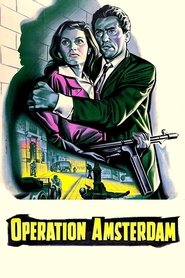
1959
Operation Amsterdam
1959
star 5.8When Germany invades Holland in 1940, a British intelligence officer and two Dutch diamond merchants go to Amsterdam to persuade the Dutch diamond merchants to evacuate their diamond supplies to England.