Top Rated Documentary Movies on Kanopy - Page 255
All Services
Free Services
 Netflix
 Amazon Prime Video
 Apple iTunes
 Apple TV Plus
 Disney Plus
 Google Play Movies
 Paramount Plus
 Hulu
Hulu
 HBO Max
 YouTube
 fuboTV
 Peacock
 Peacock Premium
 Amazon Video
 The Roku Channel
 AMC+
AMC on Demand
AMC+
AMC on Demand
 Kocowa
 Hoopla
 The CW
 Vudu
Vudu
 Starz
Starz
 Showtime
 PBS
PBS
 Pantaflix
 FXNow
FXNow
 Tubi TV
 Kanopy
 Comedy Central
 Crunchyroll
 Microsoft Store
 Redbox
 Sun Nxt
 ABC
ABC
 DIRECTV
 Crackle
 Fandor
 Plex
Plex
Netflix
Amazon Prime Video
Apple iTunes
Apple TV Plus
Disney Plus
Google Play Movies
Paramount Plus
Hulu
HBO Max
YouTube
fuboTV
Peacock
Peacock Premium
Amazon Video
The Roku Channel
AMC+
AMC on Demand
Kocowa
Hoopla
The CW
Vudu
Starz
Showtime
PBS
Pantaflix
FXNow
Tubi TV
Kanopy
Comedy Central
Crunchyroll
Microsoft Store
Redbox
Sun Nxt
ABC
DIRECTV
Crackle
Fandor
Plex

Intervention 2 Years On
2010
This impassioned documentary was rejected for broadcast by ABC TV as "biased" and lacking "balance". John Howard introduced the Intervention legislation in July 2007. Two years later, an official United Nations rapporteur on human rights, Professor James Anaya, described the policy as an "extraordinary measure which infringes on the rights and determinations of Indigenous People". In this film, two Aboriginal spokespersons - Barbara Shaw from the Mount Nancy Town Camp, Alice Springs, and Richard Downs from the Alyawarr Nation - give their views on the effect of the legislation over its first two years of operation. Their stories are accompanied by archival footage and news broadcasts of key moments in the history of the Intervention. Richard Downs speaks especially of the shame and humiliation that came with Howard's unsupported allegations of child abuse in Aboriginal communities, and of the disillusionment that came with the Rudd government's continuation of Howard's policies.Making A Bark Canoe
1969
Making A Bark Canoe
1969
An ethnographic documentary directed by Roger Sandall, recording the construction of a bark canoe by two Aboriginal men, Djurkuwidi and Wangamaru, on the north coast of Arnhem Land. Filmed in the coastal swamps of Buckingham Bay near the end of the wet season, the film follows the process from the selection and stripping of a stringybark gum tree through to the completed canoe in use for hunting magpie geese and collecting eggs. Sandall’s narration explains the techniques involved and notes changes from earlier practices.Tnorala - Baby Falling
2007
Tnorala is the Aboriginal name for Gosse's Bluff, a dramatic meteorite impact crater set in a vast plain 175km west of Alice Springs. This significant dreaming site for Western Arrernte people is steeped in mystery and tragedy. The story of its creation and the events that occurred there are narrated to the camera by Aunty Mavis Malbunka, one of the traditional story-tellers for the place.After Antarctica
2021
After Antarctica
2021
In a dramatic attempt to bring attention to climate change, an international expedition led by renowned explorer Will Steger embarked on the first-ever coast-to-coast expedition across Antarctica in 1989. Six men and their sled dogs braved howling storms, sub-zero temperatures, snow crevasses, and other perils as they traversed the icy terrain. Tasha Van Zandt’s enthralling feature debut catches up with Steger 30 years later as he revisits the frigid continent, deftly weaving his contemporary journey with rare, dynamic footage of his original, treacherous seven-month odyssey.Feeling Wanted
2015
Feeling Wanted
2015
With a dad incarcerated for murder, a mom on drugs and a childhood in foster care, Charell knew it was time to break the cycle.Dukas Dilemma
2002
Dukas Dilemma
2002
porridge pulleys and Pi: two mathematical journeys
2004
A portrait of two very different mathematicians, porridge pulleys and Pi features Fields medalist Vaughan Jones, one of the world's foremost knot theorists and an avid windsurfer, and Hendrik lenstra, a number theorist with a passion for Homer and all things classical. Porridge pulleys and Pi poses the question: how do we get first-rate research mathematicians? Hendrik lenstra and Vaughan Jones have had an extraordinary impact on mathematics; this charming documentary gives the viewer a taste of their personalities, mathematical and otherwise. A whirlwind tour of knots, geonomics, cryptography, music, Homer, elliptic curves, art, and windsurfing, the video contains sections on the history of Pi, and a suprising discovery involving a cocoa tin and an Escher print.The Thursday Club
2005
The Thursday Club
2005
In October 1967, documentary filmmaker George Paul Csicsery was beaten by police at an antiwar demonstration in Oakland, California. Thirty years later, he set out to find the policemen who were working that day. His only clue-a startling news photograph of himself begin clubbed by stern-faced cops. Take a trip back to America's turbulent 1960s as Csicsery visits a group of retired Oakland, California, policemen, who recall their days battling antiwar demonstrators and Black Panthers.Art of the Japanese Sword
2010
The Japanese sword ... prized as much for its exceptional beauty as for it's deadly cutting ability. It has endured for a thousand years as the pinnacle of Japanese culture. Now you can enter a world rarely seen by outsiders. To experience the true story of the Art of the Samurai Sword. A story told in the swordsmiths own words that separate the myth from the fact. Follow the swordsmiths dream of creating a masterpiece. From the quest to making an ancient steel to forging a blade equal to those of the Kamakura, a medieval period that produced the greatest swords in history.The Faithful: The King, The Pope, The Princess
2021
A lollipop officially licensed by the Vatican sparks filmmaker Annie Berman's 20-year exploration of fandom, memorabilia, and legacy within the orbits of three cultural icons: Pope John Paul II, Elvis Presley, and Diana, Princess of Wales.World's Fair Waffle
2013
World's Fair Waffle
2013
In 1964, Mariepaul Vermersch and her parents, Maurice and Rose, arrived at the World's Fair site in Queens and set up a booth serving the popular street food from their home in Brussels, Belgium's capital. They wanted to call them Brussels Waffles, but Rose discovered that Americans didn't know where Brussels was. They began calling them Bel-Gems or Belgian Waffles. They were unlike almost every other waffle served in the United States until then: These were light and fluffy but thick; crispy on the outside and sweet; topped with powdered sugar and/or whipped cream and fresh strawberries. For 55 years, only one place in the United States still serves "authentic" Belgian waffles exactly as that treat, Maurice's Belgian Waffles at the New York State Fair.Speaking of Abstraction: A Universal Language
1999
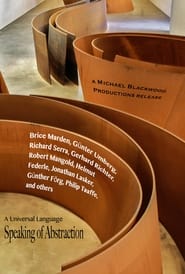
At the beginning of the twenty-first century, abstraction - that most quintessentially modernist innovation - maintains a peculiarly contradictory position. Used, on one hand, by post-modernist artists as just one more quotable style amongst many, it is on the other hand still considered an elitist or hermetic language by audiences intimidated by its lack of recognizable subject matter. Yet ultimately, abstraction continues to be a viable creative path for contemporary artists of all generations, many of whom embrace it as the most inclusive and fundamentally resonant of artistic languages. Filmed at the artists' studios, the Dia Center for the Arts, and the Guggenheim Museum during their exhibition, "Abstraction in the Twentieth Century."Waking Dream
2018
Waking Dream
2018
DACA (Deferred Action for Childhood Arrivals) has provided nearly 800,000 undocumented young people a chance to work legally, go to college, start businesses, and pursue the “American Dream.” After DACA is rescinded, Waking Dream follows the unfolding fate of six of these young people as they fight for legal status in the U.S., struggle with the deportation of family members, and pursue their dreams in a country that is trying harder and harder to push them out. They know their fate must go one direction and they are fighting for their future in America.Fruits of Labor
2021
Fruits of Labor
2021
A Mexican-American teenage farmworker dreams of graduating high school, when ICE raids in her community threaten to separate her family and force her to become her family’s breadwinner.Shipping Home
2016
Shipping Home
2016
Shipping Home follows the year-long construction of Asheville, North Carolina’s first shipping container residence. But this is no HGTV fairytale – Ryan and Brook must balance life and parenthood with their aspirations of a sustainable dream houseUncle Chatzkel
2000
Uncle Chatzkel
2000
Dede Chackelis (Uncle Chatzkel) portrays the patient triumph of one man's dignity and intellect over genocide, oppression and personal adversity.Gustav Stickley: American Craftsman
2021
The dramatic story of American furniture designer, architect and early lifestyle entrepreneur Gustav Stickley and his rise, fall and eventual resurrection as an icon and founder of the first true "American style".Three Island Women
1974
Three Island Women
1974
Three women, varying in ages and therefore perspective, agree that life on a small Chinese island in Hong Kong waters, is better for them now than in the past. They are treated equal to the men in the rigors of manual labor and now participate fully in the island's decision-making and economic life.Portugal: Wild Land on the Edge
2022
When Portugal was a great power bridging the Old and New Worlds, wild mountain horses, small enough for large ships, were captured and exported to gold-hungry conquerors. Now the seahorses of the Algarve in Portugal are threatened by the excesses of tourism: sinking anchors, noisy jet skis, illegal fishing...A Chinese Farm Wife
1974
A Chinese Farm Wife
1974
A Chinese Farm Wife gives us a peek into the life of Mrs. Li, a Taiwanese woman whose husband is a salaried factory worker. Along with the help of her eldest daughter and her neighbors, Mrs. Li runs their 3-acre farm, cultivating crops of tobacco and rice. She also supervises the children's education and manages the household, and is a full participant in community activities.