Top Rated Documentary Movies on Kanopy - Page 310
All Services
Free Services
 Netflix
 Amazon Prime Video
 Apple iTunes
 Apple TV Plus
 Disney Plus
 Google Play Movies
 Paramount Plus
 Hulu
Hulu
 HBO Max
 YouTube
 fuboTV
 Peacock
 Peacock Premium
 Amazon Video
 The Roku Channel
 AMC+
AMC on Demand
AMC+
AMC on Demand
 Kocowa
 Hoopla
 The CW
 Vudu
Vudu
 Starz
Starz
 Showtime
 PBS
PBS
 Pantaflix
 FXNow
FXNow
 Tubi TV
 Kanopy
 Comedy Central
 Crunchyroll
 Microsoft Store
 Redbox
 Sun Nxt
 ABC
ABC
 DIRECTV
 Crackle
 Fandor
 Plex
Plex
Netflix
Amazon Prime Video
Apple iTunes
Apple TV Plus
Disney Plus
Google Play Movies
Paramount Plus
Hulu
HBO Max
YouTube
fuboTV
Peacock
Peacock Premium
Amazon Video
The Roku Channel
AMC+
AMC on Demand
Kocowa
Hoopla
The CW
Vudu
Starz
Showtime
PBS
Pantaflix
FXNow
Tubi TV
Kanopy
Comedy Central
Crunchyroll
Microsoft Store
Redbox
Sun Nxt
ABC
DIRECTV
Crackle
Fandor
Plex

Love Hate Love
2011
Love Hate Love
2011
It's been nine years since Liz Alderman's son Peter was murdered by terrorists. Every day since then she's faced the same two options; succumbing to the depths of despair or finding a way to survive. Esther Hyman knows about this choice. Her sister was killed when her bus was blown up, she too has had to continuously keep from being immobilized by sadness. And Ben Tullipan now lives minus two legs because of his encounter with a car bomb. Their lives, shattered by terrorists, are now on a new path and they're taking thousands of people along for the ride. 'Love Hate Love' follows these survivors as they search for honor, meaning and a new life's path.The Sari Soldiers
2008
The Sari Soldiers
2008
Filmed over three years during the most historic and pivotal time in Nepal’s modern history, The Sari Soldiers is an extraordinary story of six women’s courageous efforts to shape Nepal’s future in the midst of an escalating civil war against Maoist insurgents, and the King’s crackdown on civil liberties. The Sari Soldiers follows Devi, a mother who's 15-year-old daughter is abducted by the army, and five other brave women, including Maoist Commander Kranti; Royal Nepal Army Officer Rajani; Krishna, a monarchist from a rural community who leads a rebellion against the Maoists; Mandira, a human rights lawyer; and Ram Kumari, a young student activist shaping the protests to reclaim democracy. The Sari Soldiers intimately delves into the extraordinary journey of these women on opposing sides of the conflict, through the democratic revolution that reshapes the country’s future.Versailles '73: American Runway Revolution
2012
In an era known for protests and sit-ins, the 1973 Grand Divertissement at Versailles, made a statement of its own - a fashion statement. The legendary event pitting the five lions of French couture Givenchy, Dior, Ungaro, Yves Saint Laurent and Pierre Cardin with five American designers Halston, Oscar de la Renta, Anne Klein, Stephen Burrows and Bill Blass created a cross-stitch of change across fashion, race, business and catwalks. When African American models Bethann Hardison, Pat Cleveland, Alva Chinn, Billie Blair, Norma Jean Darden, Barbara Jackson, Jennifer Brice, Romana Saunders and Amina Warsuma boarded the plane to Paris, they had no idea they would help change the course of fashion and pull off its biggest coup. Versailles '73: American Runway Revolution tells this storyRaw Faith
2011
Raw Faith
2011
This surprisingly open and revealing documentary follows two years in the private life of a minister. Marilyn Sewell is successful and beloved in the pulpit, but behind the scenes she is lonely and yearning for change. As she considers leaving the ministry, she realizes she will be leaving her only social network. Yet when she falls in love for the first time, she realizes she does not trust intimacy. A study in contrasts, Marilyn must rely on raw faith as she questions her future, her difficult past, her God, and most importantly... her ability to love.Broken on All Sides
2012
Broken on All Sides
2012
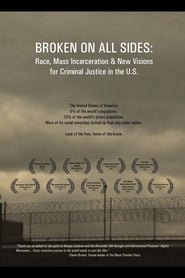
The project began as a way to explore, educate about, and advocate change around the overcrowding in the Philadelphia jail system. It has come to focus on mass incarceration across the nation and the intersection of race, poverty, and the criminal justice and penal systems. The documentary centers around Michelle Alexander's theory in her book, The New Jim Crow: since the rise of the drug war and explosion of prison populations, because discretion within the system allows for prosecution of people of color at disproportionately high rates, mass incarceration is a new version of Jim Crow. The movie also dissects the War on Drugs and 'tough on crime' movement, and offers possible reforms and solutions to ending mass incarceration and this new racial caste system.The Flute Player
2003
The Flute Player
2003
From 1975 to 1979, the Khmer Rouge led a campaign of death against every Cambodian believed to be educated. As a result, over 90 percent of the country's traditional musicians were killed. Now, as the handful of surviving musicians grow old and fall ill, a way of life quietly slips toward the brink of extinction. Facing this desperate situation is Arn Chorn Pond - a survivor of Cambodia's genocide, an internationally recognized human rights leader and a talented musician. Today Arn is striving to heal the deep scars of his wartorn past by bringing Cambodia's once outlawed traditional music back to his people. The Flute Player is a heroic story of one man's fight against the devastating effects of war. It is a film about sorrow and pain, dignity and freedom, and the will to survive.The Curators of Dixon School
2012
Public schools don’t have to be a minefield of metal detectors, minimal expectations, and mind-numbing routine. An alternative exists right here in Chicago, at the Dixon Elementary Public School in the Chatham neighborhood, where former principal Joan Crisler and her successor Sharon Dale have implemented the idea that art should be an integral part of the learning environment, with museum-quality works openly adorning the halls. The results, in terms of student performance and morale, have been spectacular, but, as this inspiring but pragmatic documentary demonstrates, there are no miracle solutions: Crisler’s protégé Carol Briggs has an uphill battle applying the same approach at another school, and recent budget cuts have left even the most successful programs vulnerable to the axe.Calling the Ghosts
1996
Calling the Ghosts
1996
Movie about tortured and humiliated women in concentration camps in Bosnia and Herzegovina.The Visual Language of Herbert Matter
2010
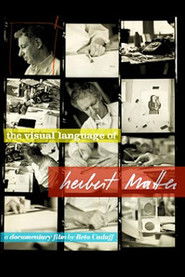
Feature length documentary film about graphic designer, photographer and visual artist Herbert Matter.Living for 32
2010
Living for 32
2010
Living for 32 is the inspirational story of Colin Goddard, a survivor of the tragic gun shooting massacre which occurred on the Virginia Tech campus, April 16th, 2007. The winning combination of Colin's passion, charisma and optimism has commanded the attention of the American public and media since the devastating incident which left 32 dead and 17 injured. In Living for 32, Colin shares an intimate account of terror he and his classmates endured and the courageous journey of renewal and hope he chose to pursue.Ordinary Miracles: The Photo League’s New York
2012
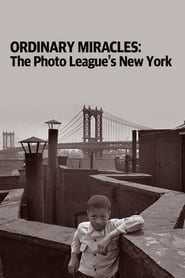
Ordinary Miracles: The Photo League's New York, narrated by Campbell Scott, chronicles the life and times of the Photo League, a legendary organization of amateur and professional photographers that flourished in New York between 1936 and 1951.War Don Don
2010
War Don Don
2010
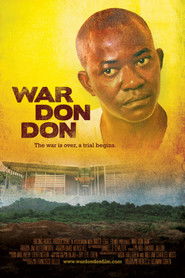
This gripping documentary follows the trial of Issa Sesay, a leader in Sierra Leone's civil war who stands accused of crimes against humanity. Can the trial of one man uncover the truth of a traumatic past?In the Garden of Sounds
2010
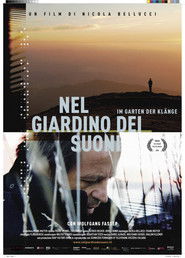
«Nel giardino dei suoni» («In The Garden of Sounds») is a touching, poetic exploration of the relationship between mind, body and sound, and a cinematic journey to the borders of communication. Nicola Bellucci tells the extraordinary story of Wolfgang Fasser, a blind musician and soundscape artist who works with severely handicapped children, helping them to find their place in a world not made for them. On his own way into the darkness, Fasser discovered the world of sounds, a parallel universe to our visual world. His far-reaching explorations of sound’s effect on mind and body led him to the field of music therapy.You're Looking At Me Like I Live Here and I Don't
2012
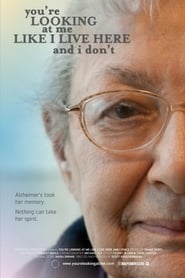
In Danville, California, Lee Gorewitz wanders on a soul-searching odyssey through her Alzheimer’s & Dementia care unit. Confined by the limits of her physical boundaries, she scavenges for reminders of her life in the outside world. Yet her search is for more than a word, or a memory, or a familiar face. It is a quest for understanding.Hollywood Chinese
2007
Hollywood Chinese
2007
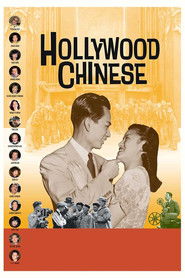
Hollywood Chinese is a captivating look at cinema history through the lens of the Chinese American experience. Directed by triple Sundance award-winning filmmaker, Arthur Dong, this documentary is a voyage through a century of cinematic delights, intrigues, and treasures. It weaves together a wondrous portrait of actors, directors, writers, and movie icons who have defined American feature films, from the silent era to the current new wave of Asian American cinema. At once entertaining and enlightening, Hollywood Chinese reveals long-untold stories behind the Asian faces that have graced the silver screen, and weaves a rich and complicated tapestry, one marked by unforgettable performances and groundbreaking films, but also by a tangled history of race and representation.Lads & Jockeys
2011
Lads & Jockeys
2011
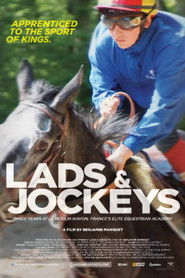
In a small village near Paris, 14-year-old boys and girls enter the training center for future lads and jockeys. For these young pupils, the transition between the family environment and this new world is brutal. Though sharing the world of teenagers -- flirting, cell phones and PlayStation -- they enter a world where the comfort of the horses comes before that of the human.Kapyong
2011
Kapyong
2011
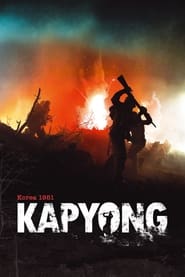
On April 24, 1951, following a rout of the South Korean army, the Chinese People Volunteer Army pursued their enemy to the lines of Australian and Canadian troops still digging fall-back defences, 39 kilometres to the rear. Here, sometimes at the length of a bayonet, often in total darkness, individual was pitted against individual in a struggle between a superpower and a cluster of other nations from across the world. They fought for a valley, the ancient and traditional invasion route to Seoul. If it fell the southern capital and the war, was lost. The United Nations troops had the military advantage of the high ground and artillery support: the Chinese relied entirely on vastly superior numbers. As a result, young men from both sides found a battle which was very close and very personal. The Battle of Kapyong became the turning point of China's Fifth Offensive in that Korea spring... Written by John LewisLiquid Vinyl
2005
Liquid Vinyl
2005
Superstar DJs discuss the history, culture, technology, spirituality and the future of electronic dance music - the music that catapulted the Club DJ to "rock star" status and united dance floors across the globe. LIQUID VINYL brings together the DJ's, the people behind the scene, and the dancers from the floor that all ultimately share in the magic of the musicNew Muslim Cool
2009
New Muslim Cool
2009
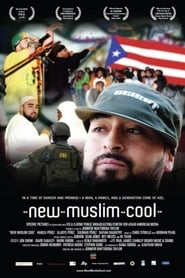
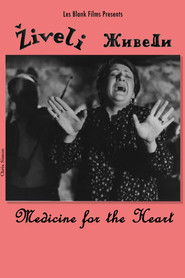
Puerto Rican American rapper Hamza Pérez ended his life as a drug dealer 12 years ago, and started down a new path as a young Muslim. Now he's moved to Pittsburgh's tough North Side to start a new religious community, rebuild his shattered family, and take his message of faith to other young people through his uncompromising music as part of the hip-hop duo M-Team.Živeli! Medicine for the Heart
1987
This little-known Blank gem is a portrait of the Serbian-American communities of Chicago and California, highlighting their history in this country, their music, dancing, and religion.