Top Rated Tv Movie Movies on Kanopy - Page 14
All Services
Free Services
 Netflix
 Amazon Prime Video
 Apple iTunes
 Apple TV Plus
 Disney Plus
 Google Play Movies
 Paramount Plus
 Hulu
Hulu
 HBO Max
 YouTube
 fuboTV
 Peacock
 Peacock Premium
 Amazon Video
 The Roku Channel
 AMC+
AMC on Demand
AMC+
AMC on Demand
 Kocowa
 Hoopla
 The CW
 Vudu
Vudu
 Starz
Starz
 Showtime
 PBS
PBS
 Pantaflix
 FXNow
FXNow
 Tubi TV
 Kanopy
 Comedy Central
 Crunchyroll
 Microsoft Store
 Redbox
 Sun Nxt
 ABC
ABC
 DIRECTV
 Crackle
 Fandor
 Plex
Plex
Netflix
Amazon Prime Video
Apple iTunes
Apple TV Plus
Disney Plus
Google Play Movies
Paramount Plus
Hulu
HBO Max
YouTube
fuboTV
Peacock
Peacock Premium
Amazon Video
The Roku Channel
AMC+
AMC on Demand
Kocowa
Hoopla
The CW
Vudu
Starz
Showtime
PBS
Pantaflix
FXNow
Tubi TV
Kanopy
Comedy Central
Crunchyroll
Microsoft Store
Redbox
Sun Nxt
ABC
DIRECTV
Crackle
Fandor
Plex

Half the Picture
1996
Kwestia sumienia
1969
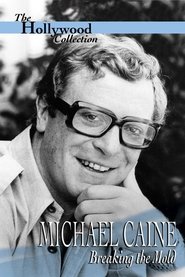
Michael Caine: Breaking the Mold
1994
A documentary about actor Michael Caine. Narrated by Caine himself, it includes interviews of his family, friends and colleagues and clips from some of his films.The Trouble with Antibiotics
2014
FRONTLINE investigates the widespread use of antibiotics in food animals and whether it is fueling the growing crisis of antibiotic resistance in people. Also this hour: An exclusive interview with the family of a young man who died in a nightmare bacteria outbreak that swept through a hospital at the National Institutes of Health.A Private Life
1989
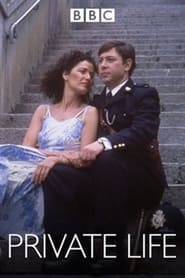
A Private Life
1989
Jack and Stella were unable to marry in South Africa because she was classified as coloured. They persevere by living together in a mixed neighborhood, but their son Paul will suffer when he is unable to marry his white girlfriend Andrea.Global Homophobia: The Roots of Hatred
2019
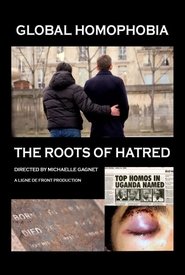
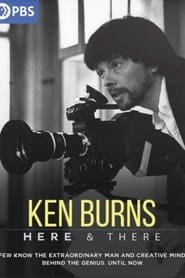
This hard-hitting documentary reveals the abuse suffered by the gay community all over the world. France, despite having legalized gay marriage in 2013, has seen a rise in homophobic violence in recent years. In Tunisia, gay people can be sentenced to three years in prison, simply for their sexual orientation. When arrested by the police, they are subject to an “anal examination”, a humiliating procedure of no scientific value. Uganda is one of the 27 sub-Saharan countries in which homosexuality is repressed, with active state-encouragement of homophobia, and where homosexuality is punishable by lifetime imprisonment. In the United States, more progressive laws have not translated into progressive attitudes. 700,000 Americans, in a desperate attempt to change their sexual orientation, have gone to see therapists who claim to be able to “transform any homosexual into a heterosexual.”Ken Burns: Here & There
2020
Explore the filmmaker’s life and career in interviews with colleagues, friends and Burns himself. The importance of place emerges as a theme as he reflects on his own geographic touchstones, from the Brooklyn Bridge to small-town New Hampshire.Hagia Sophia
2014
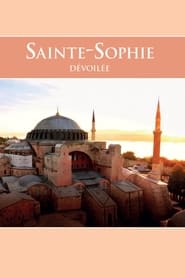
Hagia Sophia
2014
Considered the finest example of Byzantine architecture in the world, Hagia Sophia was constructed on a scale unprecedented in human history. Built in the amazingly short time of five years, it bears witness to an amazing scientific knowledge and a rich cultural heritage from the past.Miss America
2002
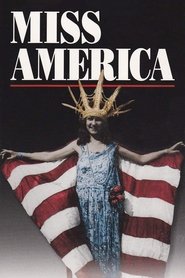
Miss America
2002
Tracking the country’s oldest beauty contest—from its inception in 1921 as a local seaside pageant to its heyday as one of the country’s most popular events—Miss America paints a vivid picture of an institution that has come to reveal much about a changing nation. The pageant is about commercialism and sexual politics, about big business and small towns. But beyond the symbolism lies a human story—at once moving, inspiring, infuriating, funny, and poignant. Combining rare archival footage, with a host of intimate interviews with distinguished commentators including Gloria Steinem, Margaret Cho, Isaac Mizrahi, former contestants and behind–the–scenes footage and photographs, the film reveals why some women took part in the fledgling event and why others briefly rejected it - how the pageant became a battle ground and a barometer for the changing position of women in society.Michael Kirby: Don't Forget the Justice Bit
2010
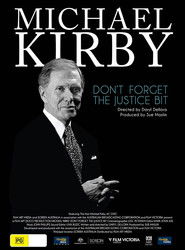
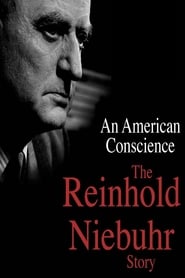
Filmed during and after his time on the High Court of Australia, this documentary about Justice Michael Kirby explores the personal, moral and spiritual convictions of one of our most compassionate and incisive legal minds. Michael Kirby reveals himself in this film through a long-form interview in a way he has never done before. It was only at the age of 61 he publicly revealed for the first time that he had been in a homosexual relationship since 1969 with partner Johan van Vloten. This film represents the first time Johan has spoken publicly about their life together.An American Conscience: The Reinhold Niebuhr Story
2017
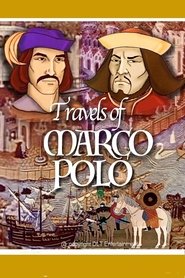
Reinhold Niebuhr's Serenity Prayer remains one of the most quoted writings in American literature. Yet Niebuhr's impact was far greater, as presidents and civil rights leaders like Martin Luther King Jr. often turned to Niebuhr's writings for guidance and inspiration on the most volatile political and social issues of the 20th century. Niebuhr rose from a small Midwest church pulpit to become the nation's moral voice - an American conscience -during some of the most defining moments in American history.Travels of Marco Polo
1972
Explorer Marco Polo is assigned to accompany two priests on a mission to China, to try to convert the "pagan" Kublai Khan to Christianity. However, on a dangerous trek through the mountains, the priests decide they don't believe that China even exists, and when Marco tries to argue the point, they abandon him and turn back. He eventually makes it through the mountains and into the fabled land of China, where he is received at the court of Kublai Khan as an envoy. Accompanied by his faithful servant Pedro, Marco spends 20 years in that country, and when he eventually returns to Europe what he brings with him changes the course of history forever.Remember Pearl Harbor
2016
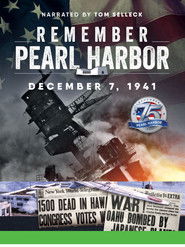
Narrated by veteran Hollywood actor Tom Selleck, REMEMBER PEARL HARBOR chronicles the personal stories of veterans and citizens who witnessed the surprise attack by the Japanese on the American Pacific Fleet on December 7, 1941, launching the United States into World War II. Using archival footage and photos and graphics, the documentary shows in detail the bombings on Oahu, along with the fiery explosion of the USS Arizona, the sinking of the USS Oklahoma, and the attacks on Hickam Field, as well as on other parts of the island. REMEMBER PEARL HARBOR documents the 75th anniversary, the tragic events and the courageous acts of those who were in or near Pearl Harbor on that day.Jean Genet: An Interview with Antoine Bourseiller
1981
An interview with artist, playwright, and political activist Jean Genet.Summer in the City
1970
Summer in the City
1970
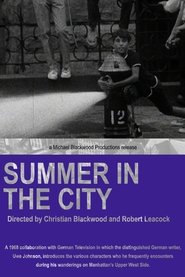
German writer Uwe Johnson lived for several years in the 1960s on Manhattan’s Upper Westside where he got to know his neighborhood very well, observing the goings-on in the streets, cafeterias, and parks. In 1968 German Television agreed to co-produce a film for broadcast featuring interviews with various neighborhood characters.Do I Have to Kill My Child?
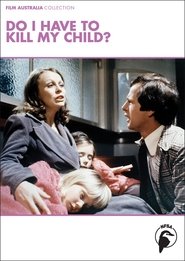
1976
A disturbing drama about a young mother who physically abuses her baby. Feeling overwhelmed and aware that she's not coping after the birth of her third child, she sends desperate cries for help. But her mother, husband, neighbour and clinic sister do not recognise the seriousness of the situation until the baby ends up in hospital with a fractured skull. A heart-wrenching film that illustrates the experiences of many women who suffer from post-natal depression.Call Me Mum
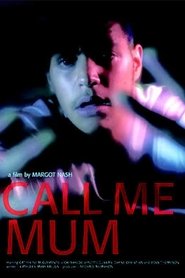
2006
Call Me Mum
2006
Kate is on a plane taking Warren, her 18 year old Torres Strait Islander foster son, to meet Flo, his birth mother, who is gravely ill in hospital in Brisbane. Flo hasn't seen Warren since she took him to the hospital on Thursday Island when he was a toddler and the white authorities took him away. But as Warren, Flo and Kate all prepare themselves for the reunion, unbeknown to them, Kate's Brisbane based parents, Keith and Dellmay, are planning a different kind of reunion.The Cremaster Cycle: A Conversation with Matthew Barney
2004
For his five Cremaster films Matthew Barney's created a multitude of sculptural forms and structures. Recently both the sculptures and the films traveled to museums in Cologne, Paris and New York's Guggenheim. In THE CREMASTER CYCLE: A Conversation with Matthew Barney, the artist guides the camera through this remarkable creation at the Guggenheim Museum while being questioned by Michael Kimmelman, chief art critic of the New York Times.Surviving Sandy Hook
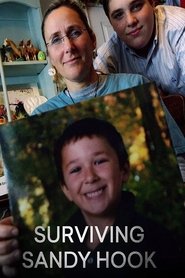
2015
Surviving Sandy Hook
2015
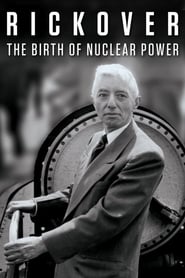
Investigative documentary following three families involved in the Sandy Hook shooting, as they try to make sense of the tragedy and find a way to move on and rebuild their lives.Rickover: The Birth of Nuclear Power
2014
Dive into the life of the father of the nuclear Navy: Hyman Rickover. Combative, provocative, and blunt, Admiral Hyman G. Rickover was a flamboyant maverick and a unique American hero. When few thought it possible, then-Captain Rickover harnessed the power of the atom to drive the first nuclear-powered submarine, the USS Nautilus, whose trip under the polar ice pack was one of the great adventure stories of the 1950s. Later, Rickover built the world's first nuclear aircraft carrier and the first commercial nuclear power plant at Shippingport, PA. Rickover's achievements made him into a national celebrity, and he appeared on the cover of Time magazine. Many wonder whether America can maintain its technological pre-eminence and whether we can still build and manage large-scale projects. To understand these issues, Rickover considers the story of the man who created the nuclear Navy as well as the civilian nuclear power industry: Hyman G. Rickover.