Top Rated Fantasy Movies on Pantaflix - Page 242
All Services
Free Services
 Netflix
 Amazon Prime Video
 Apple iTunes
 Apple TV Plus
 Disney Plus
 Google Play Movies
 Paramount Plus
 Hulu
Hulu
 HBO Max
 YouTube
 fuboTV
 Peacock
 Peacock Premium
 Amazon Video
 The Roku Channel
 AMC+
AMC on Demand
AMC+
AMC on Demand
 Kocowa
 Hoopla
 The CW
 Vudu
Vudu
 Starz
Starz
 Showtime
 PBS
PBS
 Pantaflix
 FXNow
FXNow
 Tubi TV
 Kanopy
 Comedy Central
 Crunchyroll
 Microsoft Store
 Redbox
 Sun Nxt
 ABC
ABC
 DIRECTV
 Crackle
 Fandor
 Plex
Plex
Netflix
Amazon Prime Video
Apple iTunes
Apple TV Plus
Disney Plus
Google Play Movies
Paramount Plus
Hulu
HBO Max
YouTube
fuboTV
Peacock
Peacock Premium
Amazon Video
The Roku Channel
AMC+
AMC on Demand
Kocowa
Hoopla
The CW
Vudu
Starz
Showtime
PBS
Pantaflix
FXNow
Tubi TV
Kanopy
Comedy Central
Crunchyroll
Microsoft Store
Redbox
Sun Nxt
ABC
DIRECTV
Crackle
Fandor
Plex

Peter Pan
2000
Peter Pan
2000
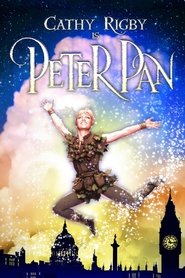
star 6.6The stage musical Peter Pan starring Cathy Rigby has toured the world to great acclaim. An adaptation of the famous 1954 musical directed by Jerome Robbins and starring Mary Martin, this new version is lasting proof that J.M. Barrie's tale of the boy who would never grow up is one of the kingpins of family entertainment. All the elements are in good form for this video production shot at the Mirada Theater in 2000 for the A&E Network. Some new songs have been added to the fabulous Moose Charlap-Carolyn Leigh score (which includes "Tender Shepherd," "I Gotta Crow," "I'm Flying," and "I Won't Grow Up"). But the biggest asset to this production are the spectacular flying sequences: Peter even soars over the audience at times. Martin was a stronger actress in a close-up, but Rigby is magical with her athleticism and spark, most notably in a percussion-filled song and dance number "Ugh-a-Wug.".Day-O
1992
Day-O
1992
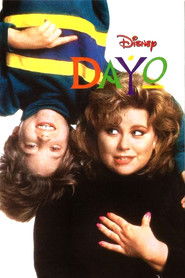
star 4.7A five-year-old named Grace creates an imaginary friend, because her parents only pay attention to the new baby, Tony. Now at 35, his sole friend reappears to help her.Ghost Bride
2013
Ghost Bride
2013
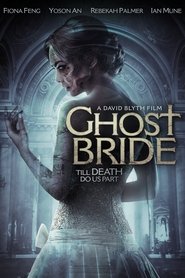
star 3Ghost Bride tells the story of Jason Chen - a young chinese immigrant in New Zealand who keeps his love for Kiwi girl Skye secret from his disapproving mother Alice. Things quickly unravel as his mother introduces him to Madam Yin, a matchmaker who has a very special bride in mind for Jason - the mysterious and silent May Ling.Legend of the Red Reaper
2013
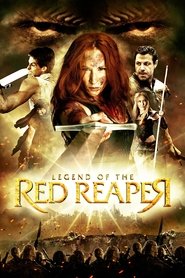
star 3.2For a thousand years, the Reapers guarded mankind from the demons that wait in the dark. Now, at the beginning of a new age, the Reapers are betrayed and slaughtered. Only one Reaper remains - Red, and she's out to exact revenge.Journey to the Center of the Earth
1993
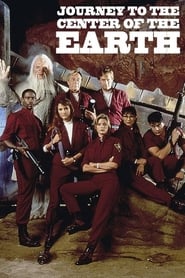
star 3.8This made-for-TV film version uses the title and general premise of Jules Verne's novel, but had its heroes carry out the journey in an earth-penetrating machine. A television series was supposed to follow, but was never produced. Cast includes John Neville, F. Murray Abraham and Kim Miyori.Yardbird
2012
Yardbird
2012
star 6.8A young girl who lives in a remote wrecking yard takes on the local bullies when they travel out to torment her father.A Story of the Forest: Mavka
1980
star 5.8Mavka, a water nymph, loves Lukash, a country youth. Their brief happiness ends when Lukash is forced to marry the shrewish Kilina. The Spirit of the Forest turns Lukash into a wolf as punishment for his infidelity. The strength of Mavka's love breaks the spell, but Kilina curses the nymph, transforming her into a weeping willow. This beautiful and tragic story is based on a play written in 1912 by Lesya Ukrainka, a Ukrainian poet, writer and political, civil and female activist, and includes mythological characters taken from Ukrainian folklore.Club of the Laid Off
1989
Club of the Laid Off
1989
star 6.6Laid-off old mannequins spend their cracked and broken lives in an old, abandoned warehouse. New mannequins are brought to the warehouse. They are old as well, but from a younger generation. The two groups must live together, but it's not easy at all.Earth Angel
1991
Earth Angel
1991
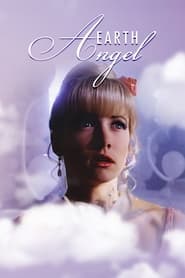
star 5When a prom queen dies in 1962, her only means of entering Heaven is by returning to 1990 earth, to assist friends from her youth.A Voyage Around a Star
1906
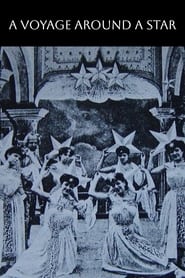
star 5.9An old astronomer has been transfixed by a star for a long time. He had but one thought: to travel to it, to declare his love for it! But how? A simple but ingenious solution-- A giant bubble. Velle remade the film for Italian studio Cines in the same year.The Christmas Carol
1949
The Christmas Carol
1949
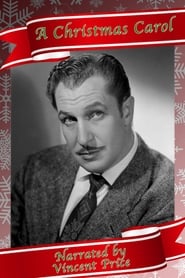
star 5.9A Christmas Carol was a 1949 syndicated, black and white television special narrated by Vincent Price.The Devil's Bride
1974
The Devil's Bride
1974
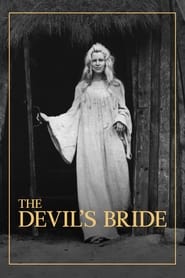
star 6.7A story of an impish devil who used to be an angel but got tired of singing Hosannah and so was condemned to live on earth. From his home in a windmill, he pursues love and happiness in a hilarious and sometimes tragic turmoil that affects the whole countryside.Amagi Pass
1983
Amagi Pass
1983
star 6.3Japan in the 1940s. A high school boy went into a magic encounter with Ozuka Hana, a geisha (pub-girl) when he traveled through Amagi Pass. A mysterious murder took place afterwards, an Ozuka was held responsible. 40 years later, the boy, who became a printing shop owner, was visited by a retired policeman who came from Amagi Pass. The truth then started to reveal itself.Necropolis
1970
Necropolis
1970
star 4.6Frankenstein's monster gropes towards the awareness that his mind is a universe; Attila, naked on a white horse, liberates his people from their ignominy; the ultra-caustic Viva bemoans the frustrations of married life and drifts into the elegiac persona of the Bloody Countess Bathory; Louis Waldon is a hip American tourist searching for the (missing) Mona Lisa.Face Like a Frog
1988
Face Like a Frog
1988
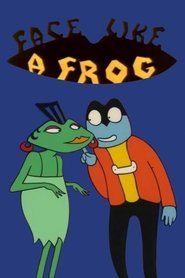
star 7.1A frog is driving his alligator-shaped car when he is stopped by a shapely she-frog who steps into the road. She tells him that her house is haunted, so he goes along to assist.Cinderella or The Glass Slipper
1912
star 5.6Georges Méliès's first attempt at Cinderella was in 1899. That film was extraordinary then for having multiple scenes and a semblance of a narrative; additionally, the use of dissolves as transitions in it influenced other filmmakers for years to do the same. Méliès was the cinema world's preeminent leader then. By 1912, however, that was no longer the case; frankly, as evidenced by this feature, his style had become dated. Moreover, Méliès had begun to adopt techniques from other filmmakers, such as direct cuts instead of dissolves, and there's even a match on action shot during the slipper trying-on scene.Stamp Day for Superman
1954
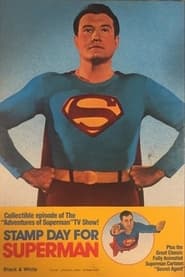
star 5.4Superman's commitment to promote US Savings Stamps is temporarily delayed when Lois is kidnapped.The Nutcracker
1994
The Nutcracker
1994
star 5.9It is Christmas Eve, and the Stahlbaum family is happily unwrapping their Christmas gifts. After all the merriment, seven-year-old Marie receives a very special gift--a mysterious Nutcracker--from her beloved Godfather Drosselmeier. When the house falls dark and silent, Marie discovers that this is no ordinary Nutcracker, but Godfather Drosselmeier's nephew, who was transformed into a wooden toy by the curse of the evil Madame Mouserink. To break the curse, the Nutcracker must win the love of Marie and defeat the malicious, seven-headed Mouse King.The Night Before Christmas
1913
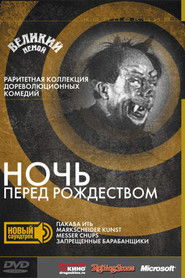
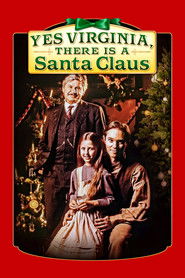
star 5.1Based on Gogol's story. It is Christmas Eve, and the town witches’ son, a blacksmith, seeks an honest marriage to his love who wishes for a pair of shoes fit for the Tsarina. A mischievous devil is trapped into providing service to the smith.Yes Virginia, There Is a Santa Claus
1991
star 7While newspaper writer Church struggles with the death of his wife, he receives a "special" assignment. He must answer a little girl's question about whether Santa Claus really exists.