Top Rated Fantasy Movies on Pantaflix - Page 368
All Services
Free Services
 Netflix
 Amazon Prime Video
 Apple iTunes
 Apple TV Plus
 Disney Plus
 Google Play Movies
 Paramount Plus
 Hulu
Hulu
 HBO Max
 YouTube
 fuboTV
 Peacock
 Peacock Premium
 Amazon Video
 The Roku Channel
 AMC+
AMC on Demand
AMC+
AMC on Demand
 Kocowa
 Hoopla
 The CW
 Vudu
Vudu
 Starz
Starz
 Showtime
 PBS
PBS
 Pantaflix
 FXNow
FXNow
 Tubi TV
 Kanopy
 Comedy Central
 Crunchyroll
 Microsoft Store
 Redbox
 Sun Nxt
 ABC
ABC
 DIRECTV
 Crackle
 Fandor
 Plex
Plex
Netflix
Amazon Prime Video
Apple iTunes
Apple TV Plus
Disney Plus
Google Play Movies
Paramount Plus
Hulu
HBO Max
YouTube
fuboTV
Peacock
Peacock Premium
Amazon Video
The Roku Channel
AMC+
AMC on Demand
Kocowa
Hoopla
The CW
Vudu
Starz
Showtime
PBS
Pantaflix
FXNow
Tubi TV
Kanopy
Comedy Central
Crunchyroll
Microsoft Store
Redbox
Sun Nxt
ABC
DIRECTV
Crackle
Fandor
Plex

Slippery Jim
1910
Slippery Jim
1910
star 6.8Apparently inspired by the antics of Harry Houdini, Slippery Jim opens in the office of a police commissioner to whom a rather cocky villain is presented. The commissioner orders the prisoner to be clapped in irons, but this proves to be easier said than done because our anti-hero - presumably the Slippery Jim of the title - proves to be an expert escapologist.The Attendant
1993
The Attendant
1993
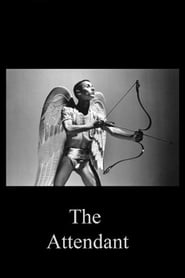
star 3.8Memory mixes with desire as a museum attendant is caught up in sado-masochistic fantasies inspired by a 19th century painting of slaves in chains called Scene on the coast of Africa. The man remembers his past as a singer and delivers Dido's lament from Purcell's opera.Moonland
1926
Moonland
1926
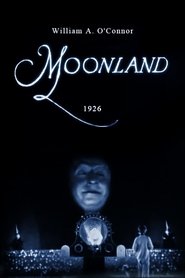
star 6The Man in the Moon invites little Mickey and his dog over for a visit. They go on a magical trip and meet strange characters along the way.The Flute of Krishna
1926
The Flute of Krishna
1926
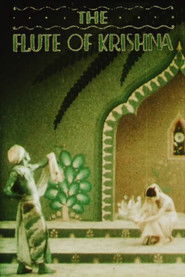
star 5.2Produced by the Eastman Kodak Company and shot in a then-experimental process, two-color Kodachrome, Martha Graham's dance "The Flute of Krishna" is performed by students from the Eastman School of Music. It's likely (but unconfirmed) that the film was directed by an uncredited Rouben Mamoulian.Rainbow Fireflies
2012
Rainbow Fireflies
2012
star 7.1One year ago, Yūta lost his father in a car crash. Now in the 6th grade, Yūta goes to catch beetles in a dam near a mountain, a place he often went with his father. There, Yūta meets a strange old man, and while walking in heavy rainfall, slips and blacks out. When Yūta awakes, he sees a child, Saeko, who shows him a village from the past. A precious summer vacation for Yūta begins.Sinbad the Sailor
1935
Sinbad the Sailor
1935
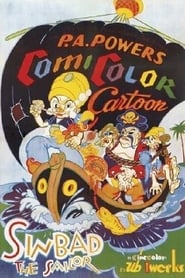
star 5.2Sinbad battles a band of pirates at sea and on a tropical isle. A giant bird rescues him, and he ends up back on his ship with the pirates' treasure.The Monkey King Conquers the Demon
1985
star 8In the heart of wild mountains, a dreadful devil, disguised as a pretty young woman, tries to seize Xuan Zang to devour him. The holy monk is an easy prey because, naive and good, he is easily misled by appearances. But fortunately he is accompanied by the Monkey King, who is clairvoyant.Chandu on the Magic Island
1935
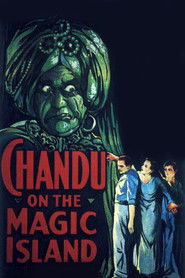
star 4.8On the mystic island of Lemuria, the cult of Ubasti seek the Egyptian Princess Nadji to sacrifice so that their goddess Ossana, whose soul resides in Nadji's body, may be resurrected by Black Magic. Nadji is located in the Far East port of Suva, but shielded by the White Magical powers of Frank Chandler, an American raised by Eastern mystics who is also known as Chandu. When Chandu takes a voyage alone, however, the evil Voice of Ubasti is able to magically spirit her to Lemuria, where Black Magic reigns supreme. Chandu sets out in pursuit with his sister Dorothy, niece Betty and nephew Bob; but, shipwrecked on the magic island, Chandu finds his family also held prisoner for sacrifice while he is plunged into an endless maze of caverns beneath the evil temple, where both his mortal and magical strength seem rendered useless.The Raven
1915
The Raven
1915
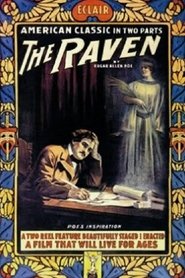
star 6.5After a brief view of Edgar Allan Poe's family background, his grandfather, David Poe, Sr., an Irish immigrant to America, and his father, David Poe, Jr., the poet's life is depicted from the death of his mother and his subsequent adoption by John Allan, to his own tortured death in 1849. Expelled from the University of Virginia for incurring too many debts, Poe nonetheless courts and marries Virginia Clemm but is disowned by his foster father. While residing in Fordham, New York, Poe tries to earn a living as a writer but meets with little financial success. Overwhelmed by their impoverished state, Virginia dies and Poe sinks into a profound depression. Always a victim of alcohol and subject to hallucinations, Poe first imagines that his neighbor, Helen Whitman, is Virginia, then plunges himself into an elaborate delusion in which his wife's spirit, various other spectres and a raven finally drive him to his own death.Mr E.
1995
Mr E.
1995
star 3A television news anchorman, İsmet Berkan goes on a journey with his wife. Along the journey, out of the blue they start fighting. When he confesses that he cheated on her, she gets mad. Enraged, Leyla gets out of the car, enters a gas station and takes off with a man in a red sports car. Trying to track down his wife, the anchorman finds himself trapped in a bizarre world in the midst of murderers, cops and beautiful women.Macabre Legends of the Colony
1974
star 4.8The Mexican luchador Tinieblas buys an ancient painting of a dead woman ignoring the warning that it is haunted. Later, after a fight his partners El Fantasma Blanco and Mil Máscaras joins him in a party at his apartment with two beautiful ladies, but when the clock reaches midnight the painting transports them all to colonial times. In order to return home they must face Spanish Conquistadores, Aztec Warriors and an evil witch whose mother, an unstoppable living dead hungry for human sacrifices, is the woman in the painting.Mary and Gretel
1916
Mary and Gretel
1916
star 5.8Alice in Wonderland meets the Garden of Eden in this surreal fable of a drunk rabbit, bowling dwarfs, and the two bewildered girls of the title.New Order
2012
New Order
2012
star 3.1Three years after a biological attack wiped out 80 percent of the population, Dr. Cornelius Van Morgen, a world renowned biologist, chooses five people from the survivors to help him find a cure.Dream Lovers
1986
Dream Lovers
1986
star 6.3Musician Song Yu and jewellery designer Yuet-heung, who barely know each other, meet in their dreams before finally uniting in person.Whore Angels
2000
Whore Angels
2000
star 4.3Komasa works at the ‘Hot Lips’ whore house. One day she saves a red-haired woman, Monroe, from a demon that is attacking her. As a thank you, Komasa gets Monroe work at Hot Lips giving blow-jobs and it is quickly discovered that her blow-jobs have magical healing powers. Her fame spreads and soon this pink-haired sexual messiah is curing dozens of sick and handicapped men in her unique way which makes her a true Angel and very popular…Butt Attack Punisher Girl Gautaman: The Birth of Gautaman
1994
star 3.8Mari Amachi is a very devout Christian who transfers to Perfect Religion Academy. A school devoted to all religions of the world in effort to make it's students the next world leaders in religion. Her friend Saori is kidnapped by the Black Buddha cult; a group who wishes to take away religious freedom though force and brainwashing. Mari prays to God for help but Buddha answers the call, instead! Mari aspires only to help her friend and she is transformed into Butt Attack Punisher Girl Gotaman. Between fighting bad guys, making a deal with Buddha, and wearing scandalous costumes, is it more than Mari can take?Butterfly
1974
Eros Eterna
1977
Eros Eterna
1977
star 3.8A woman believing to be a legendary immortal nun attracts people looking for answers to their life struggles.The Battle of Brazil: A Video History
1996
star 6.1This documentary, based on author Jack Mathew's book "The Battle of Brazil," reunites the players involved in the struggle over the film's U.S. release. This take on one of the noisiest, most unusual, and most instructive behind-the-scenes controversies in Hollywood history features Mathews, director Terry Gilliam, producer Arnon Milchan, and studio executives Frank Price, Marvin Antonowsky, Bob Rehme, and Sidney Sheinberg.Presents
1981
Presents
1981
star 6.3The apparent vertical scratch in celluloid that opens Presents literally opens into a film within the film. When its figure awakens into a woman in a 'real' unreal set, the slapstick satire of structural film begins. It is not the camera that moves, but the whole set, in this first of three material 'investigations' of camera movement. In the second, the camera literally invades the set; a plexiglass sheet in front of the dolly crushes everything in its sight as it zooms through space. Finally, this monster of formalism pushes through the wall of the set and the film cuts to a series of rapidly edited shots as the camera zigzags over lines of force and moving fields of vision in an approximation of the eye in nature. Snow pushes us into acceptance of present moments of vision, but the single drum beat that coincides with each edit in this elegaic section announces each moment of life's irreversible disappearance.