Top Rated History Movies on Pantaflix - Page 167
All Services
Free Services
 Netflix
 Amazon Prime Video
 Apple iTunes
 Apple TV Plus
 Disney Plus
 Google Play Movies
 Paramount Plus
 Hulu
Hulu
 HBO Max
 YouTube
 fuboTV
 Peacock
 Peacock Premium
 Amazon Video
 The Roku Channel
 AMC+
AMC on Demand
AMC+
AMC on Demand
 Kocowa
 Hoopla
 The CW
 Vudu
Vudu
 Starz
Starz
 Showtime
 PBS
PBS
 Pantaflix
 FXNow
FXNow
 Tubi TV
 Kanopy
 Comedy Central
 Crunchyroll
 Microsoft Store
 Redbox
 Sun Nxt
 ABC
ABC
 DIRECTV
 Crackle
 Fandor
 Plex
Plex
Netflix
Amazon Prime Video
Apple iTunes
Apple TV Plus
Disney Plus
Google Play Movies
Paramount Plus
Hulu
HBO Max
YouTube
fuboTV
Peacock
Peacock Premium
Amazon Video
The Roku Channel
AMC+
AMC on Demand
Kocowa
Hoopla
The CW
Vudu
Starz
Showtime
PBS
Pantaflix
FXNow
Tubi TV
Kanopy
Comedy Central
Crunchyroll
Microsoft Store
Redbox
Sun Nxt
ABC
DIRECTV
Crackle
Fandor
Plex

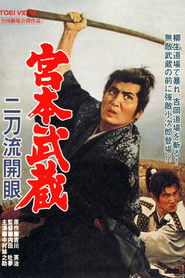
Miyamoto Musashi
1961
Miyamoto Musashi
1961
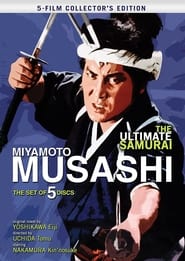
star 7.3In this first episode, we are introduced to Takezo, what Musashi used to be before he became the man of legend. His beginning are not exactly auspicious. He sides with the Toyotomi at Sekigahara, and as a result finds himself on the losing side of the historic battle. He and his friend Matahachi manage to escape the slaughter although the latter is wounded in his leg. They stumble across the young Akemi who makes her living with her mother Oko by robbing corpses of their armor and anything else they can sell. Oko takes it into her head to seduce Matahachi, which she does first by skillfully sucking the gangrene from his blood, and then just by sucking.The Bushido Blade
1981
The Bushido Blade
1981
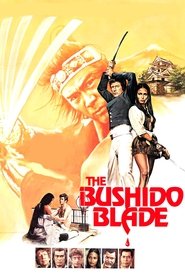
star 5.4A steel samurai blade that was to be given to the American ambassador by the Emperor of Japan is stolen. American sailors and Japanese samurai are sent to find it.Miyamoto Musashi V: Musashi vs Kojiro
1965
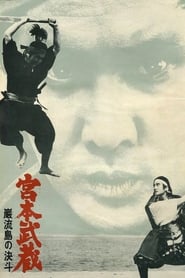
star 7.3The fifth and final installment with the build up of the epic battle between Sasaki Kojiro and Miyamoto Musashi. With all the familiar characters making appearances: Otsu (Musashi's great love), Akemi, Matahachi (his former fellow soldier), old lady Osugi (still doggedly trying to defeat Musashi), and even the return of Priest Takuan (the man responsible for his journey towards enlightenment). But most of all, the boastful, long-haired and long-sworded Sasaki Kojiro.Miyamoto Musashi IV: The Duel at Ichijo-ji Temple
1964
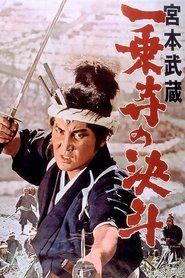
star 7In the fourth installment, Musashi's potentially greatest opponent Kojiro jumps in and out of the story at the oddest and most coincidental moments. As his great love Otsu has succumbed to madness. Musashi then sets off to beat the functionaries of a treacherous clan in an arranged duel. 73 against one. Boastful Kojiro watches, secure in the knowledge that only he is a worthy opponent.Miyamoto Musashi: Birth of Two Sword Style
1963
star 7In the third installment of Yoshikawa's novel Musashi, things continue from the 2nd film at the end of battle, where Miyamoto continues on a mission of learning; with the introduction of his arch-rival Sasaki Kojiro; and lastly the large cast of characters rendezvouses for a fateful finale.Miyamoto Musashi: Showdown at Hannyazaka Heights
1962
star 7.4The remake of Yoshikawa's novel continues with the second installment in which Takezo, soon to be Miyamoto Musashi, emerges from the Himeji Castle after three years of intense contemplation and philosophical study and starting on his epic quest to complete his skill in the Way.The Communist
1958
The Communist
1958
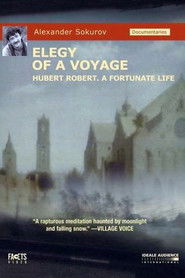
star 6A young ordinary communist, Vasiliy Gubanov, was among many who took part in the construction of the most important facility for the young republic, the power plant. He did his job in a way that was beyond human ability. He could love, too, with a passion and a passion for self, but his life was cut short very early.Robert. A Fortunate Life
1997
star 6.2Aleksander Sokurov brings the treasures of the Hermitage back into the light by making films about artists and their paintings. He has chosen the painter Hubert Robert, who spent a long time in Italy, and whose preference was for creating ancient ruined landscapes and naturalistic portrayals of times past. He was successful with the wealthy, who bought his works from him. The camera pans across the paintings while Sokurov speaks of a happy era, when the artist was at one with the spirit of the times, and agreed with the taste of his clients. Just how far removed from us this is, is shown by pictures of a "Nô" performance which are inter-cut on the screen. No words are necessary to describe what everybody knows today.Peter the First, Part I
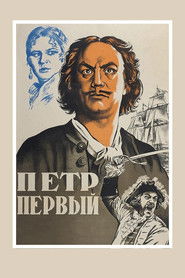
1937
star 4.7This, the first Soviet depiction of Peter the Great, set the stage for what would become the post-Revolutionary line concerning the early Romanovs. Rulers like Ivan the Terrible and Peter the Great were widely admired for their dedication to Russia and their absolute determination to enhance her position in the world. But praise for the hated later Romanovs conflicted too heavily with the very beliefs that had brought about the Revolution in 1917.Kamen Rider OOO Wonderful: The Shogun and the 21 Core Medals
2011
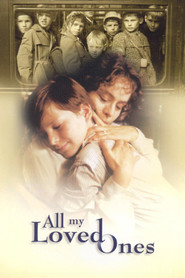
star 5.7Leading an expedition in Germany, Kougami unseals the resting place of one of the alchemists that created the Core Medals in an effort to retrieve a set of lost Medals. However, upon the seal being undone, millions of Cell Medals erupt into a tower while creating a magical barrier that causes parts of Japan to flip over. As the alchemist reveals her plans to become a new OOO, Eiji and his friends are thrown into the past and must find their way back home and stop the alchemist before she destroys the world!All My Loved Ones
1999
All My Loved Ones
1999
star 7.2Told from the perspective of man reflecting on his childhood in Prague in the early years of World War II and the eventual destruction of his family as the Nazis rise to power. The storyline focuses heavily on Jewish-Czech Silberstein family members. Drama was filmed on the real events as a tribute to Mr. Nicholas Winton, the British humanitarian who organized the rescue of 669 children, most of them Jewish, from Czechoslovakia on the eve of the Second World War in an operation later known as the Czech Kindertransport from German-occupied Czechoslovakia and likely death in the Holocaust.From a Far Country
1981
From a Far Country
1981
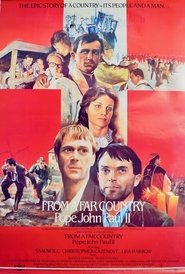
star 3.9This heroic story follows the life of Karol Wojtyla, a Polish Roman catholic who ascends the throne of St. Peter as Pope John Paul II. As a young boy, Karol is a bright and talented student. Archbishop Sapieha recognizes the very special, moving qualities Karol possesses and encourages him to consider the priesthood. Although determined to study Polish literature, Karol turns to the church; he is ordained and studies in Italy, France, and Belgium. Torn by fear and repression in post-Stalin Eastern Europe, Karol becomes a poisonous thorn in the communists' side. His deer reverence and commitment return him to Poland as Pope John Paul II.Mother Dao, the Turtlelike
1995
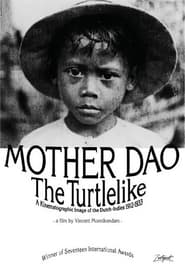
star 7.9In a span of ninety minutes the film aims to show how the Netherlands administered its colony as a colonial enterprise and what the relations were like at the time. The usual commentary has been omitted and in its place poems and songs in Bahasa Indonesia have been included in a digital sound composition. In Mother Dao the Turtlelike, the viewer sees how the colonial machinery in the 1920s was implanted in a world so different from Western Europe.Sons of Liberty
1939
Sons of Liberty
1939
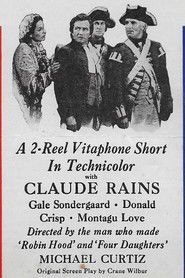
star 6.2Set during the American Revolution, this colorful 2 reel short tells the story of Haym Salomon, American patriot and financier of the American Revolution.Winstanley
1975
Winstanley
1975
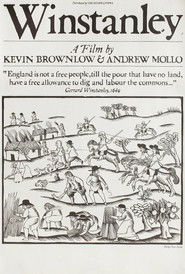
star 7.5Gerrard Winstanley is the leader of a 17th Century religious group that believes the land should be owned communally. His convictions bring him into conflict with both the state and the church.The Prisoner of the Iron Bars
2004
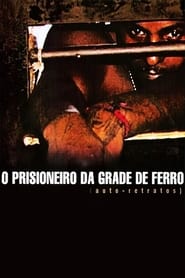
star 7.5In 2002, the greatest prison in Latin America, Complex Carandiru, was demolished. A couple of months before its implosion, director Paulo Sacramento trained some inmates and together with his crew, they produced many hours of footage, showing daily life in prison.Byron
2003
Byron
2003
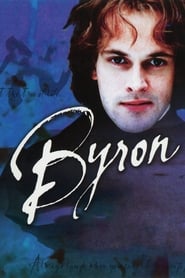
star 4.3Life and adventures of lord George Gordon Byron. BBC dramatization of the poet's final thirteen yearsHalf a Life
1982
Half a Life
1982
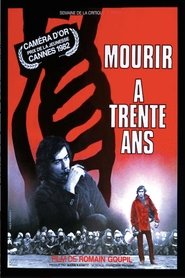
star 5.8Michel Recanati was a militant leader in the May, 1968 riots in Paris, organizing many groups to meet, discuss, and act on leftist principles both before and after the disturbances. He was imprisoned for a short while in 1973. Disillusioned after the failure of the demonstrations and the death of the only woman he had loved, his life seems to have changed from a period of hope and activism to one of bottomless despair. His friend, Romain Goupil wrote and directed this biographical documentary. Death at 30 received the 1982 Cannes Film Festival's Golden Camera Award for "Best First Feature-Length Film."The Death of Pinochet
2011
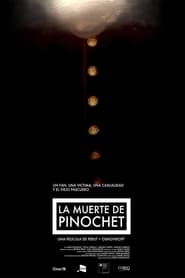
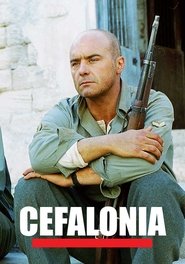
star 4.8On December 10th, 2006, General Pinochet dies unexpectedly at Santiago's Military Hospital. His decease triggers a 24 hours revival of political divisions that marked with violence and death Chilean recent history. With high quality original footage and testimonies of four characters that deeply experienced a journey of strong contrasts and surrealistic nuances, the film narrates in an innovative, exciting way the ending of a key chapter in Chilean history.Cefalonia
2005
Cefalonia
2005
star 6.5Cefalonia tells the real story about what happened in September 1943 on the Greek island of Kefalonia (Cefalonia in Italian), when the 12,000 men in the Italian 33rd Acqui Infantry Division, following Italy's surrender to the Allied, refused to put themselves under German command and also refused to surrender their weapons. The local German force, supported by Stuka dive-bombers and additional troops, attacked the Italians and after several days of combat the Italians surrendered, having lost 1,300 men. As punishment, the German High Command ordered that all surviving Italians should be executed. Some 5,000 were executed during a week of killings. A handful were rescued by locals and the Greek guerrilla, while the rest were shipped off as prisoners, whereof 3,000 drowned when their ships hit mines. The film "Captain Corelli's Mandolin" is based on a novel about the Italian occupation of Cefalonia, but the massacre was much toned down in the Hollywood version.