Top Rated History Movies on Pantaflix - Page 174
All Services
Free Services
 Netflix
 Amazon Prime Video
 Apple iTunes
 Apple TV Plus
 Disney Plus
 Google Play Movies
 Paramount Plus
 Hulu
Hulu
 HBO Max
 YouTube
 fuboTV
 Peacock
 Peacock Premium
 Amazon Video
 The Roku Channel
 AMC+
AMC on Demand
AMC+
AMC on Demand
 Kocowa
 Hoopla
 The CW
 Vudu
Vudu
 Starz
Starz
 Showtime
 PBS
PBS
 Pantaflix
 FXNow
FXNow
 Tubi TV
 Kanopy
 Comedy Central
 Crunchyroll
 Microsoft Store
 Redbox
 Sun Nxt
 ABC
ABC
 DIRECTV
 Crackle
 Fandor
 Plex
Plex
Netflix
Amazon Prime Video
Apple iTunes
Apple TV Plus
Disney Plus
Google Play Movies
Paramount Plus
Hulu
HBO Max
YouTube
fuboTV
Peacock
Peacock Premium
Amazon Video
The Roku Channel
AMC+
AMC on Demand
Kocowa
Hoopla
The CW
Vudu
Starz
Showtime
PBS
Pantaflix
FXNow
Tubi TV
Kanopy
Comedy Central
Crunchyroll
Microsoft Store
Redbox
Sun Nxt
ABC
DIRECTV
Crackle
Fandor
Plex

Serial Killer Culture
2014
star 6.1Serial Killer Culture examines the reasons why artists and collectors are fascinated by serial killers.Queen of Underworld
1991
Queen of Underworld
1991
star 4.8Popular Hong Kong actress Amy Yip plays Sister Har -- a seminal figure in 1960s and '70s Hong Kong nightlife -- in this biographical film that follows the scenester's rise and fall from the upper echelons of society to the glamour and excess of Hong Kong's teeming underworld. A truly fascinating portrait of the allure and excess that were part of the fabric of Asia's favorite playground.Four Women in a Harem
1965
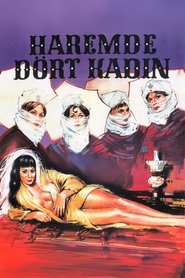
star 4.5Sadık Pasha is a pleasure-loving and pious pasha who lives in a luxurious Ottoman mansion with his three wives. The balance of the mansion, already full of intrigue with three women, is completely disrupted when he wants to take a fourth wife, thinking that he needs to continue his lineage because he has no children.The White Warrior
1959
The White Warrior
1959
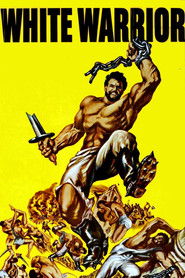
star 5.1The story of Hadji Murad, a 19th-century Chechen chieftain who led his warriors in a fight against the invading forces of the Russian Czar.Death of Yazdgerd
1982
Death of Yazdgerd
1982
star 7.8Bahram Beyzai's poetic imagining of the circumstances that led to the death of Yazdgerd III, the last of the Sassanid kings of Iran. His death in 651, during the Arab invasions that brought Islam to this Zoroastrian realm, was mysterious: his corpse was discovered in a mill, but the cause of his death—and the whereabouts of his remains—are unknown.Twenty Six Days in the Life of Dostoevsky
1981
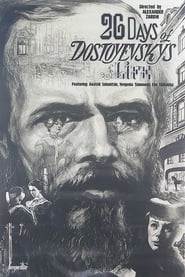
star 4.5Twenty-Six Days in the Life of Dostoyevsky was entered on February 16th at the 1981 Berlin Film Festival to commemorate the 100th anniversary of Dostoyevsky's death on February 9th, 1881, and won a "Best Actor" award for Anatoly Solonitsyn as Dostoyevsky. Solonitsyn was a favorite actor in Andrei Tarkovsky's films, and this was to be his penultimate role. This brief imaginary period in the famed Russian writer's life encapsulates one of his darker moments in 1866. At that time he was still a relatively unknown writer whose first widely acclaimed work, Crime and Punishment, was just on the horizon. His life was at a very low ebb as he struggled with debts he could not pay, and as he fought depression over the loss of his wife to tuberculosis, and the death of his brother, who was very close to him. His first literary journal had to be scrapped because of political reasons, and the second venture needed funding.The Way Home
1981
The Way Home
1981
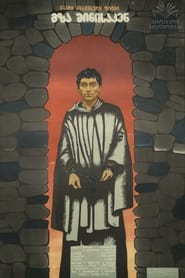
star 4.4The film is set in southern Georgia during Ottoman control, where inhabitants, who were driven from their homes due to enemy invasions, try to return home through different means. One of these inhabitants is the young scholar Antimoz.How Good to See You Alive
1989
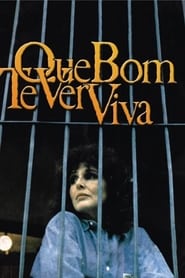
star 7.2Four years after a military coup overthrew the Brazilian government in 1964, all civil rights were suspended and torture became a systematic practice. Using a mix of fiction and documentary this extraordinary film is a searing record of personal memory, political repression and the will to survive. Interviews with eight women who were political prisoners during the military dictatorship are framed by the fantasies and imaginings of an anonymous character, portrayed by actress Irene Ravache.Race d'Ep!
1979
Race d'Ep!
1979
star 4.4"Race d’Ep!" (which literally translates to "Breed of Faggots") was made by the “father of queer theory,” Guy Hocquenghem, in collaboration with radical queer filmmaker and provocateur Lionel Soukaz. The film traces the history of modern homosexuality through the twentieth century, from early sexology and the nudes of Baron von Gloeden to gay liberation and cruising on the streets of Paris. Influenced by the groundbreaking work of Michel Foucault on the history of sexuality and reflecting the revolutionary queer activism of its day, "Race d’Ep!" is a shockingly frank, sex-filled experimental documentary about gay culture emerging from the shadows.Old Czech Legends
1953
Old Czech Legends
1953
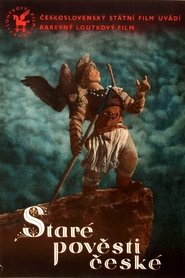
star 6.4A monumental piece of art bringing the heroes of the ancient Czech myths back to life. The picture consists of seven parts: Cech the Forefather, Bivoj, Libuse, Premysl, Girls War, Horymir, Lucka War.Love Under the Crucifix
1962
star 6.9A tea master and his daughter Ogin are both Christians in feudal Japan. Ogin falls in love with a married feudal prince who shares her faith. When the Shogun bans Christianity, the situation worsens.Songs for After a War
1976
star 6.5A particular reading of the hard years of famine, repression and censorship after the massacre of the Spanish Civil War (1936-39), through popular culture: songs, newspapers and magazines, movies and newsreels.A Child Called Jesus
1987
A Child Called Jesus
1987
star 6.6The film attempts to fill in the "missing years" of Jesus, from ages 3 through 12. When King Herod fearing that the Messiah has indeed been born, orders that all Hebrew male children under the age of three be slain, Joseph moves his family near Egypt. Here, Jesus, sensing His divinity, expresses a desire to return to Nazareth. Travelling homeward with His mother Mary, Jesus flashes forward to events that will unfold in his adult life.Paracelsus
1943
Paracelsus
1943
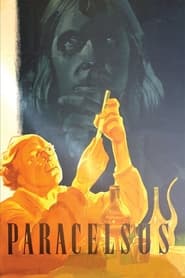
star 5.8The story of the Renaissance-era Swiss physician, alchemist and astrologer Philippus Aureolus Theophrastus Bombastus von Hohenheim, better known to the world as Paracelsus.We Are from Kronstadt
1936
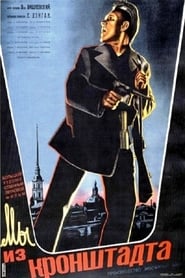
star 4.5In 1919, during the post-revolution Russian Civil War, a naval detachment (made up of communist Reds) defends the strategic city of Petrograd from the White Russian counterrevolutionary forcesThe Long Way Home
2013
The Long Way Home
2013
star 6.7Inhospitable at the best of times, the snow-covered mountainscapes of Eastern Anatolia constituted a fatal frontier for many war exiles after the battle of Sarikamish in 1915, and provides a canvas laced with beauty and threat for this bone-chilling survival yarn, the superb debut feature of Alphan Eşeli. Starting out with three characters – a refugee mother and daughter and their grizzled guide – the film traces their daunting trek across this barren terrain to safety, with the Russians encroaching and other stragglers, including a pair of wounded, frostbitten Ottoman soldiers, all orbiting the same burnt-out village they find in their path. Puncturing its aura of ghostly impasse with some shocking narrative reversals, and constantly prickling with the mutual dread of strangers in gruelling extremes, the movie stakes out hugely credible ground next to established Eastern Front war classics (In the Fog, Come and See) while remaining thoroughly its own beast. (Source: LFF programme)Crest of Betrayal
1994
Crest of Betrayal
1994
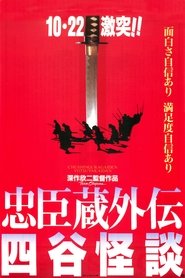
star 5.6Weaving two storylines together: the first is the story of 18th-century shogunate intrigue and loyalty, and the second is a ghost story about a beautiful woman who falls victim to passion and evil.Becoming Colette
1991
Becoming Colette
1991
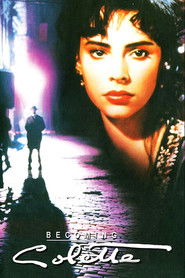
star 3.5French writer recalls her start as the country wife of a Paris publisher who called her erotic work his own.The Man to Kill
1979
The Man to Kill
1979
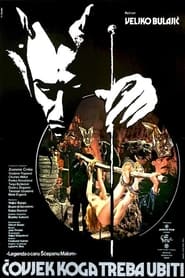
star 5.4After the murder of the Russian Emperor Peter III, who was succeeded by Empress Catherine, Satan decides that the balance between good and evil on Earth has been destabilized. In order to set things right, he sends his representative to Earth - the teacher Farfa, who bears an unusual resemblance to Peter III. His mission is to seize power from the old Duke of Montenegro, and then to take back the Russian throne as Peter III. The people of Montenegro accept Farfa as their new leader, and he proclaims himself the new Emperor, Scepan Mali, successfully resisting an invasion by the Turks. Farfa is touched by the Montenegrins' kindness and courage, falls in love with the beautiful Elfa, and fails to follow Satan's plan. Not one to be crossed, Satan sets out to kill him.New World
1978
New World
1978
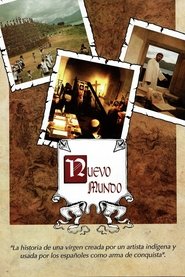
star 5.4Towards the end of the 16th century, the Spanish conquerors living in the New World faced a serious problem: the evangelization of the indigenous people, who did not understand or accept Christianity due to their unshakable faith in their own religion. The court of the Inquisition cracks down on heretics and the natives prepare for a general uprising ...