Top Rated History Movies on Pantaflix - Page 208
All Services
Free Services
 Netflix
 Amazon Prime Video
 Apple iTunes
 Apple TV Plus
 Disney Plus
 Google Play Movies
 Paramount Plus
 Hulu
Hulu
 HBO Max
 YouTube
 fuboTV
 Peacock
 Peacock Premium
 Amazon Video
 The Roku Channel
 AMC+
AMC on Demand
AMC+
AMC on Demand
 Kocowa
 Hoopla
 The CW
 Vudu
Vudu
 Starz
Starz
 Showtime
 PBS
PBS
 Pantaflix
 FXNow
FXNow
 Tubi TV
 Kanopy
 Comedy Central
 Crunchyroll
 Microsoft Store
 Redbox
 Sun Nxt
 ABC
ABC
 DIRECTV
 Crackle
 Fandor
 Plex
Plex
Netflix
Amazon Prime Video
Apple iTunes
Apple TV Plus
Disney Plus
Google Play Movies
Paramount Plus
Hulu
HBO Max
YouTube
fuboTV
Peacock
Peacock Premium
Amazon Video
The Roku Channel
AMC+
AMC on Demand
Kocowa
Hoopla
The CW
Vudu
Starz
Showtime
PBS
Pantaflix
FXNow
Tubi TV
Kanopy
Comedy Central
Crunchyroll
Microsoft Store
Redbox
Sun Nxt
ABC
DIRECTV
Crackle
Fandor
Plex

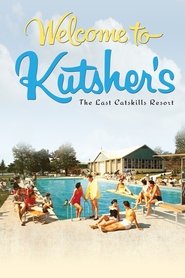
Welcome to Kutsher's: The Last Catskills Resort
2012
star 5.3Kutsher's Country Club is the last surviving Jewish resort in the Catskills. One of the legendary Borscht Belt hotels during its heyday, Kutsher's has been family-owned and operated for over 100 years. Exploring the full Dirty Dancing-era Catskills experience-- and how it changed American pop culture in the comedy, sports and vacation industries-- this documentary captures a last glimpse of a lost world as it disappears before our eyes.Mangoré
2015
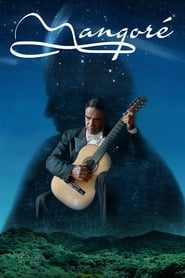
Mangoré
2015
star 7.7The life and times of famed Paraguayan musician Agustín Pío Barrios, from the years of his youth to his international success.The Movement
2015
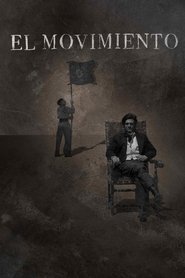
The Movement
2015
star 6.7During the first half of the 19th century, in a vast and desolated land fallen into anarchy, several armed groups drift along the infinite Pampas demanding support and food from the peasants. Even if they are bitter rivals, they all claim to pledge allegiance to the “movimiento”. Among these gangs is one led by Señor, an educated man who, with two of his followers, intends to found a peaceful new order. But while his enchanting words and manners seem appealing, his methods reveal an unstoppable thirst for power.A Boy
1977
A Boy
1977
star 5Latvia, late 19th century. Farm-hand boy Jancis lives on a homestead with his mother, grandfather and grandmother. His world does not reach beyond the horizon, and life progresses according to the seasonal cycle – from winter through spring, summer and autumn to the next St. George's Day when farmhands often had to move to the next farm.Run Melos!
1981
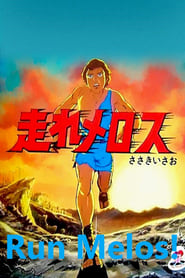
Run Melos!
1981
star 6.4Hashire Melos! is the title of two Japanese animated films. The first was directed by Tomoharu Katsumata and released on Japanese television on February 7, 1981. It was either 68 or 87 minutes long, and its official title did not include the exclamation mark on the end. The second, with the exclamation mark, was a 107-minute remake of the first and was released on July 25, 1992. It featured direction and screenplay by Masaaki Osumi, music by Kazumasa Oda, art by Hiroyuki Okiura and Satoshi Kon, and background art by Hiroshi Ohno. Both were produced by Toei Company Ltd. Visual 80, and both were based on the original short story written by Osamu Dazai in 1940.Seven Songs from the Tundra
2000
star 6.4An anthology of stories about the indigenous Nenet peoples of the Northern Russian tundra, and how their way of life was disrupted by the advent of Soviet power.1964
2014
1964
2014
star 6.41964 was the year the Beatles came to America, Cassius Clay became Muhammad Ali, and three civil rights workers were murdered in Mississippi. It was the year when Berkeley students rose up in protest, African Americans fought back against injustice in Harlem, and Barry Goldwater’s conservative revolution took over the Republican Party. In myriad ways, 1964 was the year when Americans faced choices: between the liberalism of Lyndon Johnson or Barry Goldwater’s grassroots conservatism, between support for the civil rights movement or opposition to it, between an embrace of the emerging counterculture or a defense of traditional values.Cuartelazo
1977
Cuartelazo
1977
star 5.9Narration of one of the bloodiest episodes of the Mexican national history, The Tragic Ten, beginning when General Victoriano Huerta sent to kill President Francisco I. Madero, Vice President José María Pino Suárez and Senator Belisario Dominguez. The film recreates the moment of the execution at the hands of Huerta and his accomplices Bernardo Reyes, Félix Díaz and Manuel Mondragón.Spy Sorge
2003
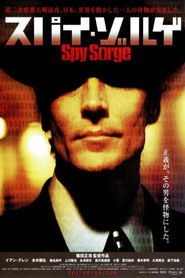
Spy Sorge
2003
star 6.6A foreign spy using the Sorge alias is assigned to Tokyo the capital of Japan just prior to the outbreak of World War II and in the midst of the Japanese imperial ambitions in Eastern Asia. The spy becomes acquainted with a sympathetic communist who like he is attached to the ideals of freedom and rule of the masses. Sorge is able to feed the Soviet Union useful information regarding the Axis allies and their movements in Asia and beyond.My Beautiful Dacia
2009
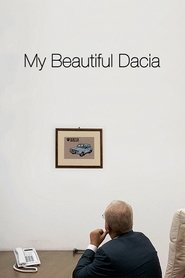
My Beautiful Dacia
2009
star 7An extravagant odyssey from Communism to Capitalism as seen from the perspective of one of Romania's most charismatic symbols, the Dacia automobile.This Was Pancho Villa: Second chapter
1958
star 4.9The second chapter of director Ismael Rodríguez's series about Pancho Villa. Several stories about the life and death of the famous mexican revolutionary general.Dorotheus
1981
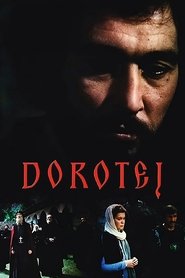
Dorotheus
1981
star 5In medieval Serbia, a young monk, a master of herbal medicine, grabs the attention of warlord's wife.Abolition
1988
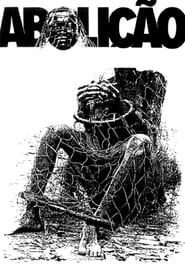
Abolition
1988
star 6.7In 1988, the centenary of abolition of slavery in Brazil, Zózimo Bulbul made this powerful historical analysis of racial issues in his country. This documentary provides an in-depth look through extensive archival researching and interviews of key figures who were involved in preserving black culture. Aside from historical testimony, this epic documentary also points to the current relevance of facing the racism that still confronts the black population in Brazil.In Broad Daylight
1981
In Broad Daylight
1981
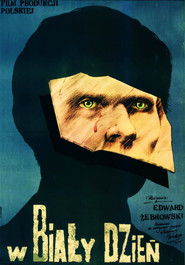
star 6.3Set in 1905. The story focuses on a young and inexperienced man in a revolutionary execution squad. He does his killing job out of idealism, and for the love of a woman. The young student murders a Russian spy and is afterwards arrested by the police. Much to his surprise he is released after a session with the traitor-judge, hinting at some leaks in the organisation. Student reports his suspicions back to the organisation, but in response is given a new hit mission.Lost Flower: Eo Woo-dong
2015
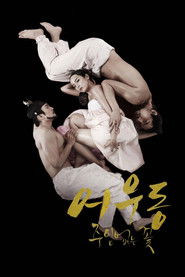
star 5.1A triangular relationship between Eo Woo-dong, her husband Lee Dong, and fantasy character Moo-gong, highlights on the first half of the Joseon Dynasty and portrays the contradicted life of the high class people, criticizing the modern day Korean society.Influence
2015
Influence
2015
star 4.1A story about the key events of the Wielkopolska Uprising - a dramatic arrival of Ignacy Jan Paderewski in Poznań, and the people who prepared the uprising, fought in it and won.The Bone Srewn Road
1980
The Bone Srewn Road
1980
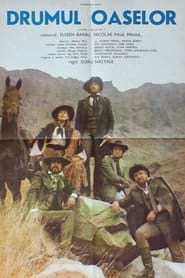
star 7.3Margelatu, the feared criminal helps the Romanian resistance to fight the dictatorial authorities.Little Houdini
2014
Little Houdini
2014
star 8.4Appleton, Wisconsin, 1886. Harry, 12 years old, has lived and breathed magic since his early childhood. But the small village Appleton is not the best spot for his natural talent to blossom. Although he rehearses endlessly in his parent’s barn he does realize that his dream is far stretched out. One day Harry catches the glimpse of a chance: the New York mayor has called out for a large contest in view of the Statue of Liberty’s official opening. However one must be tutored by a «real» magician and he doesn’t have the slightest idea of how to contact one… until his father tells him that the great Tesla is in town! Despite the young boys’ lack of knowledge Tesla spots talent, creativity and boldness in Harry. He decides to give him a chance and invites him to his own home, accompagnied by his niece Beth and his robot assistant Amrold.Rome '78
1978
Rome '78
1978
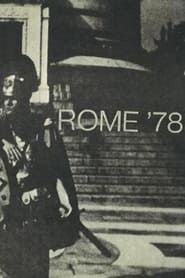
star 6.4Nares mocks up Ancient Rome by shooting in faux-classical sites including Tribeca's American Thread Building, where a decrepit penthouse loft with a peeling-paint dome serves as an echoey stand-in for the imperial palace. The latter location required ingenuity: Posing as potential renters, Nares and associates asked the manager to show them the apartment, then unlocked the windows on the way out; a few hours later, they broke back into the space, full cast and crew in tow, to shoot the necessary scenes.Adi Shankaracharya
1983
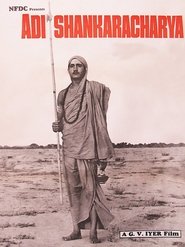
Adi Shankaracharya
1983
star 6.4The first and only Indian movie to be made in Sanskrit. The movie follows the life and times of Sankara - the founder of the non-duality (Advaita) school of Indian philosophy.