Top Rated History Movies on Pantaflix - Page 216
All Services
Free Services
 Netflix
 Amazon Prime Video
 Apple iTunes
 Apple TV Plus
 Disney Plus
 Google Play Movies
 Paramount Plus
 Hulu
Hulu
 HBO Max
 YouTube
 fuboTV
 Peacock
 Peacock Premium
 Amazon Video
 The Roku Channel
 AMC+
AMC on Demand
AMC+
AMC on Demand
 Kocowa
 Hoopla
 The CW
 Vudu
Vudu
 Starz
Starz
 Showtime
 PBS
PBS
 Pantaflix
 FXNow
FXNow
 Tubi TV
 Kanopy
 Comedy Central
 Crunchyroll
 Microsoft Store
 Redbox
 Sun Nxt
 ABC
ABC
 DIRECTV
 Crackle
 Fandor
 Plex
Plex
Netflix
Amazon Prime Video
Apple iTunes
Apple TV Plus
Disney Plus
Google Play Movies
Paramount Plus
Hulu
HBO Max
YouTube
fuboTV
Peacock
Peacock Premium
Amazon Video
The Roku Channel
AMC+
AMC on Demand
Kocowa
Hoopla
The CW
Vudu
Starz
Showtime
PBS
Pantaflix
FXNow
Tubi TV
Kanopy
Comedy Central
Crunchyroll
Microsoft Store
Redbox
Sun Nxt
ABC
DIRECTV
Crackle
Fandor
Plex

Cheka Employee
1964
Cheka Employee
1964
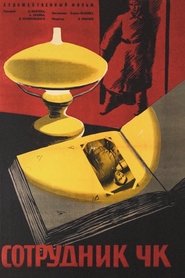
star 5.9Based on the novel of the same name by Aleksandr Lukin and Dmitriy Polyanovskiy. Russia, 1919. A young soldier of the First Cavalry Army, Aleksei Mikhalyov, is sent to work in the provincial Cheka. Here in the south of the country there is a large White Guard underground led by the elusive Markov. Aleksei gets into the gang, where he is mistaken for his own. The day of the operation to eliminate the white underground is appointed. But unforeseen circumstances destroy the plans of the Chekists.L'Affaire Dreyfus
1995
L'Affaire Dreyfus
1995
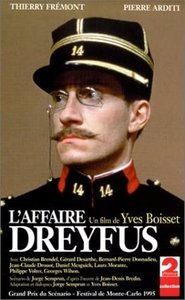
star 5.9In 1894, the French Army discovered the existence of a traitor Alsatian and Jewish, the French officer Alfred Dreyfus makes an ideal culprit. For lack of evidence, the War Ministry creates a damning document Dreyfus overwhelming. Judged and sentenced, Dreyfus is deported to Devil's Island. In 1896, the Army flushed out the real culprit. The truth broke out in 1898 thanks to the mobilization of intellectuals shaken by Zola's "J'accuse!"The White Silk Dress
2006
The White Silk Dress
2006
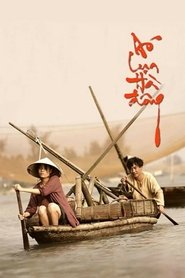
star 6.3A family living in poverty faces financial difficulties while striving to educate their daughters. The mother resorts to extraordinary measures to procure the traditional silk dresses needed for her kids to attend school.Queen Margot
1954
Queen Margot
1954
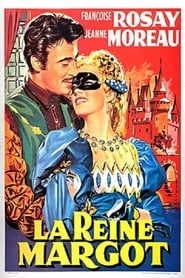
star 6.9Marguerite de Valois, daughter of Catherine de Médicis, celebrates her wedding with Henri de Navarre. Officially, it's a rapprochement between the League and the Huguenots. In fact, it was an opportunity to bring all the Huguenots to Paris and kill them all at once. King Charles IX fails in his attempt on Coligny's life. Queen Margot tries to save her husband from the St. Bartholomew's Day massacre by preventing the annulment of his marriage, forcing Henri to share her bed. Two knights from opposing camps are wounded and, saved în extremis, are hidden together by the queen and her cousin. Margot falls in love with one of them, but has to run to warn her husband of a new attack...Behold the Man
1935
Behold the Man
1935
star 7.3The final days of Jesus from the time he enters the city of Jerusalem. Viewed as a threat, it is decided that he must be captured, tried, and executed as a criminal, a plan aided and abetted by disciple Judas Iscariot.Big Bang in Tunguska
2008
Big Bang in Tunguska
2008
star 7.4At 7:14 am on 30 June 1908, the largest explosion recorded in human history to date reverberated throughout our planet. The force of the explosion was two thousand times that of the Hiroshima bomb. A woodland area the size of Luxembourg was eradicated in the Siberian taiga. This incident is recorded in history books as the Tunguska catastrophe. To this day, internationally renowned scientists of various disciplines argue about the causes of this disastrous explosion. The documentary discusses the latest and most controversial insights of these leading scientists. It identifies the reasons why Tunguska has evolved into a phenomenon and points out the curious results produced by this mythical event in culture and economy.Le déserteur
2008
Le déserteur
2008
star 4.4It tells the story of Georges Guénette, a deserter from the Canadian Army during World War II, who was shot and killed by members of the Royal Canadian Mounted Police.Buddenbrooks - 1. Teil
1959
star 5.2First part of two of the saga of the troubled Buddenbrook family and their business in mid 19th century Germany.Position Among the Stars
2011
star 8.4Through the eyes of grandmother Rumidjah, a poor old Christian woman living in the slums of Jakarta, we see the economical changing society of Indonesia and the influence of globalization reflected in the life of her juvenile granddaughter Tari and her sons Bakti and Dwi.Placido Rizzotto
2000
Placido Rizzotto
2000
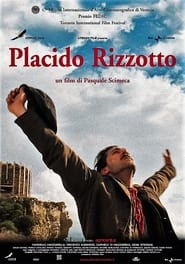
star 6.7As a child, Sicilian Placido Rizzotto saw his father imprisoned for a crime he didn't commit, and as a young man he fought in World War II, first as a soldier and then as an anti-fascist partisan. These events have left Placido with little taste for petty tyranny and with a desire to promote social justice. Upon his return home, he becomes increasingly aware that the Mafia has taken hold of his village, witnessing angry and frustrated as gangsters control local politics and take whatever they want from the people. Placido helps to form a trade union as a challenge to the Mafia's authority, and attempts to organize the villagers into a collective to grow crops in the fields taken by the Mafia.Signorina Effe
2008
Signorina Effe
2008
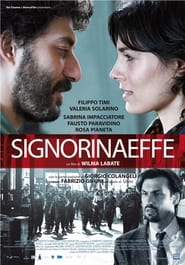
star 6.6A white and a blue collar worker fall in love during the 1980 strike at FIAT that marked the end for labor movement in Italy.The House on 56th Street
1933
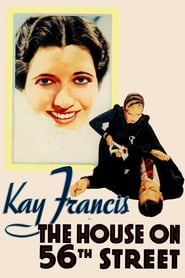
star 4.6A beautiful chorine marries a handsome rich socialite, but her idyllic life ends when she visits a dying old beau and is charged when he commits suicide.Unchained Memories: Readings from the Slave Narratives
2003
star 4.8When the Civil War ended in 1865, more than four million slaves were set free. Over 70 years later, the memories of some 2,000 slave-era survivors were transcribed and preserved by the Library of Congress. These first-person anecdotes, ranging from the brutal to the bittersweet, have been brought to vivid life in this unique HBO documentary special, featuring the on-camera voices of over a dozen top African-American actors.Pope Joan
1972
Pope Joan
1972
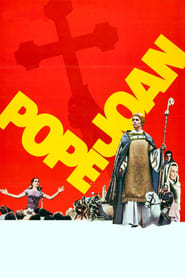
star 5.9Based on the medieval legend of Pope Joan, who was made Pope for a brief period around 855 A.D. The movie presents her existence as fact, though it is questionable that Pope Joan really did exist, and portrays her relationships with other notables of the time.Red Mercury
2010
Red Mercury
2010
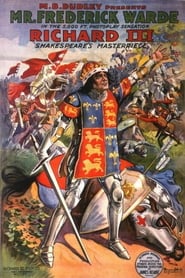
star 4.2It's the early 90's. A new currency is in circulation in Estonia - the kroon. The former federal republic has become a world leader in non-ferrous metal exports. There is a relentless struggle around this criminal business. It brings new victims every day. Estonia ranks first in Europe in terms of the number of killings. This is just the beginning...The Life and Death of King Richard III
1912
star 4.7Shakespeare's tragedy of the wicked and hump-backed Duke of Gloucester, who rises to the throne of England by chicanery, treachery, and brilliance.1812
1912
1812
1912
star 4.3Made in 1912, this film has become known as one of the greatest pieces of pre-Soviet cinema. The silent film tells the story of the Patriotic war of 1812 when Napoleon attempted to invade Russia. This joint French and Russian film sparked major excitement in Moscow at its premier screening and continues to entertain audiences throughout the world today. The 32-minute silent film was the point of origin for some of the more advanced camera techniques used today. Sirotin of the Voice of Russia said that, “The film is interesting to spectators even today and is frequently shown both in Russia and abroad.”Jánošík
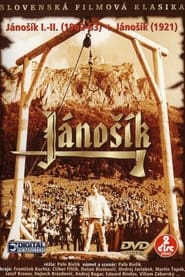
1963
Jánošík
1963
star 7.7This film is one of the most popular pictures of Slovak cinema and relates the story about the legendary folk hero and brigand Juro Jánošík [1688-1713] and the social situation in Slovakia of the late 17th and early 18th centuries. The first part talks about Jánošík's childhood, studies and return to his native village. In the second part Jánošík leaves for the hills, where he organizes his band of brigands and starts an anti-feudal resistance. The film concludes with Jánošík's execution.Africa, I Will Fleece You
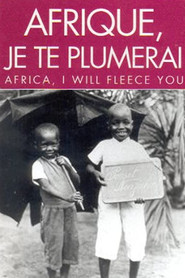
1992
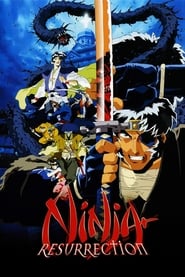
star 5.8This documentary of repressive political realities in Cameroon begins with the 1990 publication of an open letter to President Biya calling for a national conference - and the immediate arrest of the letter's author and publisher. The narration then examines the nation's colonial history, beginning with the first German missionary in 1901, the establishment of schools, French occupation following World War I, the paucity of books written by and published by Cameroonians, and the repression of the CPU, a leftist organization of the 1950s and 1960s. Cameroon and its people are the lark, its feathers plucked first by colonialism and then by native strongmen: 'Alouette, je te plumerai.'Ninja Resurrection
1997
Ninja Resurrection
1997
star 5.7Ninja Resurrection takes place in the Tokugawa era, at a time when Christians in Japan were being persecuted. The leader of the Shimabara Rebellion, Amakusa Shirō, hoped to resist the government forces attacking Christians like him but is assassinated. Soon after, Amakusa's restless spirit returns to avenge his fallen comrades and is up to Yagyū Jūbei Mitsuyoshi to put a stop to the demonic onslaught.