Top Rated History Movies on Pantaflix - Page 339
All Services
Free Services
 Netflix
 Amazon Prime Video
 Apple iTunes
 Apple TV Plus
 Disney Plus
 Google Play Movies
 Paramount Plus
 Hulu
Hulu
 HBO Max
 YouTube
 fuboTV
 Peacock
 Peacock Premium
 Amazon Video
 The Roku Channel
 AMC+
AMC on Demand
AMC+
AMC on Demand
 Kocowa
 Hoopla
 The CW
 Vudu
Vudu
 Starz
Starz
 Showtime
 PBS
PBS
 Pantaflix
 FXNow
FXNow
 Tubi TV
 Kanopy
 Comedy Central
 Crunchyroll
 Microsoft Store
 Redbox
 Sun Nxt
 ABC
ABC
 DIRECTV
 Crackle
 Fandor
 Plex
Plex
Netflix
Amazon Prime Video
Apple iTunes
Apple TV Plus
Disney Plus
Google Play Movies
Paramount Plus
Hulu
HBO Max
YouTube
fuboTV
Peacock
Peacock Premium
Amazon Video
The Roku Channel
AMC+
AMC on Demand
Kocowa
Hoopla
The CW
Vudu
Starz
Showtime
PBS
Pantaflix
FXNow
Tubi TV
Kanopy
Comedy Central
Crunchyroll
Microsoft Store
Redbox
Sun Nxt
ABC
DIRECTV
Crackle
Fandor
Plex

Bach - A Christmas Miracle
2024
star 6.5Leipzig, December 1734: Christmas brings the Bach family together. The first snow has fallen and the children Gottfried and Elisabeth are delighted about the arrival of their older brothers Friedemann and Emanuel. The Thomaskantor has retired to his music room. Anna Magdalena supports her husband, as there are only a few days left and his latest work, the six-part "Christmas Oratorio", must be finished on time. It is awaited with suspicion by the city council and the gentlemen of the consistory, who have long found Bach's waywardness a thorn in their side and fear that, after the premiere of the St. Matthew Passion a few years earlier, the St. Thomas Church will once again be filled with "operatic" music. With the oratorio, Johann Sebastian Bach hopes that he will finally become court composer in Dresden. And, as always, he demands that all members of the family join forces to help him. But differences of opinion are increasingly delaying the completion of Bach's most famous work.The Tragic Story of Fritz the Elephant
2023
star 8The story of the birth of the exploitation of wild animals, the fruit of the iron twinning between the Industrial Revolution and the omnipotent and arrogant logic of colonialism, told through the multiple tribulations of Fritz, an Asian elephant who, one hundred and fifty years ago, worked in the largest circus in the world.Hannibal: The Man Who Hated Rome
2004
star 7.8No shortlist of the greatest generals in history would be complete with out the name of Hannibal. This film shows why he was both feared and respected by his enemies. Hannibal's tactical genius is illustrated with the latest three-dimensional graphics technology and exciting dramatic reconstructions of his victories. This is the story of the General who took on the might of Rome.Coco Chanel vs Elsa Schiaparelli
2014
star 10In the 1920s, the rivalry between fashion icon Gabrielle Chanel and her stylistic rival Elsa Schiaparelli gave rise to innovations in haute couture.Lebanon 1982 - X-ray of a massacre
2023
star 6This film is primarily a smell. An indescribable scent that marks you forever. The smell of war, of death. The smell of impossible peace. Constructed as an investigation, the film is a double testimony, that of the executioner and that of the victim, presenting the turning point in the history of a country, a region, several peoples that are at the center of all conflicts in the Middle East. The film tells the story of 5 days in September 1982, which itself sums up a century of conflict. In one place, Beirut. An investigation based on the testimonies of all the protagonists, victims, executioners, accomplices and witnesses.Trabucos y pistolas
0000
The Last Republican
2024
The Last Republican
2024
star 7.5A fan of Hot Tub Time Machine, Republican Congressman Adam Kinzinger invites the left-wing Hollywood director Steve Pink to follow his efforts to hold Donald Trump accountable for the January 6 insurrection.Janis Ian: Breaking Silence
2025
star 7.5In 1965, Janis Ian, a 14-year-old singer-songwriter from New Jersey, wrote “Society’s Child” about an interracial relationship. Recorded and released a year later, the song launched Ian's career, but its subject matter ignited controversy, even resulting in death threats. The fallout plunged Ian into an emotional tailspin–and yet a few years later she emerged from the ashes with an even bigger hit, “At Seventeen.” Over six decades, Janis Ian gained ten Grammy nominations in eight different categories, saw her song “Stars” recorded by such luminaries as Nina Simone and Cher, and overcame homophobia, misogyny, and a life-threatening illness to produce an indelible body of work that continues to draw audiences around the globe. Featuring Janis Ian, Joan Baez, Jean Smart, Arlo Guthrie, Lily Tomlin, and Tom Paxton, among other icons.The Legend of the Icon
1992
star 4A young Japanese girl Rin-san comes to the pre-revolutionary Russia with a great and wonderful mission: to understand the mastery of iconography and attach Japan to the Russian Christian culture. She does not know that Russia stands on the verge of tragic change. Terrible years of atheism are coming. Envy of mediocre, intriguing nuns, the tragic love of a terrorist-regicide will turn Rin's life upside down...The Hunters
2024
The Hunters
2024
star 61970 something. As the end of an era of repression approaches, a bourgeois family still in its bubble of power spends its vacation in a country house. The teenage cousins spend their days in indolence, interrupted by fits of hysteria. It will only take the introduction of an outside element for violence to erupt.Sara: Amor y Revolución
2024
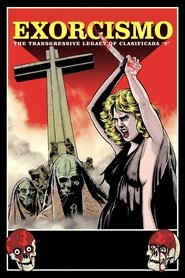
star 4The politically active Sara Pérez Romero from Queretaro fights, together with her husband, President Francisco I Madero, for the restoration of democracy in Mexico. Sara, strong-willed since she was a child, lived with the workers on her father's farm, which made her reflect on the social differences in Mexico. She later studied in California, embracing liberal and democratic ideals that would accompany her throughout her life.Exorcismo: The Transgressive Legacy of Clasificada “S”
2024
star 6.5Spain, 1975. Franco's death opens the door to the possibility of uncensored cinema. After two years of relaxed censorship, it is abolished in 1977, and the “S” rating is created to protect viewers from films that may “offend their sensibilities.”Sube a mi nube
2024
Sube a mi nube
2024
star 5.5In a time without the internet or social media, Mónica battled the pressures of fame while starring in the beloved children's show Sube a mi nube. Though the show brought joy to many, it slowly consumed her, as she struggled with the weight of her mental health in a world that didn't understand her pain.Zombies of the Third Reich
2025
star 6.5During WW2, a group of assembled allied forces are sent to a secret nuclear bunker occupied by Nazi Germany to uncover the operations of what's been occurring there. But when they discover the bunker is infested with rabid, zombie, super-humans in a nuclear testing operation gone wrong, they must destroy every last one in hopes of survival.