Top Rated History Movies on Pantaflix - Page 355
All Services
Free Services
 Netflix
 Amazon Prime Video
 Apple iTunes
 Apple TV Plus
 Disney Plus
 Google Play Movies
 Paramount Plus
 Hulu
Hulu
 HBO Max
 YouTube
 fuboTV
 Peacock
 Peacock Premium
 Amazon Video
 The Roku Channel
 AMC+
AMC on Demand
AMC+
AMC on Demand
 Kocowa
 Hoopla
 The CW
 Vudu
Vudu
 Starz
Starz
 Showtime
 PBS
PBS
 Pantaflix
 FXNow
FXNow
 Tubi TV
 Kanopy
 Comedy Central
 Crunchyroll
 Microsoft Store
 Redbox
 Sun Nxt
 ABC
ABC
 DIRECTV
 Crackle
 Fandor
 Plex
Plex
Netflix
Amazon Prime Video
Apple iTunes
Apple TV Plus
Disney Plus
Google Play Movies
Paramount Plus
Hulu
HBO Max
YouTube
fuboTV
Peacock
Peacock Premium
Amazon Video
The Roku Channel
AMC+
AMC on Demand
Kocowa
Hoopla
The CW
Vudu
Starz
Showtime
PBS
Pantaflix
FXNow
Tubi TV
Kanopy
Comedy Central
Crunchyroll
Microsoft Store
Redbox
Sun Nxt
ABC
DIRECTV
Crackle
Fandor
Plex

Théo et Marie
1998
Théo et Marie
1998
star 6After the arrest of his mother, who is accused of collaboration, 14-year-old Theo decides to go join his grandfather in Paris. On the road he meets Marie, an 11 year old orphan.The Death Story of Sohrab
2017
star 6A minstrel named Kamous is standing before Rostam. One out of many stories he has recited for people is: What befell Sohrab with Rostam. Rostam believes that the story the minstrel is narrating-- the Tragedy of Sohrab, is inverted, gone astray and wrongful. And he questions the minstrel "why?" Here, with Rostam questioning the minstrel another story begins which is the opening of our narrative.Sommer '39
2009
La Tour de Nesle
2021
La Tour de Nesle
2021
star 4During the reign of King Louis X the Hutin, his wife Marguerite indulged in parties of pleasure in the secrecy of the Tour de Nesle. Her young lovers were also her victims, and she had them murdered to avoid detection. Such was the fate that awaited Philippe d'Aulnay, who had barely arrived in Paris and who, in one night, had gone from the arms of the sovereign to the bottom of the Seine. What the queen doesn't know is that among his companions in debauchery that night was a certain Buridan. An adventurer, ready to do anything to conquer money and power - including blackmailing the Queen of France... This is the beginning of a merciless war between these two beings, with one spectacular turn of events after another, horrifying revelations and the crossfire of hatred and love.The Nazi Jesus
2016
The Nazi Jesus
2016
star 7While Nazi ideology dominated Europe, Adolf Hitler used all dogmas to his advantage and fed the cult of his personality. How did the Führer manage to transform the Bible, the Church and the symbols of Christianity into instruments of power, winning the support of the Germans? This documentary traces the rise of a little-known theological organization: the “German Christians”, which became the most powerful propaganda tool of the Third Reich.John Adams: Nixon in China
2012
star 72012 telecast production of John Adams's opera Nixon in China, recorded at the Théâtre du Châtelet in Paris, France.Civil War (Or, Who Do We Think We Are)
2021
star 4A journey across the United States to explore the story of the Civil War of Americans from President Obama's final year in office through the present.The Rumba Kings
2021
The Rumba Kings
2021
star 9In the fifties, when the future Democratic Republic of Congo was still a Belgian colony, an entire generation of musicians fused traditional African tunes with Afro-Cuban music to create the electrifying Congolese rumba, a style that conquered the entire continent thanks to an infectious rhythm, captivating guitar sounds and smooth vocals.Orient Express: A Train Writes History
2020
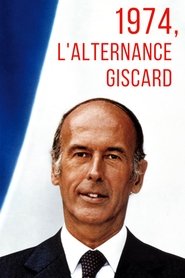
star 7.5Putting the Orient Express – also called „the train of trains“ – on its tracks called for considerable stamina. Several times, the ambitious project of Georges Nagelmackers was on the brink of failure as the Belgian entrepreneur was facing the bankruptcy of his sleeping car company.1974, l'alternance Giscard
2019
star 7In May 1974, Valéry Giscard d'Estaing became the third President of the Fifth Republic. An alternation of power that did not speak its name opened the doors of power to a reforming president. Abortion, divorce by mutual consent, lowering the age of majority to 18 - in less than two years, the youngest President of the Republic - at the time - carried out reforms with a vengeance, without a united majority in Parliament, before failing in the economic sphere and losing the battle against unemployment. At the age of 90, the former President of the Republic has agreed to look back on these years and gives us a valuable account of his time in power.The Girl Who Wore Freedom
2021
star 9Discover the untold stories of D-Day from the men, women and children who lived through German occupation and Allied liberation of Normandy, France. Powerful and deeply personal, THE GIRL WHO WORE FREEDOM tells the stories of an America that lived its values, instilling pride in a country that's in danger of becoming a relic of the past.Handsome Men BC
2019
Handsome Men BC
2019
star 1.5The primitive tribe needs nothing, spends their time uselessly, and lives off another tribe next door who works hard to make supplies. One day the latter disappears, so the idlers face a difficult task... They have to decide: to work on their own or find fugitives, and they choose the second option.The Genius of Gothic Art
2021
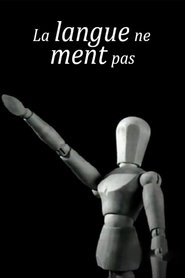
star 7.8Death and the devil, nudity and eroticism, horror in blazing colours, Gothic art cast a spell over people 500 years ago. In these image-poor times, art deliberately and skilfully played with the emotions of the viewer, triggering fear, devotion, but also rapture. Art documentary on German gothic art of the late-middle ages.Language Does Not Lie
2004
star 8Victor Klemperer (1881-1960), a professor of literature in Dresden, was Jewish; through the efforts of his wife, he survived the war. From 1933 when Hitler came to power to the war's end, he kept a journal paying attention to the Nazis' use of words. This film takes the end of 1945 as its vantage point, with a narrator looking back as if Klemperer reads from his journal. He examines the use of simple words like "folk," "eternal," and "to live." Interspersed are personal photographs, newsreel footage of Reich leaders and of life in Germany then, and a few other narrative devices. Although he's dispassionate, Klemperer's fear and dread resonate