Top Rated History Movies on Pantaflix - Page 462
All Services
Free Services
 Netflix
 Amazon Prime Video
 Apple iTunes
 Apple TV Plus
 Disney Plus
 Google Play Movies
 Paramount Plus
 Hulu
Hulu
 HBO Max
 YouTube
 fuboTV
 Peacock
 Peacock Premium
 Amazon Video
 The Roku Channel
 AMC+
AMC on Demand
AMC+
AMC on Demand
 Kocowa
 Hoopla
 The CW
 Vudu
Vudu
 Starz
Starz
 Showtime
 PBS
PBS
 Pantaflix
 FXNow
FXNow
 Tubi TV
 Kanopy
 Comedy Central
 Crunchyroll
 Microsoft Store
 Redbox
 Sun Nxt
 ABC
ABC
 DIRECTV
 Crackle
 Fandor
 Plex
Plex
Netflix
Amazon Prime Video
Apple iTunes
Apple TV Plus
Disney Plus
Google Play Movies
Paramount Plus
Hulu
HBO Max
YouTube
fuboTV
Peacock
Peacock Premium
Amazon Video
The Roku Channel
AMC+
AMC on Demand
Kocowa
Hoopla
The CW
Vudu
Starz
Showtime
PBS
Pantaflix
FXNow
Tubi TV
Kanopy
Comedy Central
Crunchyroll
Microsoft Store
Redbox
Sun Nxt
ABC
DIRECTV
Crackle
Fandor
Plex

1958: Those Who Said No
2018
star 8On October 4, 2018, France celebrated the 60th anniversary of the Fifth Republic. It is a republic born in the throes of the Algerian War and one which—from the day it was founded by General de Gaulle until the presidency of a very Jupiterian Emmanuel Macron—has been assailed as a “Republican monarchy” by partisans of a more assertive parliamentarian state. By revisiting the struggle of those who dared oppose the new regime — only to suffer a crushing defeat on September 28, 1958, when they were barely able to garner 20% of the vote against the constitutional text — this film shines a powerful new light on the origins of the Fifth Republic and its consequences for the next 60 years. It is a constitutional debate that planted the seeds for a complete upheaval of the French political landscape, on the left in particular, and set the country in motion toward what would be called the Union of the Left.The Last War Crime
2012
The Last War Crime
2012
star 6Epic political fantasy drama, envisioning what would have happened if Dick Cheney had been indicted for ordering torture, which was used to get the false confessions to make a fraudulent case for war.Unprovoked: A Creative Process
2021
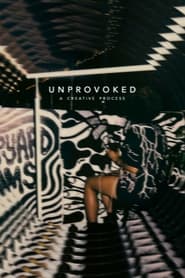
star 10Artist Taylor Denise sets out to make her first painting, which also happens to be her largest work to-date. As she embarks on this creative process of making shit because it looks cool, she's met with comradery, debauchery, and people's brains interrupting art whatever way they want to-ery.A Cursed Monarchy
2005
A Cursed Monarchy
2005
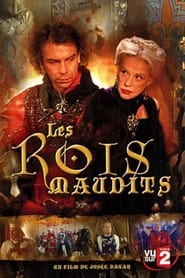
star 6It is the early 1300's and the treasury of France, under the rule of Philippe IV (Philippe le Bel or Philippe the Beautiful), is empty. The king decides the only solution is to raid the treasures of the Knights Templar (amongst others) and concocts various charges of treason, heresy and deviance against the Knights and their Grand Master Jacques de Molay. Having confessed under torture to the crimes of which he is accused, de Molay is condemned to be burned at the stake. With his dying breath he curses the king, the king's advisor (Guillaume de Nogaret), the pope (Pope Clement V) and the thirteen succeeding generations of their families. There follows one of the most dramatic periods in French history, half a century of political intrigue, murder, treason, war and famine, which ultimately culminates in the 100 Years War.Between Walls
2021
Between Walls
2021
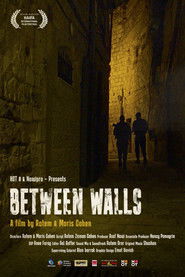
star 8The Old City of Jerusalem, the land on which King Solomon, Jesus, Saladin Titus, and many others walked, continues to attract believers and visitors from all over the world. Within the ancient city walls “Platoon C”, a special border police unit, exclusively operates to secure the tensed area. The platoon itself consists of Jewish, Christian, and Muslim soldiers, who are torn between their inner faith and their intuitive training as cops, a role that requires neutralization of emotion.Ariane: A Space Epic
2021
Ariane: A Space Epic
2021
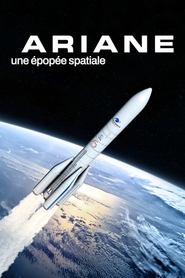
star 6The history of the Ariane rocket is a space epic that has seen Europeans unite and innovate to make a place for themselves in the space race. Faced with Soviet and then American supremacy, men and women from the four corners of Europe have achieved the impossible. Ariane has become a true monument, thanks to the passion of those who dreamed of it and to their tenacity in the face of the various obstacles that stood in their way. This undeniable European success is now at a turning point in its history. The new Ariane 6 program is currently being developed to meet the challenges of tomorrow: will it be able to meet the challenges of a more competitive environment than ever before?Portrait of God
2001
Portrait of God
2001
star 6Portrait of God is a documentary road movie about the manhunt for the most wanted person in the world. The film is constructed as a classic detective story. A middle-aged detective shadows the suspect through the highs and lows of South African society until he ends up in a gigantic prison in Cape Town bursting with murderers, thieves, and rapists.Addicted to Solitude
1999
Addicted to Solitude
1999
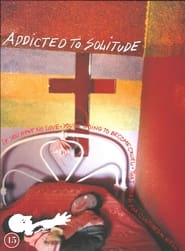
star 6I traveled to South Africa to find a white family living on a desolate farm. I wanted to film how they faced the new days of equality after the fall of Apartheid. But I soon lost my way both on the endless roads and in my way. Instead, the film became a story about two very different women who both experienced a tragic loss in the midst of a white community not too fond of the future.Berlanga: el sentimiento austrohúngaro de la vida
2021
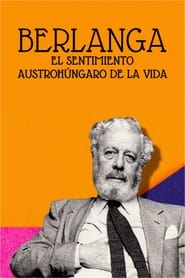
star 6A journey through the life, work and many artistic miracles of the brilliant Spanish filmmaker Luis García Berlanga (1921-2010).Getting Away with Murder(s)
2021
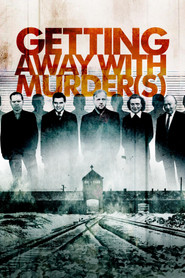
star 10Almost 1 million people in 22 countries carried out the unprovoked murder of 11 million innocent men, women and children. The Allies knew where a great many of the murderers could be found - Germany, Austria, Italy, the UK, the USA, Canada, Australia, and numerous countries in South America. The Allies unanimously agreed to prosecute those responsible when they drew up The London Agreement in August 1945, but, after the late 1940s, these very same Allies did almost nothing. Why were so many were actively permitted to get away with their crimes?Lysistrata
1965
Lysistrata
1965
Hranice
2006
Hranice
2006
star 6Story of a man who, at the end of the 1940s, attempted to cross the Czechoslovak border illegally like many others to escape the communist regime and became a victim of the historically documented game of the security forces of the totalitarian regime, the so-called Kameny action. The project of the Miroslav Ondříček Film Academy in Písek is the debut of screenwriter and director Martin Kopp.A Call to Arms
2009
A Call to Arms
2009
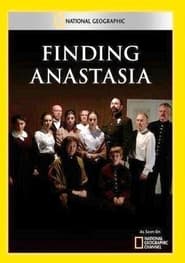
star 6A documentary which traces the controversial Anthrax Vaccine Immunization Program (AVIP) in the United States and the United Kingdom.Finding Anastasia
2008
Finding Anastasia
2008
star 6Did Romanov Princess Anastasia survive a Bolshevik firing squad or did she and her brother Crown Prince Alexis perish with their father, Tsar Nicholas II, before another firing squad in 1918? The chance find of human remains in a Siberian forest brings forensic anthropologist Dr.Anthony Falsetti in search of the truth. Marshalling DNA, ballistics and the very latest forensic analysis, an international team works to dispel the greatest myth of the 20th century and tell a real story more remarkable than any fiction.Le monde de Khéops
2018
Saint Nektarios
1969
Saint Nektarios
1969
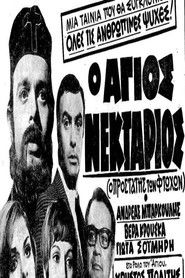
star 5A dancer, Vera, is married to a nuclear scientist, Tasos. She suffers from multiple sclerosis and is in very bad condition. In a little church on Aegina, according to rumors, supernatural things happen. True miracles. The President of the community is Tasos' father, and so Tasos himself has the chance to experience from up close many remarkable incidents. Bedridden Vera reads the biography of Saint Nektarios, patron saint of the island, whose life we follow in parallel. This strengthens the religious faith of both the heroine and her husband. A new diagnosis, however, changes the facts, and Vera, after a surgical operation, is completely cured.Ežo Vlkolinský
1978
Ežo Vlkolinský
1978
star 8The TV dramatization of PO Hviezdoslav's epic tells of a time when the feudal system as a social force begins to disappear. Its only salvation is to merge with the people. Ežo is a supporter of this idea.Krishna in Vrindavan
2007
Krishna in Vrindavan
2007
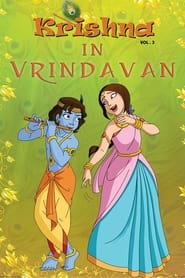
star 10The adventures of Krishna and his friends in Vrindavan are filled with action and excitement, as they discover new forests and face new demons. All through these fun adventures Krishna and his friends are challenged by demons, which are finally destroyed by Krishna and Balram.