Top Rated Music Movies on Pantaflix - Page 289
All Services
Free Services
 Netflix
 Amazon Prime Video
 Apple iTunes
 Apple TV Plus
 Disney Plus
 Google Play Movies
 Paramount Plus
 Hulu
Hulu
 HBO Max
 YouTube
 fuboTV
 Peacock
 Peacock Premium
 Amazon Video
 The Roku Channel
 AMC+
AMC on Demand
AMC+
AMC on Demand
 Kocowa
 Hoopla
 The CW
 Vudu
Vudu
 Starz
Starz
 Showtime
 PBS
PBS
 Pantaflix
 FXNow
FXNow
 Tubi TV
 Kanopy
 Comedy Central
 Crunchyroll
 Microsoft Store
 Redbox
 Sun Nxt
 ABC
ABC
 DIRECTV
 Crackle
 Fandor
 Plex
Plex
Netflix
Amazon Prime Video
Apple iTunes
Apple TV Plus
Disney Plus
Google Play Movies
Paramount Plus
Hulu
HBO Max
YouTube
fuboTV
Peacock
Peacock Premium
Amazon Video
The Roku Channel
AMC+
AMC on Demand
Kocowa
Hoopla
The CW
Vudu
Starz
Showtime
PBS
Pantaflix
FXNow
Tubi TV
Kanopy
Comedy Central
Crunchyroll
Microsoft Store
Redbox
Sun Nxt
ABC
DIRECTV
Crackle
Fandor
Plex

Kaanchi
2014
Kaanchi
2014
star 5.2Kaanchi movie is a musical thriller with a love story. It is a story of the inner power of a woman who represents millions of suppressed youth against unjust in the country. It is also the story of an innocent rural beauty and her fight against power.Kora Terry
1940
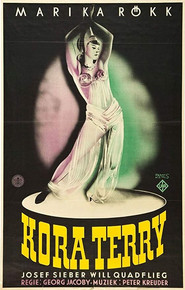
Kora Terry
1940
star 5.2When Bartos, the director of the Odeon variety theater, cancels an artist at short notice, he hires the Terrys out of necessity, whose parents were successful variety artists, but who had not yet received an engagement themselves. Both are supported by Tobs, a friend of their parents. While blonde Mara Terry arrives punctually for the first rehearsal, her dark-haired sister Kora is late like a diva and acts aloof and snippy. At their first performance together the next day, Kora is overtired from partying the night before. During a dangerous act in which she has to balance her upside-down sister on her head, she becomes careless...Karneval der Liebe
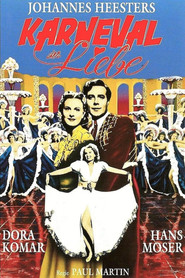
1943
Isola Bella
1961
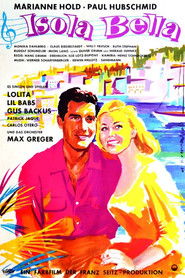
Isola Bella
1961
star 5.7Consul daughter Anne Stülcken wants to take her fiancee undetected under the magnifying glass and therefore slips in her father's villa in the role of a maid.Do Not Marry, Girls
1985
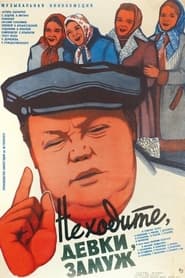
Do Not Marry, Girls
1985
star 3.6A chairman of a Kolkhoz tries to organize a musical band in order to prevent kolkhoz girls to escape into a big city.The Court Concert
1936
The Court Concert
1936
star 4.6Before he became cult director Douglas Sirk, Detlef Sierck cut his teeth on such lavish European star vehicles as Das Hofkonzert (The Court Concert). Marta Eggerth is cast as Christine, a young singer who aspires to find out who her father was. Her odyssey brings her to the court of a mythical kingdom, where she is romanced by handsome lieutenant Walter (Johannes Heesters). He is warned not to lose his heart to a "commoner," but all turns out all right when King Serenissimus (Otto Tressler) turns out to be Christine's long-lost daddy. Hofkonzert was designed as a comeback for Marta Eggerth, whose star had eclipsed by the mid-1930s.I, You, and Ovidiu
1978
I, You, and Ovidiu
1978
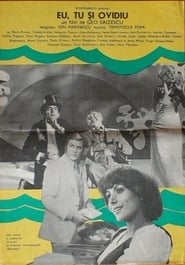
star 5.4A witty and cheerful musical comedy made under the Communist regime. The Black Sea coast and the city of Constanta, in the height of the summer season, as well as the pearls of Romanian tourism, the resorts of Mangalia, Saturn, Venus, Jupiter, Neptune and Olimp, offer a more than generous setting for a comedy with songs and dances, with beautiful boys and girls, with important ladies and gentlemen, with adventurers, for one day or for several days, with tangled suitcases, functions and destinies, in a turbulent humoristic atmosphere.Die Fledermaus
1946
Die Fledermaus
1946
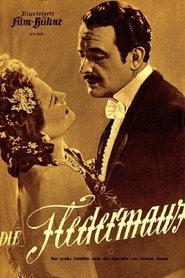
star 8Theater director Falke, dressed as a bat, ends up in prison after a merry carnival night. Director Frank only releases him after some time. Falke decides to take revenge on his friend Gabriel von Eisenstein, to whom he owes the whole affair. The annual masked ball at Prince Orlofsky's provides the opportunity. Falke stages a game of mistaken identity in which Eisenstein does not recognize his own wife and courts her, while maid Adele appears as the countess. Eisenstein is duped, Falke has taken his revenge.Damals
1943
Damals
1943
star 6.6Vera Meiners' life was sweet but unfortunately for her, it was not to last. Her husband, Jan, left her after she met a former lover in a harmless friendly meeting. Forced to resume her disrupted medical career, she worked in a Swiss clinic but, without the knowledge of the chief surgeon, Vera ordered a risky operation to be performed and was thereafter fired. Penniless, she then works in Spanish nightclubs in order to provide for herself and her child. After many years, she runs into her friend Frank again in one of these nightclubs...Die große Kür
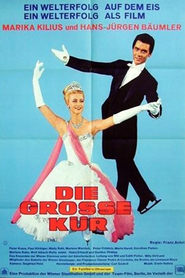
1964
Pansy Division: Life in a Gay Rock Band
2008
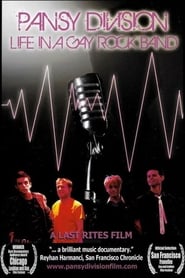
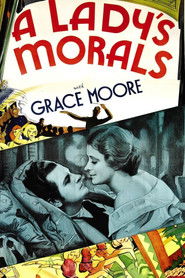
star 3.8Undeniably one of the most important and influential gay music acts in the last twenty years, Pansy Division pioneered the "queercore" genre long before other gay musicians had the confidence to come out of the closet, and without major record label support or mainstream radio airplay. Using original and archive footage and covering over fifteen years as a group, Pansy Division: Life in a Gay Rock Band is a fast-paced, intimate and humorous account of one of rock's most fearless acts. From their first days in San Francisco's underground music scene to a full-fledged stadium tour with Green Day and beyond, founding members Jon Ginoli and Chris Freeman overcome increasingly difficult line-up changes, prejudice and near-poverty to keep the band together and create music that has truly made a difference.A Lady's Morals
1930
A Lady's Morals
1930
star 4.2Romantic biography of Swedish opera singer Jenny Lind and her famous affairs.That´s What Music is For
2013
star 5.1Documentary about “Os Mulheres Negras” , the world´s third smallest big band, discussing music, aesthetics and creation in Brazil from the 80´s till nowadays.Catch My Soul
1974
Catch My Soul
1974
star 5.4Screenwriter John Good's rock & roll adaptation of Shakespeare's Othello who is a wandering evangelist who happens onto Iago's remote commune. There he marries the lovely Desdemona much to the chagrin of Iago, who also loves her. The conniving commune leader then manages to quietly pressure Othello until murder and tragedy ensue. Songs include: "Othello", "Working on a Building," "Eat the Bread, Drink the Wine," "Book of Prophecy," "That's What God Said," "Chug a Lug," "Open Your Eyes," "Lust of the Blood," "Put Out the Light" and more.To the Devil, with Love
1972
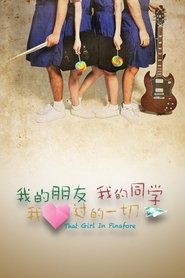
star 3.4On an island buffeted by storms, the seamen are confined with no desire to abandon the life by the sea. They spend days and nights drunk in the tavern. The young woman who serves them has one desire: to go far away. This sets the stage for a musical in the open, and will frame a story of love and adventure, reminiscent of the director's film Aoom.That Girl in Pinafore
2013
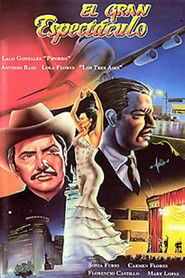
star 6Jiaming, a free spirited teenager, has never taken school seriously. However, he is forced to confront his future when he flunks his O level exams and drops out of school. While deciding his future, Jiaming decides to help out at his parents music pub, Meng Chuan. Jiaming's buddies Caogen, Haoban and Xiaopang pass their exams and move on to Junior College. But they are caught renting porn magazines by the principal and are suspended for a month. During this month, the boys join a local music competition, have a taste of first love, and work hard to bring business back to the struggling Meng Chuan. In this coming-of-age tale, Jiaming and gang realise the harsh realities of the real word. In growing up, choosing to follow your heart is never easy in the face of societal expectations.El gran espectáculo
1958
Bewitching Kisses
1937
Bewitching Kisses
1937
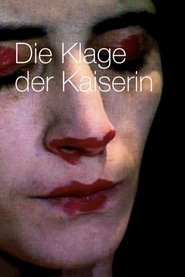
star 5.8A singer is kidnapped by a rancher and her boyfriend comes to rescue her.The Complaint of an Empress
1990
star 4.2This first film by choreographer Pina Bausch reflects her method of working as developed with the Wuppertal Theatre of Dance during the 1973/74 season. The film does not tell a story, but is made up of various scenes put together as a collage with scenes set in different locations. The futility of human activity and the search for love make up the film's central theme set against the strains of a Silician funeral march. Filmed on location in Wuppertal, Germany, between October 1987 and April 1989.