Top Rated War Movies on Pantaflix - Page 107
All Services
Free Services
 Netflix
 Amazon Prime Video
 Apple iTunes
 Apple TV Plus
 Disney Plus
 Google Play Movies
 Paramount Plus
 Hulu
Hulu
 HBO Max
 YouTube
 fuboTV
 Peacock
 Peacock Premium
 Amazon Video
 The Roku Channel
 AMC+
AMC on Demand
AMC+
AMC on Demand
 Kocowa
 Hoopla
 The CW
 Vudu
Vudu
 Starz
Starz
 Showtime
 PBS
PBS
 Pantaflix
 FXNow
FXNow
 Tubi TV
 Kanopy
 Comedy Central
 Crunchyroll
 Microsoft Store
 Redbox
 Sun Nxt
 ABC
ABC
 DIRECTV
 Crackle
 Fandor
 Plex
Plex
Netflix
Amazon Prime Video
Apple iTunes
Apple TV Plus
Disney Plus
Google Play Movies
Paramount Plus
Hulu
HBO Max
YouTube
fuboTV
Peacock
Peacock Premium
Amazon Video
The Roku Channel
AMC+
AMC on Demand
Kocowa
Hoopla
The CW
Vudu
Starz
Showtime
PBS
Pantaflix
FXNow
Tubi TV
Kanopy
Comedy Central
Crunchyroll
Microsoft Store
Redbox
Sun Nxt
ABC
DIRECTV
Crackle
Fandor
Plex

Decisive Engagement: The Liaoxi Shenyang Campaign
1991
star 8.1First part of the Decisive Engagement trilogy. Directed by Pingfen Li et al.Black Shirt
1933
Black Shirt
1933
star 3.3An Italian blacksmith who emigrated is wounded during the war on the French front, losing his memory. Hospitalized in a German hospital, he recovers it three years later and returns home from Tunisia, happy for the reclamation of the Pontine Marshes and the inauguration of the city of Littoria.Tomka and His Friends
1977
star 7.7Tomka is a boy who likes playing football with his friends. When the German army captures his town, the German soldiers establish their camp in the town stadium. Tomka with help from his friends and their parents organizes sabotage actions against the soldiers.Tunisian Victory
1944
Tunisian Victory
1944
star 6.2Documentary made by the U.S. Army Signal Corps after the North African campaign.A Farewell to Fools
2013
A Farewell to Fools
2013
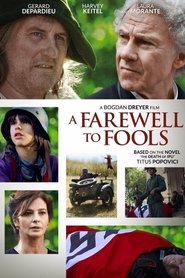
star 5.1Set during World War II, somewhere in Eastern Europe. A German soldier is found dead near the village. The local authorities must find the culprit, or they will be all shot by the Nazis the morning after. There's no way to find the guilty one, but there's Ipu, the madman of the village, whom they promise a hero's funeral if he will claims responsibility and agrees to die in their place. He must decide, and time is running out.The Zookeeper
2001
The Zookeeper
2001
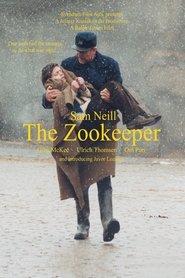
star 6.5Jonah Ludovic is a custodian at a small municipal zoo. After a night of heavy shelling Ludovic arrives at his job to find the staff abandoning the zoo. He joins a skeleton crew that includes an elderly guard and a veterinarian. Their purpose: to keep the animals alive until help arrives from an international zoological mission.The Coward
1915
The Coward
1915
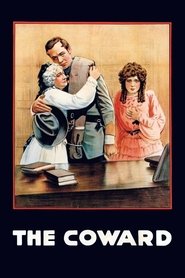
star 5.8Set during the American Civil War, Keenan stars as a Virginia colonel and Charles Ray as his weak-willed son. The son is forced, at gunpoint, by his father to enlist in the Confederate army. He is terrified by the war and deserts during a battle. The film focuses on the son's struggle to overcome his cowardice.The Fugitives
1955
The Fugitives
1955
star 7.6During the Second World War, in 1943, two French prisoners, François and Michel, escape from Stalag B377 in northern Germany near the Baltic Sea. They meet another escaped compatriot, Pierre, who has donned the uniform of a German officer and joins them. Their goal: to reach neutral Sweden. To get there, they'll have to walk part of the way, then take a train to the coast and, from there, find a way to cross the sea to the shores of Sweden.White Badge
1992
White Badge
1992
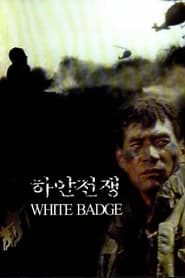
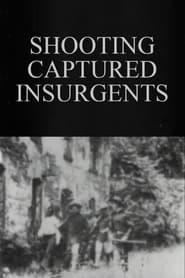
star 5.5A Vietnam war veteran writes a series of articles about his war experiences for a local newspaper. As he does so, another veteran, drawn by the articles, begins randomly appearing in his life.Shooting Captured Insurgents
1898
star 4.3“A file of Spanish soldiers line up the Cubans against a blank wall and fire a volley. The flash of rifles and drifting smoke make a very striking picture.” (Edison film catalog)In the Border States
1910
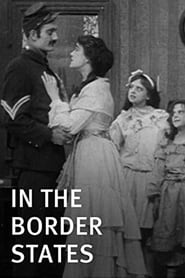
In the Border States
1910
star 5.5During the Civil War, a father living in a border state leaves to join the Union Army. After he leaves, Confederate troops forage on his property, where a soldier encounters one of his daughters. The father himself is wounded on a hazardous mission and must run for his life, pursued by Confederate soldiers.The Thin Red Line
1964
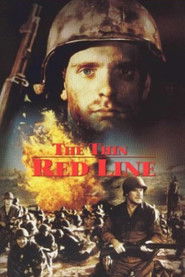
The Thin Red Line
1964
star 5.9Set during the Allied invasion of the island of Guadalcanal in the Pacific theater during WWII, this film is based on the novel by James Jones. Keir Dullea is Private Doll, who dreads the invasion and steals a pistol to help him protect himself. Sergeant Welsh (Jack Warden), a caustic, battle-scarred veteran, hates Doll, whom he considers a coward. In battle, Doll kills a Japanese soldier and is filled with remorse, which further angers the sergeant. The next day, an emboldened Doll wipes out an entire enemy machine gun post and begins to feel as sadistic as Welsh. The two must work together to clear away some mines, but as they do, their platoon is surprised by a Japanese raid.Raza
1942
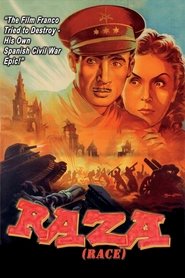
Raza
1942
star 4.8The troubled story of the Churruca family, a noble lineage of brave seamen, descendants of Cosme Damián Churruca, the Spanish hero of the Battle of Trafalgar; from the Spanish-American War (1898) to the end of the Spanish Civil War (1936-39). (In 1950, a new cut of the film was released with less ideological depth and ten minutes shorter.)Interviews with My Lai Veterans
1971
star 6Interviews with five former American soldiers who were present at the March 16, 1968 attack on the village of My Lai during the Vietnam War; they discuss the orders that were issued leading up to the attack, their expectations of what they would find there, and the subsequent massacre of the inhabitants and destruction of the village, as well as possible motivations for the killings and rapes which took place. Preserved by the Academy Film Archive in 2002.Strawman
1987
Strawman
1987
star 7.1In 1940s Taiwan, during the last days of Japanese rule, an impoverished farming village is less concerned with colonial politics than with feeding their families. One day, an American bomb falls onto a field, where it lies unexploded.Agnus Dei
2012
Agnus Dei
2012
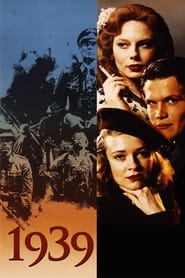
star 6.6Based on a true story, Agnus Dei is a kind of Oedipus of our days. Peter must find his way to redemption. But the past will make itself known and fate sparingly gives mercy. Can he save himself, or even be saved at all?1939
1989
1939
1989
star 4.5When the war breaks out, Annika lives with her parents in Värmland, close to the border to Norway. Her cousin Harald is a dealer in the black market but has to escape from the police to Norway. Annika moves to Stockholm and gets a job as a waitress. She meets the happy-go-lucky Berit and together they have a wonderful time. She also meets a young man, Bengt, whom she marries. But almost immediately she discovers that her husband is different from the man who was courting her. Plot by Mattias Thuresson.Army
1944
Army
1944
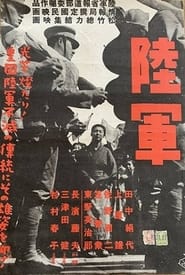
star 6.7Though plagued by ill health all his life, a young Japanese man is obligated to fulfill his family's longstanding military tradition.Beginning of an Unknown Era
1967
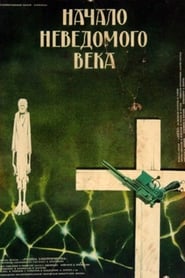
star 5.6Two young directors adapted the short stories of two Russian authors whose works had been banned for decades, and so their film ended up in the censor’s vault as well – for twenty years. Both tales look back to the post-revolutionary era: 'Angel' (Olesha) speaks tragically of the brutality and destruction of the time, and 'The Homeland of Electricity' (Platonov) captures its haunting grotesquery.Operation Bikini
1963
Operation Bikini
1963
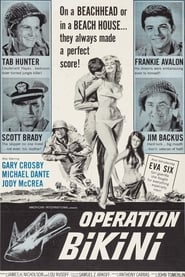
star 3.7The film takes place aboard an American submarine in the Pacific during World War II. The sub's commander is ordered to stop and pick up an underwater demolition team led by Lt. Hayes, whose mission is to locate and destroy a US submarine sunken in a lagoon off Bikini Atoll before the Japanese are able to raise it and capture the advanced radar system on board.