Top Rated War Movies on Pantaflix - Page 126
All Services
Free Services
 Netflix
 Amazon Prime Video
 Apple iTunes
 Apple TV Plus
 Disney Plus
 Google Play Movies
 Paramount Plus
 Hulu
Hulu
 HBO Max
 YouTube
 fuboTV
 Peacock
 Peacock Premium
 Amazon Video
 The Roku Channel
 AMC+
AMC on Demand
AMC+
AMC on Demand
 Kocowa
 Hoopla
 The CW
 Vudu
Vudu
 Starz
Starz
 Showtime
 PBS
PBS
 Pantaflix
 FXNow
FXNow
 Tubi TV
 Kanopy
 Comedy Central
 Crunchyroll
 Microsoft Store
 Redbox
 Sun Nxt
 ABC
ABC
 DIRECTV
 Crackle
 Fandor
 Plex
Plex
Netflix
Amazon Prime Video
Apple iTunes
Apple TV Plus
Disney Plus
Google Play Movies
Paramount Plus
Hulu
HBO Max
YouTube
fuboTV
Peacock
Peacock Premium
Amazon Video
The Roku Channel
AMC+
AMC on Demand
Kocowa
Hoopla
The CW
Vudu
Starz
Showtime
PBS
Pantaflix
FXNow
Tubi TV
Kanopy
Comedy Central
Crunchyroll
Microsoft Store
Redbox
Sun Nxt
ABC
DIRECTV
Crackle
Fandor
Plex

Eliso
1929
Eliso
1929
star 5.4Georgia, 1864. The Tsarist regime is using Cossacks to forcibly resettle Muslim Georgians to Turkey in order to steal their land. Meanwhile a Muslim girl falls in love with a Christian from the next village.Red and Black
1942
Red and Black
1942
star 5.9Since childhood, Luisa and Miguel have always been good friends; but several years later, as adults, when Spain faces the abyss of the Civil War (1936-1939), they support ideologically opposed camps.Life in Shadows
1949
Life in Shadows
1949
star 7.2The creative and ambitious Carlos, a young Spanish film buff, manages to become a professional camera operator with time and effort, and is also blessed with the love of Ana, which he has longed for; but the outbreak of the Civil War in 1936 changes everything for both of them.The Youth of Maxim
1935
The Youth of Maxim
1935
star 5A 1935 USA trade-paper reviewer called it... "an impressive and technically outstanding historical drama dealing with czarist terrorism and revolutionary boiling in the days of 1907. Picture is one of the Soviet prize winners and has particular merits in realistic performance, photography and movement, plus some musical touches in way of folk songs." Written by Les AdamsCanaris
1954
Canaris
1954
star 6.5Admiral Canaris is chief of the intelligence service of Nazi Germany. His department is quite successful and Hitler grants him all the money he wants for new developments. Still he's a thorn in the side of the Nazi chiefs, since he's not as unscrupulous as they want him and is known to criticize their ideology.Surname Viêt Given Name Nam
1989
star 5.2The film evolves around questions of identity, popular memory and culture. While focusing on aspects of Vietnamese reality as seen through the lives and history of women resistance in Vietnam and in the U.S, it raises questions on the politics of interviewing and documenting.Mashenka
1942
Mashenka
1942
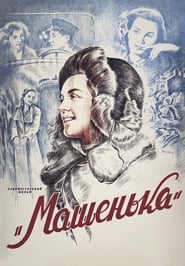
star 5.5Lovely telegraph operator Masha Stepanova is a sanitary nurse. During a training alarm, she meets a taxi driver Alexei (Alyosha) Solovyov. He reads verses to a girl and invites her to the theater. But at the appointed time, Alyosha doesn't come, and Mashenka finds him, helps to recover. Young people fell in love with each other, but Alexei was too frivolous, and brings the girl a lot of sorrows and insults. Because of Alexei’s hobby for another girl, Masha breaks up with him. But she will be able to convey her faithful and true-hearted feeling through years of separation and the hardships of wartime, and when they meet again at the front of the Finnish War, Solovyov realizes what a gift of fate was meeting him with this girl.Beau Ideal
1931
Beau Ideal
1931
star 4.1An American joins the French Foreign Legion in order to rescue a boyhood friend.Hedd Wyn
1992
Hedd Wyn
1992
star 5.1'Hedd Wyn' is a 1992 Welsh anti-war biopic. Ellis Humphrey Evans, a farmer's son and poet living at Trawsfynydd in the Meirionydd countryside of upland Wales, competes for the most coveted prize of all in Welsh Poetry - that of the chair of the National Eisteddfod, which in August 1917 was due to be held in Birkenhead (one of the rare occasions when it was held in England). After submitting his entry, under his bardic name "Hedd Wyn" ("Blessed Peace") Evans later departs from Meirionydd by train to join the Royal Welsh Fusiliers in Liverpool, despite his initial misgivings about the war. Ellis is sent to fight in the trenches of Flanders. 'Hedd Wyn' was the first Welsh-language film to be nominated for an Oscar.Nine Men
1943
Nine Men
1943
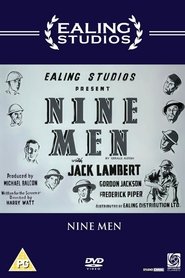
star 6.1The Nine men of the title are a British WWII Army patrol stuck in a desert fort during the African campaign. The Men must defend the fort against the Italian and German troops until they can be relieved.Mameluke
1958
Mameluke
1958
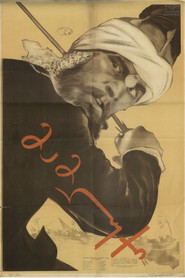
star 6In Arabic, “mameluke” means a white slave, a prisoner. In Egypt, this name was given to prisoners of war who had been sold into slavery from Georgia and other countries of the Caucasus. The action of this drama starts in Georgia in the late 18th century. Two friends are abducted and sold into slavery. One ends up in Egypt, the other - in Venice. Years later, they meet by the ancient pyramids, in the desert where a battle is going on between the armies of Bonaparte and Ali-bey, the ruler of Egypt. In a combat with a French officer, the Mameluke injures him. Falling from his horse onto the sand, the officer exclaims in Georgian: “Vai, nana!” (“Oh, mother!”). And the Mameluke recognizes in him a mate of his childhood games.Hitler: Beast of Berlin
1939
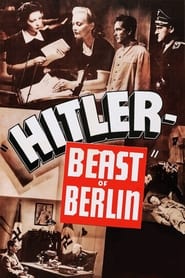
star 4.3Hans Memling, a young intellectual, patriotic German, is secretly opposed to the Nazi regime. With the aid of Gustav Schultz, Father Pommer, Anna Wahl and others, he is gleaning accurate information from foreign radio broadcasts and distributing it through Germany with an underground-press operation.The Raggedy Rawney
1988
The Raggedy Rawney
1988
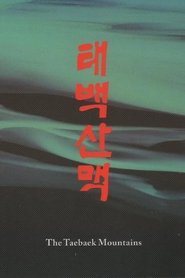
star 5.2During WWII a youth deserts his country's army after a combat experience, but not before wounding his commanding officer with a knife in order to escape. The young man, now very emotionally distraught, dresses in women's clothes and eventually joins a passing gypsy caravan, who think him a young girl... as well as a kind of seer, or 'rawney'. In time, however, he regains some composure and becomes attracted to one of the gypsy girls, which only leads to problems within the gypsy band, especially when the wounded commanding officer finds him.The Taebaek Mountains
1994
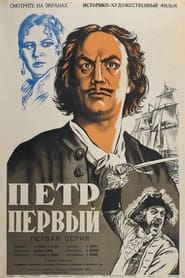
star 6.6Based on the great river story, The Taebaek Mountains chronicles the lasting generational conflict between proprietors and peasants in South Korea.Peter the First, Part I
1937
star 4.7This, the first Soviet depiction of Peter the Great, set the stage for what would become the post-Revolutionary line concerning the early Romanovs. Rulers like Ivan the Terrible and Peter the Great were widely admired for their dedication to Russia and their absolute determination to enhance her position in the world. But praise for the hated later Romanovs conflicted too heavily with the very beliefs that had brought about the Revolution in 1917.The Finest Hour
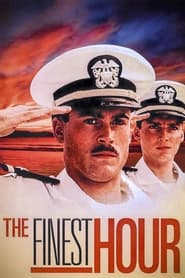
1992
The Finest Hour
1992
star 4.5Macho Lawrence 'Larry' Hammer and frailer Dean Mazzoli initially rival as U.S. Navy SEAL trainees, but become buddies in instructor chief petty officer Bosco's merciless training class. The friends date two girls, but both love Barbara, who chooses to marry Larry, as ideal father for her pre-teen son. After graduation from Basic UDT/SEAL training, they choose opposite oceans for further training. However Sadam Husein's invasion of Kuwait gets both mobilized in the same unit, with Bosco, who gets captured and tortured. Dean learns Barbara has left adulterer Larry. They mount a rescue together, taking risks even on their own side.Leave It on the Floor
2011
star 5Kicked out of his home for being gay, a young man (Ephraim Sykes) finds a new family with Los Angeles drag queens.Day in the Life of Gestapo Officer Schmidt
1964
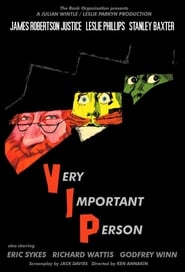
star 5.3Constructed from the private photo album of a Gestapo officer, this short documentary juxtaposes his everyday snapshots with the captions he himself wrote. Through these images and notes, the film reveals the chilling banality of Nazi perpetrators’ lives while exposing the brutality they oversaw.Very Important Person
1961
star 5.2Comedy set in World War Two, starring James Robertson-Justice and Leslie Phillips. Sir Ernest Pease (Robertson-Justice) is a self-important scientist who is sent undercover on a bombing mission to monitor the effectiveness of his latest invention, a new-fangled radar. When the plane is attacked, he parachutes to safety - only to be sent to a POW camp, where he takes on the alias of Lieutenant Farrow. There, the somewhat happy-go-lucky bunch of Brits suspect their acerbic new fellow prisoner of being a spy, and all sorts of culture clashes and misunderstandings ensue.I'll Remember April
1999
I'll Remember April
1999
star 6.3Four young boys find a shipwrecked Japanese sailor during World War II and struggle with the decision to save him.