Top Rated War Movies on Pantaflix - Page 321
All Services
Free Services
 Netflix
 Amazon Prime Video
 Apple iTunes
 Apple TV Plus
 Disney Plus
 Google Play Movies
 Paramount Plus
 Hulu
Hulu
 HBO Max
 YouTube
 fuboTV
 Peacock
 Peacock Premium
 Amazon Video
 The Roku Channel
 AMC+
AMC on Demand
AMC+
AMC on Demand
 Kocowa
 Hoopla
 The CW
 Vudu
Vudu
 Starz
Starz
 Showtime
 PBS
PBS
 Pantaflix
 FXNow
FXNow
 Tubi TV
 Kanopy
 Comedy Central
 Crunchyroll
 Microsoft Store
 Redbox
 Sun Nxt
 ABC
ABC
 DIRECTV
 Crackle
 Fandor
 Plex
Plex
Netflix
Amazon Prime Video
Apple iTunes
Apple TV Plus
Disney Plus
Google Play Movies
Paramount Plus
Hulu
HBO Max
YouTube
fuboTV
Peacock
Peacock Premium
Amazon Video
The Roku Channel
AMC+
AMC on Demand
Kocowa
Hoopla
The CW
Vudu
Starz
Showtime
PBS
Pantaflix
FXNow
Tubi TV
Kanopy
Comedy Central
Crunchyroll
Microsoft Store
Redbox
Sun Nxt
ABC
DIRECTV
Crackle
Fandor
Plex

Kanji Ishiwara: The Man Who Triggered the War
2012
star 5Most people think that World War II started on September 1st, 1939, when the Germans invaded Poland, and then spread to Asia on September 7th 1941, after the Japanese attacked Pearl Harbor. However, World War II actually started ten years earlier, when Manchuria was invaded by a now-forgotten Japanese general: Kanji Ishiwara. This is the little known truth about the most famous war in history.1939/1945: German Women Against Hitler
2020
star 9Coming from all social strata, a priory model citizens of the Third Reich, one thing unites these women: hatred against the Hitler regime and the desire to end the Führer.Awakening
2008
Awakening
2008
star 2After a car accident Zahra loses her memory. Psychiatrists are desperate about the case while Zahra is in search for her lost daughter. After 24 years she is awake once again and begin to search for her then 6 years old girl but everything is different now.The Story of Kees
1989
The Story of Kees
1989
star 7This TV-film is based on a single play written by Willem Wilmink. Life in the war years through the innocent eyes of a child. Kees is ten years old and the Second World War seems strange to him. He becomes sick with fear and is sent to the countryside where life is even stranger, but at least he gets to eat.War Hero
2020
Wife of a Kamikaze
2015
Wife of a Kamikaze
2015
star 8In June 1945 Yamauchi Fusako goes alone to Manchuria where her husband, Setsuo, a second lieutenant of the Kwantung Army, is based. At that time, 200,000 Japanese had settled in Manchuria, a Japanese occupied territory, as settler communities. Fujita Hideo’s family worked hard to clear the wilderness, but the Soviets are lying in wait for an invasion of Manchuria from the North. Fusako is safely reunited with her husband at the headquarters of the Kwantung Army’s Fifth Training Squadron in Manchuria’s Dahushan. Setsuo also takes good care of his beloved wife, but his position is an instructor to the young soldiers who will eventually carry out suicide attacks. He wonders if he should have summoned her and speaks of these mixed feelings to his commanding officer, Michiba Kazuo, a first lieutenant. Michiba is concerned about Setsuo’s attempts to cherish his wife before the coming showdown on homeland. Fusako learns about life in Manchuria from Michiba’s wife, Etsu.Inside the Mind of Adolf Hitler
2005
star 6During World War II, a psychological analysis of the person Adolf Hitler was prepared in the United States in the hope of predicting his strategies.The Secret Weapon That Won World War II
2017
star 7Discover how a small Florida town called Boca Raton was the site of a top-secret military project during World War II. Thousands of airmen were tasked with learning the ins and outs of an emerging technology known as airborne radar. See how this tiny device turned the tide of World War II for Allied forces.Virtuti
1989
Virtuti
1989
star 6Second half of September 1939. Lt. Brejer, along with a detachment of his sappers, receives orders to blow up the bridge. The promised explosives do not arrive. So Brejer gets the order to withdraw and reunite with the rest of the division. Along the way, suffering hunger and discomfort along with his soldiers, he joins various divisions, collects survivors and fights. From a German prisoner of war, he finally learns that the Soviets have entered Poland. Finally, he and his men manage to reach his home unit, but that unit has just surrendered to the Germans.Qui Vive
2019
Qui Vive
2019
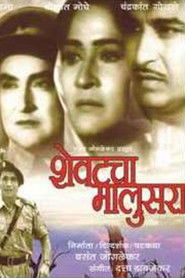
star 7August 1914. Germany invades Belgium and terrorizes the population. Despite her pregnancy, Louise takes care of the farm, her little boy, and the harvest all by herself.Shevatcha Malusara
1965
Shevatcha Malusara
1965
star 5An unusual Marathi war movie which mobilises and updates a historical/regional chauvinism associated with 17th-C. Maratha emperor Shivaji. Major Subhanrao Malusare, a direct descendant of Shivaji’s legendary lieutenant Tanaji Malusare, continues a proud family tradition by winning the Victoria Cross as an Allied officer fighting against Italian fascists in WW2. When he dies, his wife Savitri (Uma) vows that their son will never join the army. However, during the India-China conflict (1962), when her son’s friend is killed, she enjoins her son to fight for the nation even though the boy’s death would mean the end of the ancient clan. The film updated the rousing sentimentalism associated with Shivaji historicals into the present via songs such as He bharatiyano aika balidan katha veeranchi.Navy Heroes of Normandy
2008
star 5Chronicles the building and dedication of the first-ever United States Navy monument in Normandy, France. Dozens of interviews with Navy D-Day veterans are included. New England region Emmy Awards for writing and photography. Airing on American Public Television. —Tim GrayWar Note
2021
War Note
2021
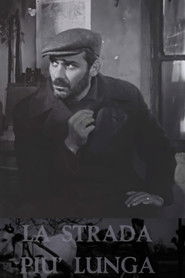
star 8Personal videos from the phones, camcorders, cameras and GoPros of Ukrainian soldiers are woven into a surreal journey to the frontline of the war with Russia. The film shows a bizarre world whose laws are quite different from what we are used to. The behaviour is different, the relationships unfold differently and the humour takes on different notes. The heroes wake up and fall asleep, rejoice and cry, always feeling that the recording may end at any moment.La strada più lunga
1965
La strada più lunga
1965
star 6Michele, a bourgeois intellectual, adhered to fascism for years. After fighting abroad, he returns home in 1943, but is now tired and refuses to join the Republic of Salò. His comrades still want him with them, but this Social Republic, imposed by the SS arms, does not convince him. The war continues and the situation does not allow one to remain neutral.Operation "Wonderland"
1989
star 8In 1942, the Far North was home to an icebreaker, almost devoid of weapons. Despite this, it stood as a formidable force, blocking the path of a German cruiser. Led by Captain Anatoly Kacharava, a small detachment of sailors held back the enemy for over three hours. This daring act thwarted Operation Wunderland, a meticulously planned Nazi operation aimed at preventing a Soviet convoy from delivering essential supplies to Arkhangelsk.Operation Courthouse Blitz
2015
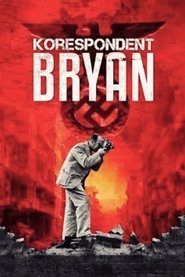
star 10A group of resistance fighters advance on the dictators courthouse in this all out non-stop action short film.Korespondent Bryan
2010
Korespondent Bryan
2010
star 8The film is based solely on footage shot in Warsaw in 1939 by Julien Hequembourg Bryan. This American filmmaker and photographer documented life in Poland, the Soviet Union and Nazi Germany between 1935 and 1939. Following the outbreak of the Second World War, he arrived in Warsaw, where he shot a number of films documenting the city under siege, and is said to be the only foreign correspondent in the Polish capital at the time. Bryan also took the first colour photographs of wartime Warsaw.Victory
1975
Victory
1975
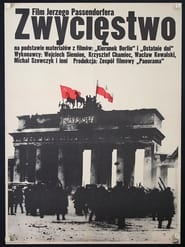
star 7This film was created by combining and shortening the films Kierunek Berlin (Destination Berlin) and Ostatnie dni (The Last Days). It presents the final phase of the great offensive of 1945, which ended with the capture of Berlin, from the perspective of a private soldier of the First Polish Army.