Top Rated War Movies on Pantaflix - Page 332
All Services
Free Services
 Netflix
 Amazon Prime Video
 Apple iTunes
 Apple TV Plus
 Disney Plus
 Google Play Movies
 Paramount Plus
 Hulu
Hulu
 HBO Max
 YouTube
 fuboTV
 Peacock
 Peacock Premium
 Amazon Video
 The Roku Channel
 AMC+
AMC on Demand
AMC+
AMC on Demand
 Kocowa
 Hoopla
 The CW
 Vudu
Vudu
 Starz
Starz
 Showtime
 PBS
PBS
 Pantaflix
 FXNow
FXNow
 Tubi TV
 Kanopy
 Comedy Central
 Crunchyroll
 Microsoft Store
 Redbox
 Sun Nxt
 ABC
ABC
 DIRECTV
 Crackle
 Fandor
 Plex
Plex
Netflix
Amazon Prime Video
Apple iTunes
Apple TV Plus
Disney Plus
Google Play Movies
Paramount Plus
Hulu
HBO Max
YouTube
fuboTV
Peacock
Peacock Premium
Amazon Video
The Roku Channel
AMC+
AMC on Demand
Kocowa
Hoopla
The CW
Vudu
Starz
Showtime
PBS
Pantaflix
FXNow
Tubi TV
Kanopy
Comedy Central
Crunchyroll
Microsoft Store
Redbox
Sun Nxt
ABC
DIRECTV
Crackle
Fandor
Plex

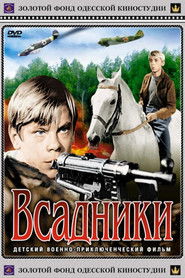
Horsemen
1972
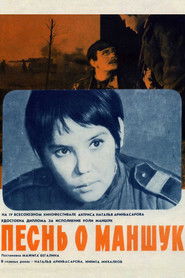
The Song of Manshuk
1969
The Song of Manshuk
1969
star 6The story of the hero of the Soviet Union, Manshuk Mametova, machine-gunner of the 21st Guards Rifle Division of the 3rd shock army of the Kalinin Front, the guards sergeant in charge. The first woman awarded the title of Hero of the Soviet Union for bravery. The film recreates the past and shows a day of combat life Manshuk and her comrades, who took unequal battle with German tanks.The Great Commander Georgy Zhukov
1995
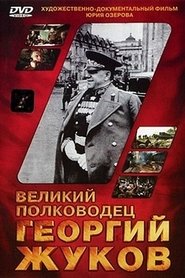
star 5Biopic about Marshal Georgi Zhukov. Documentary footage from WWII and dramatization played by Russian and German actors.1917
1970
1917
1970
star 1A British short film about World War I, directed by Stephen Weeks and starring Timothy Bateson, David Leland, and Geoffrey Davies.Strict Male Life
1978
Strict Male Life
1978
star 6About the peaceful everyday life of one of the tank regiments of the Soviet Army on the northern borders of the country, where graduates of the tank school, Lieutenant Sorokin and his comrades, serve. The acute conflict situation among the officers of the tank regiment reveals people who understand their duty as defenders of the Fatherland in different ways.Plain Shots
2001
Plain Shots
2001
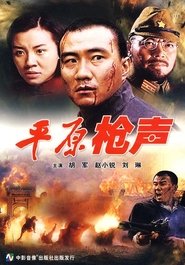
star 6During the Anti-Japanese War, Eighth Route Army officer Ma Ying returns to his hometown to mobilize resistance against Japanese forces and traitors. As enemies plot to turn villagers against each other, Ma Ying must rally the people to prevent a devastating massacre.Algeria, The Two Soldiers
2017
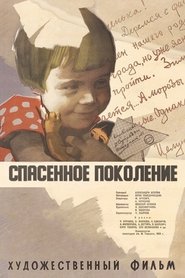
star 10"Algeria, The Two Soldiers" tells the true story of two young French soldiers during the Algerian War, who were driven in two completely opposite directions by the same keen sense of honor: Noël Favrelière deserted to free a young Algerian Muslim prisoner who was going to be executed, and René Técourt, to continue the fight for French Algeria alongside the OAS ultras. Two emblematic examples, which describe in a direct, carnal way, what happened there.The Rescued Generation
1960
star 5Antonina Vasilyevna, as a member of the bureau of the district committee of the party, was instructed to save the Leningrad children, whom the war overtook in the suburban camps. She took them to the Kirov region. After twelve days of hard travel, the children arrived in the village of Supryadki...Going My Way
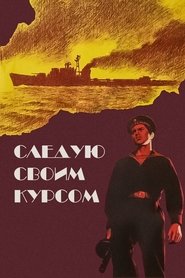
1975
Going My Way
1975
star 6It was the last days of June 1942. The fascist troops were tearing towards Sevastopol, and fighting was already going on in the city itself. Ships of the Black Sea Fleet had already broken through to Sevastopol more than once, delivering replenishment, ammunition and weapons. And now, destroyers "Daring" and "Stremitelny" receive a new order to go to Sevastopol. This way is known to sailors well enough, but the fascists repeatedly mined the only fairway to Sevastopol, and enemy aircraft constantly attacking destroyers. At the cost of losing the "Daring" sailors manage to break through to Sevastopol. But the hardest tests fall to the sailors on the way back, when overloaded with wounded "Stremitelny" returns to his native port.Dziś w nocy umrze miasto
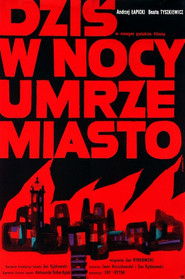
1961
star 7An unlikely couple - a Polish concentration camp inmate and a young German girl - stick together and try to survive the RAF bombing of Dresden in February 1945.The Kinmen Bombs
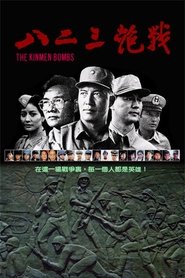
1986
The Kinmen Bombs
1986
star 4After a devastating artillery attack on the island of Kinmen, commander Chi Liang-chen and his battery prepare a counter-attack.The Slowest Train
1963
The Slowest Train
1963
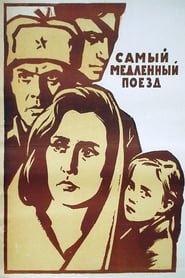
star 6Spring, 1943. A military train is heading from a city, just liberated from the fascists. A special carriage with divisional printing-works is hitched to the train. Manager of the printing-works and correspondent expects he will travel alone, and even makes a prudent sign on the door - mines. But gradually the carriage starts to get filled with uninvited fellow travelers. The first were an injured soldier with a girl, then - a pregnant woman with escort, two communist party members, an actress, aunt Pasha, and others. The correspondent has nothing but to put up with it, because he cant turn out people, who suffer from the war, each in his/her own way.Pride
1998
Pride
1998
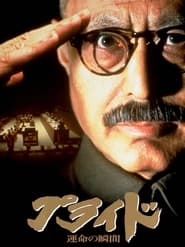
star 5Based on the International Military Tribunal for the Far East of 1946–48, depicts Japanese prime minister Hideki Tojo as a family man who fought to defend Japan and Asia from western colonialism but was ultimately hanged by a vengeful United States.Ruiny strelyayut...
1971
Ruiny strelyayut...
1971
star 6The plot centers on the people who began to form underground groups from the very first days of the occupation of Minsk: oil engineer Isa Kazinets, soldier Ivan Kabushkin, student journalist Vladimir Omelianuk, medical professor Yevgeny Klumov, party and Soviet worker Sergey Blagorazumov, and others. Their main weapon was their hatred of the occupiers. Soon, the underground fighters managed to establish contact with the partisans, and they began to plan joint operations.DMZ (Demilitarized Zone)
2004
star 8A boy's experience as a fresh military recruit stationed at the North-South border in the late 1970s.Native Fields
1945
Native Fields
1945
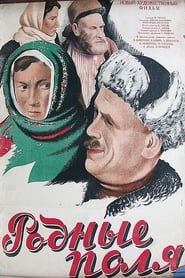
star 6November 1941. One by one, the men leave, leaving only old men, women and children in the village of Bykovka. Ivan Vybornov, the chairman of the collective farm, is also raring to go to the front, but, obeying party discipline, remains in the village and continues to skillfully and energetically lead the collective farm, mobilizing fellow villagers to send bread for the front and starving cities.Native Shores
1943
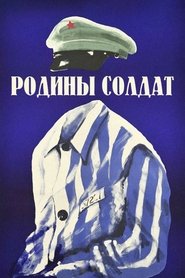
Родины солдат
1975
Родины солдат
1975
star 7About the famous fortification scientist, Lieutenant General of Engineering Troops Dmitry Mikhailovich Karbyshev. Before the war, he led the work on strengthening the Brest Fortress and the approaches to Leningrad. In 1940 he was 60 years old. The beginning of the war found him in Belorussia. After one of the battles, seriously wounded, he was taken prisoner to the Mauthausen camp, where he fought against fascism for 1320 days.Risk
1971
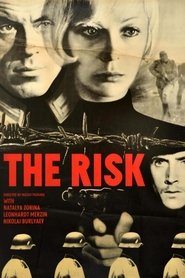
Risk
1971
star 51944. On the Polish front, the fascists are building a secret defensive barrier. The task of obtaining the plans for the structures is assigned to a young intelligence agent, Maria, who must make contact with the frontline intelligence resident, Major Kurtz, behind enemy lines…Custer's Last Stand
2012
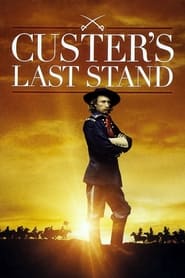
Custer's Last Stand
2012
star 7Follow General George Armstrong Custer from his memorable, wild charge at Gettysburg to his lonely, untimely death on the windswept Plains of the West. On June 26, 1876, Custer, a reputation for fearless and often reckless courage ordered his soldiers to drive back a large army of Lakota and Cheyenne warriors. By day's end, Custer and nearly a third of his army were dead.