Top Rated War Movies on Pantaflix - Page 443
All Services
Free Services
 Netflix
 Amazon Prime Video
 Apple iTunes
 Apple TV Plus
 Disney Plus
 Google Play Movies
 Paramount Plus
 Hulu
Hulu
 HBO Max
 YouTube
 fuboTV
 Peacock
 Peacock Premium
 Amazon Video
 The Roku Channel
 AMC+
AMC on Demand
AMC+
AMC on Demand
 Kocowa
 Hoopla
 The CW
 Vudu
Vudu
 Starz
Starz
 Showtime
 PBS
PBS
 Pantaflix
 FXNow
FXNow
 Tubi TV
 Kanopy
 Comedy Central
 Crunchyroll
 Microsoft Store
 Redbox
 Sun Nxt
 ABC
ABC
 DIRECTV
 Crackle
 Fandor
 Plex
Plex
Netflix
Amazon Prime Video
Apple iTunes
Apple TV Plus
Disney Plus
Google Play Movies
Paramount Plus
Hulu
HBO Max
YouTube
fuboTV
Peacock
Peacock Premium
Amazon Video
The Roku Channel
AMC+
AMC on Demand
Kocowa
Hoopla
The CW
Vudu
Starz
Showtime
PBS
Pantaflix
FXNow
Tubi TV
Kanopy
Comedy Central
Crunchyroll
Microsoft Store
Redbox
Sun Nxt
ABC
DIRECTV
Crackle
Fandor
Plex

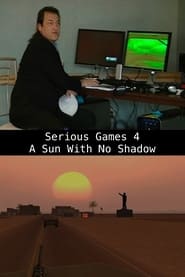
Serious Games 4 – A Sun With No Shadow
2010
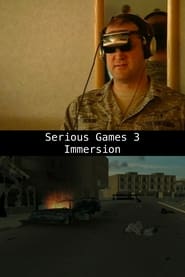
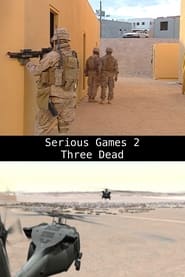
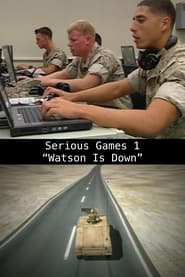
An exploration of how the U.S. military employs video game technology to train troops for war. In A Sun With No Shadow, Farocki calls attention to the subtle differences between the simulations for combat training and PTSD. With the former, the sun can be programmed to cast shadows in the virtual combat zones, while the latter, less expensive technology does not offer this feature.Serious Games 3 – Immersion
2010
An exploration of how the U.S. military employs video game technology to train troops for war. In Immersion, Farocki presents footage of a role-playing exercise in which military psychologists demonstrate how to use the PTSD program on their colleagues, who describe traumatic wartime experiences. On a second channel, their descriptions play out as virtual renderings.Serious Games 2 – Three Dead
2010
An exploration of how the U.S. military employs video game technology to train troops for war. Three Dead depicts a military exercise within a mock Iraqi town built on the outskirts of Twentynine Palms, California, blurring the line between computer simulation and reality.Serious Games 1 – "Watson Is Down"
2010
An exploration of how the U.S. military employs video game technology to train troops for war. Filmed at the United States Marine Corps Air Ground Combat Center, Watson is Down pairs footage of soldiers at computers engaging in combat-simulation training with scenes from the video games.Modern ‘Red Chamber Dream’
1952
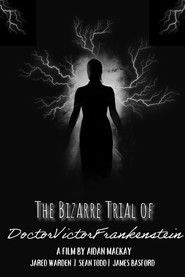
Dream of the Red Chamber, one of the big four of classic Chinese novels, has been adapted for film and television dozens of times over the past decades. Yet this sui generis Great Wall production daringly transposes the setting to modern-day 1950s. The contemporised story revolves nonetheless around the love triangle between Jia Baoyu and his two cousins. Both girls love him but his heart belongs to only one. The ending, however, is remarkably changed to separation of the lovers as a result of war—the war that was surely still haunting the minds of the filmmakers at the time when the film was made. Not only did Great Wall pour money into building extravagant sets just so to recreate down to the smallest detail the grandeur of the legendary Jia mansion, but the film also boasted of its lavish costume designs for the diverse female cast. (From Hong Kong Film Archive)The Bizarre Trial of Doctor victor Frankenstien
2025
In the aftermath of World War II, the Nuremberg trials unveil a chilling drama, "The Bizarre Trial of Doctor Victor Frankenstein." Four scientists, Edward Klause, Stephan Maxis, Igor Fritz, and Victor Von Frankenstein, face judgment for their role in Hitler's covert "Project Iron Sight." Through flashbacks, Victor reveals their macabre attempts to create superhuman soldiers. The trial becomes a stage for ethical debates, exploring the fine line between scientific inquiry and culpability. The narrative exposes the moral ambiguity of each scientist, offering a poignant reflection on the consequences when intellect collides with wartime horrors, making it a riveting exploration of human nature.El kapo
2023
El kapo
2023
For decades, the name of the Valencian anarchist César Orquín Serra responded to that of one of the 7,251 Spanish republicans deported to the Nazi concentration camp of Mauthausen-Gusen between 1940 and 1945, although the controversy surrounding his role as Chief of Kommando pursued him with the survivors, divided between those who highlighted his actions to help the survival of his men and those who accused him of collaborating with the SS.Seeing Through the Darkness
2025
The film follows five people who lost their sight in armed conflicts, gathering fragments of their present-day lives. Through an enveloping sound composition, veiled archival material, footage shot by the protagonists themselves, and a sensitive visual approach, the film explores memory, perception, and our relationship to the visible. Steering away from spectacle, it invites us to hear what often goes unheard, and to feel differently. In an age saturated with images, this documentary offers a sensory experience where listening becomes a gesture of resistance and human reconnection.Das Afgahnistan-Drama: Deutschlands Krieg am Hindukusch
2021
NATO went to war in Afghanistan. This developed into a 20-year operation that ended in defeat. This senseless war cost thousands of lives.Soul Searching: The Journey of Thomas Merton
0000
This documentary focuses on the journey of Merton, a bohemian who went from communism to Catholicism before finding his calling as a monk cloistered in eastern Kentucky for 27 years. It also covers his writing career which examined spirituality, the Cold War, the civil rights movement and being an individual in a post-modern worldThe Great Monk Seo San
1972
In 1581, the monk Seo-san predicts that the Japanese are planning an invasion of Korea. He goes to the king, suggesting that the kingdom build a stronger army, but he is thrown out of court. He begins training three pupils in martial arts, but rumors reach the king that Seo-san is training an army. The king sends his soldiers to have the monk arrestedWe Are Home
2024
We Are Home
2024
As war ravages their homeland, Ukrainian children flee their homes out of fear. Across the country, young lives are uprooted and transformed overnight. But even amidst devastating loss, the children's resilience and optimism shine through. The original version of the film was 15 minutes long, and it was the one that had the initial festival distribution and screenings. Then, for the release of the film on VOD, the running time was increased to 52 minutes.Flight
0000
Patesnak, A Christmas Tale
1998
In a city at war, little Benda is wounded by a sniper in an ambush. Palouk, another child, watches the events astonished.Glorious Mother
1996
Christmas at the Front
1914
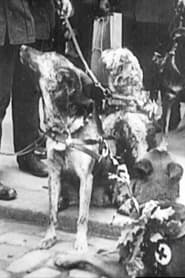
Poignant scenes of Allied troops enjoying their Yuletide rations at the first Christmas of WWI.Red Cross Dogs
1914
Red Cross Dogs
1914
Talented and obedient Red Cross dogs prepare to rescue Berlin's wounded from the Front.Preventive Warriors
2004
Preventive Warriors
2004
Preventive Warriors examines George W Bush's foreign policy -- specifically in the National Security Strategy of 2002. The NSS states that the US reserves the right to attack any nation that poses an imminent threat to the US or its interests. The film focuses on terrorism, rogue states, weapons of mass destruction, and how the United States' actions may impact the rest of the world.Francois
0000
Francois
0000
Francois is based on true events that took place during the Rwandan Genocide, based on the story of Francois Habimana, a man who trekked through the Rwandan forest to find his displaced family amidst the cruel war.迫降乌江
2021
迫降乌江
2021