Top Rated War Movies on Pantaflix - Page 91
All Services
Free Services
 Netflix
 Amazon Prime Video
 Apple iTunes
 Apple TV Plus
 Disney Plus
 Google Play Movies
 Paramount Plus
 Hulu
Hulu
 HBO Max
 YouTube
 fuboTV
 Peacock
 Peacock Premium
 Amazon Video
 The Roku Channel
 AMC+
AMC on Demand
AMC+
AMC on Demand
 Kocowa
 Hoopla
 The CW
 Vudu
Vudu
 Starz
Starz
 Showtime
 PBS
PBS
 Pantaflix
 FXNow
FXNow
 Tubi TV
 Kanopy
 Comedy Central
 Crunchyroll
 Microsoft Store
 Redbox
 Sun Nxt
 ABC
ABC
 DIRECTV
 Crackle
 Fandor
 Plex
Plex
Netflix
Amazon Prime Video
Apple iTunes
Apple TV Plus
Disney Plus
Google Play Movies
Paramount Plus
Hulu
HBO Max
YouTube
fuboTV
Peacock
Peacock Premium
Amazon Video
The Roku Channel
AMC+
AMC on Demand
Kocowa
Hoopla
The CW
Vudu
Starz
Showtime
PBS
Pantaflix
FXNow
Tubi TV
Kanopy
Comedy Central
Crunchyroll
Microsoft Store
Redbox
Sun Nxt
ABC
DIRECTV
Crackle
Fandor
Plex

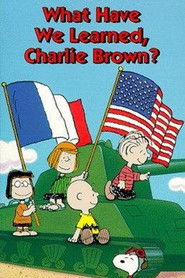
What Have We Learned, Charlie Brown?
1983
star 6.6As they begin their journey home from their student exchange term, Charlie Brown and the gang find themselves sidetracked. They have severe car trouble and more importantly, they pass by various monuments to World Wars I & II. With Linus guiding them through these memorials, they learn about the events of the wars and the sacrifices required of the troops who fought them.Chicogrande
2010
Chicogrande
2010
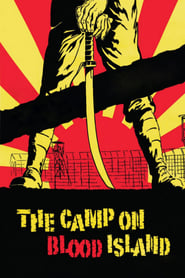
star 6.7Butch Fenton, major of American army, comes for Villa's head and he's gonna get it. The "Punitive Expedition" proved to be the last major campaign of the U.S. Cavalry. Mexican revolution is the first social movement of the century.The Camp on Blood Island
1958
star 6.6Set in a Japanese prisoner of war camp during World War II, the film focuses on the brutality and horror that the allied prisoners were exposed to as the Japanese metered out subjugation and punishment to a disgraced and defeated enemy. This harrowing drama concentrates on the deviations of legal and moral definitions when two opposing cultures clash. Although fictional, this was one of the earliest films to deal realistically with life and death in a Japanese prisoner-of-war camp during the Second War.I Dutifully Report
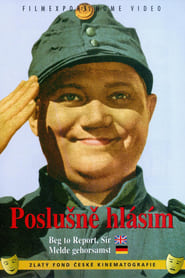
1958
I Dutifully Report
1958
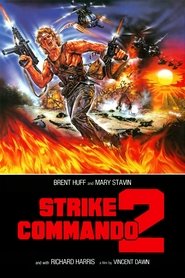
star 6.9A comedy based on the novel of Jaroslav Hašek's The Good Soldier Svejk happens during the World War I. I Dutifully Report: In the introduction to the second part of the film adaptation of Hašek's novel The Good Soldier Švějk presents his main character Josef Švejk. With the distinctive traditional Czech cartoon character of a soldier Svejk, this time you meet on the way to the front and eventually right in the firing line. You can look at his famous train events, and also probably the most famous episode of the novel, Švejk's Budějovice anabasis. Don't miss the scene with the secretly bought cognac, the episode with Svejk as a fake Russian prisoner of war, including the court scene, and the scene in which lieutenant Dub is caught in a brothel. Despite the criticism, Steklý's adaptation is undoubtedly the most famous and memorable at present.Strike Commando 2
1988
The Real Glory
1939
The Real Glory
1939
star 6.3Fort Mysang, southern Philippine Islands, under US rule, 1906. A small group of army officers and native troops resist the fierce and treacherous attacks of the ruthless Alisang and his fanatical followers.The Enemy
2011
The Enemy
2011
star 6.5The story begins a couple days after the war has ended. A group of Serbian soldiers in charge of clearing the fields from mines discovers a man sealed inside a factory's basement. A mysterious man says he is 'ours', he doesn't feel cold, isn't hungry and only asks for cigarettes. As soon as he is brought along, people start disappearing, and the infighting begins. Who is the mystery man?Camp de Thiaroye
1988
Camp de Thiaroye
1988
star 7.4A Senegalese platoon of soldiers from the French Free Army are returned from combat in France and held for a temporary time in a military encampment with barbed wire fences and guard towers in the desert. Among their numbers are Sergeant Diatta, the charismatic leader of the troop who was educated in Paris and has a French wife and child, and Pays, a Senegalese soldier left in a state of shock from the war and concentration camps and who can only speak in guttural screams and grunts.Hitler's Children
1943
Hitler's Children
1943
star 5.9This lurid exposé of the Hitler Youth follows the woes of an American girl declared legally German by the Nazi government.A Walk with Love and Death
1969
star 5.9During France’s Hundred Years’ War, a Parisian student seeks refuge by the sea and falls in love with an aristocrat. As they find shelter in a monastery, their romance is overshadowed by the ongoing conflict between peasants and noblemen.My Way Home
1965
My Way Home
1965
star 7.1In the aftermath of World War II, a Hungarian teenager, captured by Soviet troops, forms an unlikely bond with a Russian soldier in a remote prison camp.My Friend Rashed
2011
My Friend Rashed
2011
star 6.8The story of the Bangladesh Liberation War in 1971 as seen through the eyes of a young boy.Hill 24 Doesn't Answer
1955
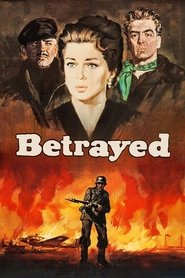
star 5.6In 1948, immediately before a ceasefire takes effect, four volunteers fighting for Israel are ordered to take Hill 24, overlooking the road to Jerusalem.Betrayed
1954
Betrayed
1954
star 5.6When the Dutch resistance brings in Carla Van Oven to spy on the Nazis, Col. Pieter Deventer initially suspects she could be a double agent. Van Oven eventually convinces Deventer of her character, and when she is sent into occupied territory, she joins up with a rebel leader known as "The Scarf". As the resistance endures severe losses and their missions fail, Deventer starts to wonder whose side Van Oven is fighting on.4 Days in May
2011
4 Days in May
2011
star 6.1Germany, Baltic Sea coast, May 1945, a few days before the end of World War II. A small Soviet patrol arrives at an isolated house where an elderly baroness gives shelter to a group of orphan girls and a boy who is determined to continue the fight.Romeo, Juliet and Darkness
1960
star 6Pavel, a young student living in Prague in 1942, hides a Jewish girl in his apartment building's attic. Amidst the brutality of the occupying German army, love blossoms between the two. He is her only link to the outside world. Then the two are discovered by Pavel's mother, who forces the residents of the apartment building to decide whether Hana can remain.Contraband
1940
Contraband
1940
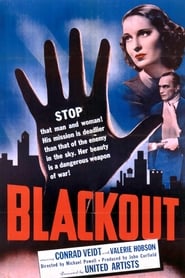
star 7.1During early World War II, a Danish sea captain, delayed in a British port, tangles with German spies.Going and Coming Back
1985
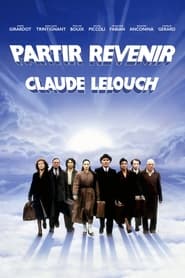
star 6.4Salomé Lerner just finished writing an autobiography. She goes to a TV show called "Apostrophes", hosted by French TV showman Bernard Pivot. Pivot then imagines a film that could be created from her gripping story. A film entirely made of music because after seeing the young pianist Erik Berchot, Salomé believes seeing her long lost brother, who was a musician as well. A brother she had lost along with her parents in 1943. However, the Lerners did in fact escape the gestapo and might have based themselves in Paris...Escape by Night
1960
Escape by Night
1960
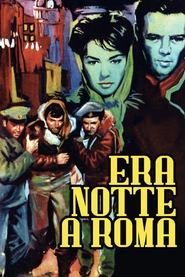
star 6.9In Nazi-occupied Rome, a beautiful bootlegger, to the chagrin of her lover, gives sanctuary to three escaped POWs: an American pilot, a Russian sergeant and a British major.Something of Value
1957
Something of Value
1957
star 5.4As Kenya's Mau Mau uprising tears the country apart, former childhood friends Kimani (Sidney Poitier), a native, and Peter (Rock Hudson), a British colonist, find themselves on opposite sides of the struggle in this provocative drama. Though each is devoted to his cause, both wish for a more moderate path -- but their hopes for a peaceful resolution are thwarted by rage, colonial arrogance and escalating violence on both sides.