Top Rated History Movies on Plex - Page 31
All Services
Free Services
 Netflix
 Amazon Prime Video
 Apple iTunes
 Apple TV Plus
 Disney Plus
 Google Play Movies
 Paramount Plus
 Hulu
Hulu
 HBO Max
 YouTube
 fuboTV
 Peacock
 Peacock Premium
 Amazon Video
 The Roku Channel
 AMC+
AMC on Demand
AMC+
AMC on Demand
 Kocowa
 Hoopla
 The CW
 Vudu
Vudu
 Starz
Starz
 Showtime
 PBS
PBS
 Pantaflix
 FXNow
FXNow
 Tubi TV
 Kanopy
 Comedy Central
 Crunchyroll
 Microsoft Store
 Redbox
 Sun Nxt
 ABC
ABC
 DIRECTV
 Crackle
 Fandor
 Plex
Plex
Netflix
Amazon Prime Video
Apple iTunes
Apple TV Plus
Disney Plus
Google Play Movies
Paramount Plus
Hulu
HBO Max
YouTube
fuboTV
Peacock
Peacock Premium
Amazon Video
The Roku Channel
AMC+
AMC on Demand
Kocowa
Hoopla
The CW
Vudu
Starz
Showtime
PBS
Pantaflix
FXNow
Tubi TV
Kanopy
Comedy Central
Crunchyroll
Microsoft Store
Redbox
Sun Nxt
ABC
DIRECTV
Crackle
Fandor
Plex

Maidan Massacre
2014
Maidan Massacre
2014
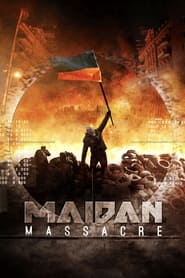
star 1Maidan Massacre is an investigative documentary into the shootings which occurred on February 20th, 2014, when nearly 50 people were gunned down on the streets of Kyiv's Independence square. The massacre was the result of a massive three month long protest against the former Government of Viktor Yanukovich and his decision to reject a trade deal with the EU. Although no thorough investigation had been conducted, the blame was immediately placed on the officers who served under Yanukovich. This program investigates the scene of the crime, interviewing those who were there when the shootings occurred, and seeks to answer the questions as to who really was shooting that day on Kyiv's Independence square - a place known to the people of Ukraine, as Maidan.—John Beck HofmannConsider It All Joy
1986
Con il mare negli occhi
2021
star 7A young Calabrian woman just back from Gorizia tells a friend about her trip: what prompted her to go to Friuli-Venezia Giulia was her discovery of the poems and novels by one Carlo Michelstaedter, an author and philosopher who had died young, in 1910. What was the reason for his tragic death? And that odd yet familiar figure glimpsed on the beach, at the end of the trip, as the woman told it: who did it belong to?Getting Away with Murder(s)
2021
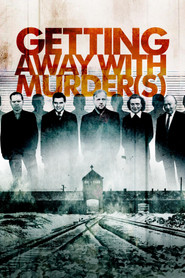
star 10Almost 1 million people in 22 countries carried out the unprovoked murder of 11 million innocent men, women and children. The Allies knew where a great many of the murderers could be found - Germany, Austria, Italy, the UK, the USA, Canada, Australia, and numerous countries in South America. The Allies unanimously agreed to prosecute those responsible when they drew up The London Agreement in August 1945, but, after the late 1940s, these very same Allies did almost nothing. Why were so many were actively permitted to get away with their crimes?Stuck in the Groove
2021
Stuck in the Groove
2021
star 7A Documentary film exploring the history and evolution of vinyl records. Featuring Interviews with the experts, musicians and fans alike, 'Stuck in the groove' takes you on a journey of vinyl-mania, music and nostalgia.A Rogue in Londinium
2021
A Rogue in Londinium
2021
star 2Richard Rhys, a painter in Victorian London, is the prime suspect in the Jack the Ripper murders. In a chance encounter he meets a wealthy reformer and socialite, Victoria Thornton, married to the richest man in England. Their passionate love affair results in a pregnancy and possible scandal and ruin. It is a story of redemption and true love.Breaking the Silence
2020
Breaking the Silence
2020
star 8Francesca, tormented by her past, breaks the silence to talk about surviving the horrors of the comfort stations of Imperial Japan.300 Spartans: The Real Story
2015
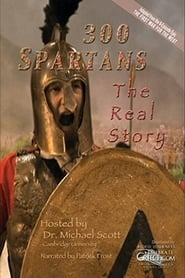
star 5300 Spartans-The Real Story. Putting aside the myths and legends, this documentary takes a detailed look at the Battle of Thermopylae in 480 BC Greece leading to the last stand of the 300 Spartans and Spartan King Leonidas. On the 3rd day of the battle, when Leonidas was being surrounded, he sent most of his troops away and covered their retreat with a last stand because Spartans never retreated.Liberty & Slavery
2016
Liberty & Slavery
2016
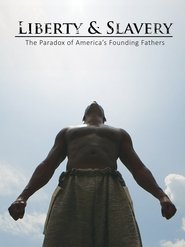
star 5America's Founding Fathers were yearning for a nation of individual liberty. But, the origins of America were overflowing with a deep-seated paradox. The Founding Fathers were rallying the colonists to liberty, while many were slave owners.The Pity of War
2014
The Pity of War
2014
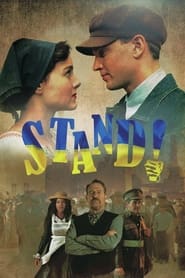
star 6Professor Niall Ferguson argues that Britain's decision to enter the First World War was a catastrophic error that unleashed an era of totalitarianism and genocide.Stand!
2019
Stand!
2019
star 10In post-World War I Winnipeg, a Ukrainian immigrant and a Jewish woman get caught up in a labour strike.The Boer War: 1899-1902
1992
star 5Journey back in time to a different age, when the sun never set on the British Empire and her armies were great in number. The Boer War: 1899-1902 was a turning point in British military history and would revolutionize tactics, battlefield strategy, equipment, and training. Well known participants in the Boar Wars include: Harry "Breaker" Morant, Winston Churchill and Mahatma Gandhi.Operation Sussex
2012
Operation Sussex
2012
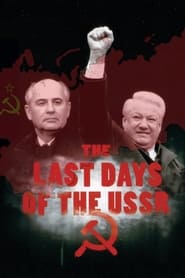
star 6A documentary about the infiltration by parachute drop of Free French by the OSS on the eve of D-Day.The Last Days of the USSR
2011
star 8From 1989 to 1991 a string of unpredictable events happened that brought to light the rivalry between two men: Gorbachev, hindered by the economic results of his perestroika, and Yeltsin, embodying the hopes of the Russian people. Illustrated with interviews of top protagonists such as Mikhail Gobachev himself, the documentary recounts the critical last two years of the former USSR.Treasure Fleet: The Epic Voyage of Zheng He
2005
star 9Between 1405 and 1433, Admiral Zheng He of China led seven epic voyages to more than 30 countries, including Sri Lanka, India, Indonesia, Malaysia, Vietnam, Kenya and Tanzania. The admiral and his crew gathered knowledge and wealth from Indochina to Africa for China's Ming empire. These voyages were the biggest naval expeditions mounted at the time. Zheng He was bigger than life and could have changed the course of history. But after the seven voyages, he and his Treasure Fleet were forgotten by China, and the world, for six hundred years. National Geographic photographer Michael Yamashita sets sail to discover why. To celebrate the 600th anniversary of Zheng He's maiden exploration voyage, Michael Yamashita traveled over 10,000 miles from Yunnan in China to Africa's Swahili coast taking over 40,000 pictures for the feature story on this great explorer, published in the July 2005 edition of National Geographic.A War Over Reality
2018
A War Over Reality
2018
star 6We will soon be facing the greatest threat ever known as we are feeding and nurturing the monster of our own destruction. Welcome to your future.The First Christmas
1957
War Raiders
2018
War Raiders
2018
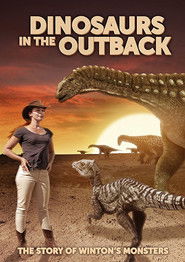
star 5Eastern Europe, 1944. The Allies successfully bomb a dam in France, wiping out a German installation, concealing secret codes valuable for Allied decoding. A rogue band of soldiers is sent to retrieve the codes from a hidden vault in the flooded towns ruins and bring them back to the Allied headquarters. Along the way they must fight off pockets of Nazi resistance and stay alive.Dinosaurs in the Outback
2016
star 6Dinosaurs in the Outback features the often dramatic evidence which proves that Australia was once a place where dinosaurs roamed in vast numbers.Bonaparte: The Egyptian Campaign
2016
star 5In the Spring of 1798, Napoleon set out with 38,000 men and 10,000 sailors to conquer Egypt . He also brought along 167 men of science and the arts to start a scientific mission to explore the land. It was the beginning of a scholarly encounter between the West and the Muslim world.