Top Rated Documentary Movies on Tub Tv - Page 171
All Services
Free Services
 Netflix
 Amazon Prime Video
 Apple iTunes
 Apple TV Plus
 Disney Plus
 Google Play Movies
 Paramount Plus
 Hulu
Hulu
 HBO Max
 YouTube
 fuboTV
 Peacock
 Peacock Premium
 Amazon Video
 The Roku Channel
 AMC+
AMC on Demand
AMC+
AMC on Demand
 Kocowa
 Hoopla
 The CW
 Vudu
Vudu
 Starz
Starz
 Showtime
 PBS
PBS
 Pantaflix
 FXNow
FXNow
 Tubi TV
 Kanopy
 Comedy Central
 Crunchyroll
 Microsoft Store
 Redbox
 Sun Nxt
 ABC
ABC
 DIRECTV
 Crackle
 Fandor
 Plex
Plex
Netflix
Amazon Prime Video
Apple iTunes
Apple TV Plus
Disney Plus
Google Play Movies
Paramount Plus
Hulu
HBO Max
YouTube
fuboTV
Peacock
Peacock Premium
Amazon Video
The Roku Channel
AMC+
AMC on Demand
Kocowa
Hoopla
The CW
Vudu
Starz
Showtime
PBS
Pantaflix
FXNow
Tubi TV
Kanopy
Comedy Central
Crunchyroll
Microsoft Store
Redbox
Sun Nxt
ABC
DIRECTV
Crackle
Fandor
Plex

Hôtel des Invalides
1952
Hôtel des Invalides
1952
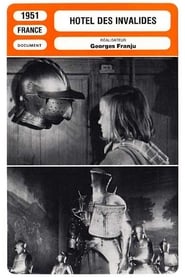
star 5.8A tour of the Hotel des Invalides, and more particularly of the Army Museum and the Saint Louis Chapel. From François I's armor to Guynemer's airplane, to Napoleon's and Marshall Foch's tombs. But this is no ordinary tour,it is rather a chilling visit guided by Georges Franju and narrated by Michel Simon emphasizing - at times through biting humor -not the glory but the nonsense of wars, but their tragic aftermath.Lost, Lost, Lost
1976
Lost, Lost, Lost
1976
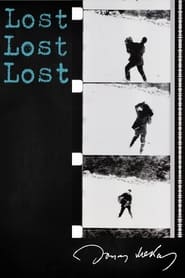
star 7Drawn from footage shot between 1949 and 1963, Jonas Mekas’s autobiographical diary film chronicles his early years in exile, capturing the struggle to build a new life in New York and his gradual discovery of a vibrant artistic community.Centuries of June
1955
Centuries of June
1955
star 4Centuries of June, perhaps more than any Cornell film, is a naked attempt to capture the soul of a place and the mood of a disappearing moment.Sea Urchins
1929
Sea Urchins
1929
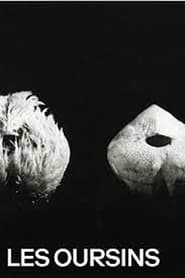
star 6.3A close-up look at sand urchins and rock urchins. At the seashore, a man digs up a sand urchin. We look closely. He sets it back in the sand, and it burrows out of sight. Its intestines take nutrients out of sand. Using magnification 200,000 times normal size, we see a rock urchin's spines with suckers on the end; a drawing illustrates how they work. A sea urchin walks toward a rock. We see three-fingered jaws—pedicellaria at the end of flexible stems—take in algae and other bits. We also see cilia less than 0.001 ml in length; their motion constant, creating whirlpools. On the shore again, we watch the setting sun. Occasional titles in French tell us what to watch for.Tacoma Narrows Bridge Collapse
1940
star 6.5The collapse of the bridge was recorded on film by Barney Elliott, owner of a local camera shop. The film shows Leonard Coatsworth leaving the bridge after exiting his car. In 1998, The Tacoma Narrows Bridge Collapse was selected for preservation in the United States National Film Registry by the Library of Congress as being culturally, historically, or aesthetically significant. This footage is still shown to engineering, architecture, and physics students as a cautionary tale. Elliott's original film of the construction and collapse of the bridge was shot at 16 frames a second, on 16mm Kodachrome film, but most copies in circulation are in black and white because newsreels of the day copied the film onto 35 mm black-and-white stock (not to mention, often showed the film at the wrong speed).Daphnia
1928
Daphnia
1928
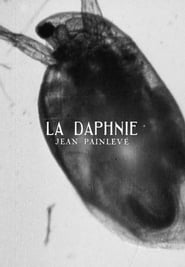
star 6.1Titles in French and English help us know what we're seeing. In all waters, daphnia abound. They are crustaceans about 2 ml long, with one eye that turns in all directions. Antennae enable daphnia to move: in a close up magnified 150,000 times, we see the muscles of the antennae pulse. We see the eye, the nerve mass, blood globules, and the heart, beating several times per second. The intestine forms a long line. All are females; eggs develop above the intestine. New generations come rapidly. Inside each daphnia are tiny infusoria; we watch them clean the intestine of a dead daphnia. An enemy, the hydra, approaches. A daphnia dies, but many remain.Hindenburg Disaster Newsreel Footage
1937
star 7.5The airship Hindenburg, arriving from Europe, was being led to its mooring at Lakehurst, New Jersey when suddenly disaster struck. The hydrogen-filled zeppelin ignited, and was almost instantly transformed into an enormous fireball. In less than a minute, the entire ship had been consumed by flames. The Hindenburg explosion marked the end of the budding airship travel industry.Liquid Crystals
1978
Liquid Crystals
1978
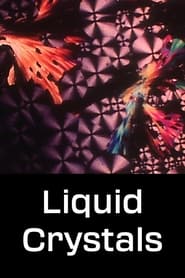
star 7Title cards introduce images we watch without narration; they are displays of shape and color. François de Roubaix's electronic music accompanies these images, photographed under a polarizing microscope. The crystals appear to move like tiny organisms: small four-part fans share the frame with flowing lines of pink. Multiple patterns appear side by side.Glimpse of the Garden
1957
star 5.5Experimental film showing film clips of a garden, with birds chirping for the soundtrack.Hapax Legomena II: Poetic Justice
1972
star 5Poetic Justice presents the viewer with an ordinary domestic scene: a stack of papers, a cup of coffee, and a potted cactus on a table. The sheets of paper compose a script that provides handwritten, frame-by-frame instructions for a film that unfolds only in the mind of the viewer.The Day That Lasted 21 Years
2012
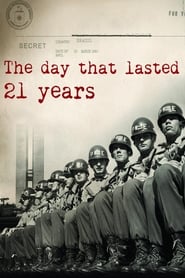
star 7.6Stunning espionage documentary on the US conspiracy that led to the 1964 Brazilian coup d'état. John F. Kennedy and Lyndon Johnson original White House tapes, and CIA Top Secret documents reveal how the US government planned to overthrow Brazilian elected president João Goulart.The American Scream
2012
The American Scream
2012
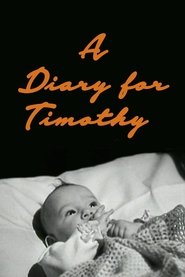
star 6.7An original documentary which follows three families in a small seaside town in Massachusetts as they prepare for their annual home made haunted houses. This story highlights their long journey from planning to opening day and cleanup until next year and the obstacles which face them during the process.A Diary for Timothy
1945
A Diary for Timothy
1945
star 6.6A narrator recounts the state of Great Britain near the end of WWII via a visual diary for the titular baby boy born in September 1944.Jason Becker: Not Dead Yet
2012
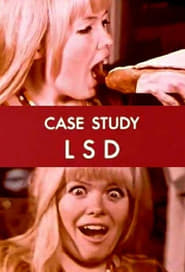
star 7.6When doctors diagnosed 19-year-old rock star Jason Becker with Lou Gehrig's Disease, they said he would never make music again and that he wouldn’t live to see his 25th birthday. 22 years later, without the ability to move or to speak, Jason is alive and making music with his eyes.Case Study: LSD
1969
Case Study: LSD
1969
star 5.3A young girl relates what happened during her first LSD trip, when – among other things – her food began talking to her.The Stars Are Beautiful
1974
star 5We move back and forth between scenes of a family at home and thoughts about the stars and creation. Children hold chickens while an adult clips their wings; we see a forest; a narrator talks about stars and light and eternity. A dog joins the hens and the family, while the narrator explains the heavens. We see a bee up close. The narrator suggests metaphors for heavenly bodies. Scenes fade into a black screen or dim purple; close-ups of family life may be blurry. The words about the heavens, such as "The stars are a flock of hummingbirds," contrast with images and sounds of real children.I, an Actress
1977
I, an Actress
1977
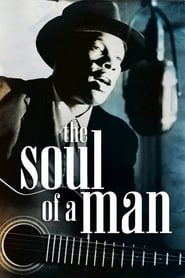
star 5.6An actress and a director run through a melodramatic scene, speaking to a mannequin.The Soul of a Man
2003
The Soul of a Man
2003
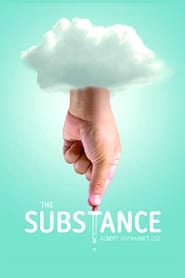
star 6.5In "The Soul of A Man," director Wim Wenders looks at the dramatic tension in the blues between the sacred and the profane by exploring the music and lives of three of his favorite blues artists: Skip James, Blind Willie Johnson and J. B. Lenoir. Part history, part personal pilgrimage, the film tells the story of these lives in music through an extended fictional film sequence (recreations of '20s and '30s events - shot in silent-film, hand-crank style), rare archival footage, present-day documentary scenes and covers of their songs by contemporary musicians such as Shemekia Copeland, Alvin Youngblood Hart, Garland Jeffreys, Chris Thomas King, Cassandra Wilson, Nick Cave, Los Lobos, Eagle Eye Cherry, Vernon Reid, James "Blood" Ulmer, Lou Reed, Bonnie Raitt, Marc Ribot, The Jon Spencer Blues Explosion, Lucinda Williams and T-Bone Burnett.The Substance: Albert Hofmann's LSD
2011
star 6.9By coincidence rather than by design, the Swiss chemist Albert Hofmann makes a sensational discovery in the spring of 1943. He realizes that he is dealing with a powerful molecule that will have an impact that reaches far beyond the scientific world. THE SUBSTANCE is an investigation into our troubled relationship with LSD, told from its beginnings to today.Something Has Happened
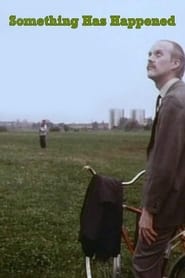
1987
star 7.1As the AIDS epidemic was spreading in 1987, the Swedish government commissioned Roy Andersson to make an educational film about the disease. In these twenty or so monotone scenes, Andersson criticizes the medical community for its dehumanizing and racist tendencies when researching HIV and AIDS.