Top Rated Documentary Movies on Tub Tv - Page 211
All Services
Free Services
 Netflix
 Amazon Prime Video
 Apple iTunes
 Apple TV Plus
 Disney Plus
 Google Play Movies
 Paramount Plus
 Hulu
Hulu
 HBO Max
 YouTube
 fuboTV
 Peacock
 Peacock Premium
 Amazon Video
 The Roku Channel
 AMC+
AMC on Demand
AMC+
AMC on Demand
 Kocowa
 Hoopla
 The CW
 Vudu
Vudu
 Starz
Starz
 Showtime
 PBS
PBS
 Pantaflix
 FXNow
FXNow
 Tubi TV
 Kanopy
 Comedy Central
 Crunchyroll
 Microsoft Store
 Redbox
 Sun Nxt
 ABC
ABC
 DIRECTV
 Crackle
 Fandor
 Plex
Plex
Netflix
Amazon Prime Video
Apple iTunes
Apple TV Plus
Disney Plus
Google Play Movies
Paramount Plus
Hulu
HBO Max
YouTube
fuboTV
Peacock
Peacock Premium
Amazon Video
The Roku Channel
AMC+
AMC on Demand
Kocowa
Hoopla
The CW
Vudu
Starz
Showtime
PBS
Pantaflix
FXNow
Tubi TV
Kanopy
Comedy Central
Crunchyroll
Microsoft Store
Redbox
Sun Nxt
ABC
DIRECTV
Crackle
Fandor
Plex

Rabbit à la Berlin
2009
Rabbit à la Berlin
2009
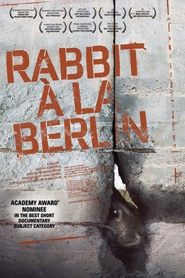
star 6.4The untold story about wild rabbits which lived between the Berlin Walls. For 28 years Death Zone was their safest home. Full of grass, no predators, guards protecting them from human disturbance. They were closed but happy. When their population grew up to thousands, guards started to remove them. But rabbits survived and stayed there. Unfortunately one day the wall fell down. Rabbits had to abandon comfortable system. They moved to West Berlin and have been living there in a few colonies since then. They are still learning how to live in the free world, same as we - the citizens of Eastern Europe.Halloween: The Inside Story
2010
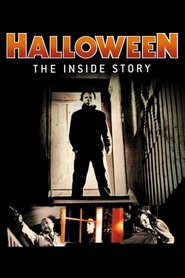
star 7.3This feature-length documentary takes a look at one of the most successful film franchises of all time as it goes behind the scenes of John Carpenter’s Halloween, the frightfest that redefined the horror genre in the late 1970s.Fårö Document 1979
1979
Fårö Document 1979
1979
star 6.5In 1969, with Sven Nykvist as cinematographer, Ingmar Bergman made The Fårö Document, a film that ended with a rather pessimist view of the island’s future. One of the scenes in the film is of a school-bus and its young passengers. To these and to the realities ten years later Bergman returns in the long documentary Fårö Document 1979.Experimental Treatment of a Hemorrhage in a Dog
1930
star 5.2Jean Painleve short about an experimental canine surgery.Val Lewton: The Man in the Shadows
2007
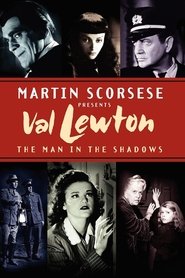
star 6.9Martin Scorsese narrates this tribute to Val Lewton, the producer of a series of memorable low-budget horror films for RKO Studios. Raised by his mother and his aunt, his films often included strong female characters who find themselves in difficult situations and who have to grow up quickly. He is best remembered for the horror films he made at RKO starting in 1940. Starting with only a title - his first was The Cat People - he would meticulously oversee every aspect of the film's completion. Although categorized as horror films, his films never showed a monster, leaving it all to the viewers imagination, assisted by music, mood and lighting.Histoire(s) du Cinéma 4a: The Control of the Universe
1998
star 6.4Part 7 of Godard's 8 part examination of the history of the concept of cinema and how it relates to the 20th century.Common Threads: Stories from the Quilt
1989
star 6.9On the eve of 1987's Second National March on Washington for Lesbian and Gay Rights, surviving families and friends of people who have died of AIDS prepare panels to be added to a large-scale memorial quilt project. Drawing from the sea of names memorialized, director Robert Epstein focuses on the lives of six people. Alongside the intimate profiles offered, through news footage and interviews, Epstein puts the AIDS crisis in the larger context of social and government response to the disease.Genocide
1982
Genocide
1982
star 7.4The mass murder of Jewish people by the Nazi regime is chronicled, with a warning that anti-Semitism is on the rise and the events of the Holocaust could happen again. The history of European Jewish culture and events before and during the Holocaust are seen in newsreels, photographs, and animated segments. The words of the victims of the era are read, and footage from the liberation os a concentration camp is shown.The Making of Fanny and Alexander
1984
star 6.8The Making of Fanny and Alexander is a fascinating look at the creation of a masterpiece. Directed by Ingmar Bergman himself, this feature-length documentary chronicles the methods of one of cinema’s true luminaries as he labors to realize his crowning production.Le Jeu de la mort
2010
Le Jeu de la mort
2010
star 6.8The Game of Death is a documentary co-produced by France Télévisions and Radio Television Switzerland1 in 2009 and staging a fake game show (The Xtreme Zone) during which a candidate must send electric shocks increasingly strong candidate to another until voltages that can cause death. The staging reproduces the Milgram experiment carried out initially in the United States in 1960 to study the influence of authority on obedience: electric shocks are fictitious, an actor pretending to suffer, and objective is to test the ability to disobey the candidate who inflicts this treatment and who is not aware of the experiment. The notable difference with the original experience is that scientific authority is replaced by a television presenter, Tania Young.The Brandon Teena Story
1998
star 6.1Documentary about Brandon Teena, a transgender man who was murdered along with two others in 1993 in rural Nebraska.Grand Prix: The Killer Years
2011
star 6.4In the 60s and early 70s it was common for Grand Prix drivers to be killed while racing, often televised for millions to see. Mechanical failure, lethal track design, fire and incompetence snuffed out dozens of young drivers. They had become almost expendable as eager young wannabes queued up at the top teams' gates waiting to take their place. This is the story of when Grand Prix was out of control. Featuring many famous drivers including three times world champion Sir Jackie Stewart OBE, twice world champion Emerson Fittipaldi and John Surtees OBE, this exciting but shocking film explores how Grand Prix drivers grew sick of their closest friends being killed and finally took control of their destiny.Leader-Sheep
2011
Leader-Sheep
2011
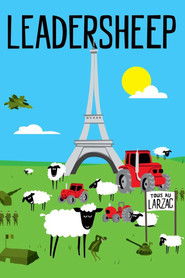
star 7Marizette, Christiane, Pierre, Léon, José... are some of the actors, funny and moving, of an incredible struggle, that of the peasants of Larzac against the State, confrontation of the weak against the strong, which united them in a merciless fight to save their lands. A determined and joyful fight, but sometimes also trying and perilous. It all began in 1971, when the government, through its Defense Minister Michel Debré, declared that the Larzac military camp must expand. Radical, the anger spreads like wildfire, the peasants mobilize and sign an oath: they will never give up their land. In the daily face to face with the army and the police, they will deploy treasures of imagination to make their voices heard. Soon hundreds of Larzac committees will be born throughout France... Ten years of resistance, collective intelligence and solidarity, which will carry them to victory.Farrebique, or the Four Seasons
1947
star 6.6Farrebique, the first feature-length effort of French documentary filmmaker Georges Rouqier, is widely regarded as his finest film. Rouqier concentrates on a single French farm family, following them through the four seasons. As in the works of Robert Flaherty, the human characters and the land surrounding them are "one", and Rouqier never misses an opportunity to parallel their lives with the eons-old phases of nature. The final symbolic images of Spring, achieved through time-lapse photography, are almost unbearably beautiful. The winner of several festival awards, Farrebique nonetheless did not immediately result in an outpouring of financing for Rouqier's follow-up films (this was a common problem in the financially strapped French film industry of the 1940s). Perhaps as a result, Rouqier did not make his sequel, Biquefarre (filmed in the same region, with some of the same "actors"), until 1983.Days of Glory
1945
Paradise or Oblivion
2012
Paradise or Oblivion
2012
star 6.9Paradise or Oblivion is a free online documentary produced by the Venus Project. This documentary details the root causes of the systemic value disorders and detrimental symptoms caused by our current established system. The film advocates a new socio-economic system, which is updated to present-day knowledge, featuring the life-long work of Social Engineer, Futurist, Inventor and Industrial Designer Jacques Fresco, which he calls a Resource-Based Economy. Paradise or Oblivion by the Venus Project introduces the viewer to a more appropriate value system that would be required to enable this caring and holistic approach to hhuman civilisation. This alternative surpasses the need for a monetary-based, controlled scarcity environment we find ourselves in today.Sexy Baby
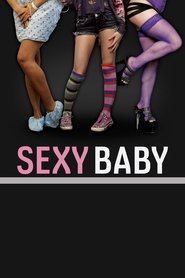
2012
Sexy Baby
2012
star 6.4The cyber age is creating a new sexual landscape. While doing research for the film, we had intimate and candid conversations with kids in middle school classrooms, suburban shopping malls, nightclubs, college dorms, and even conducted an informal roundtable during a high school house party. While chronicling trends among small town and big city kids, we discovered this: Having pubic hair is considered unattractive and “gross.” Most youngsters know someone who has emailed or texted a naked photo of themselves. Many kids have accidentally or intentionally had their first introduction to sex be via hardcore online porn. Facebook has created an arena where kids compete to be “liked” and constantly worry about what image to portray – much of what was once private is now made public. And the list goes on.Day of Freedom
1935
Day of Freedom
1935
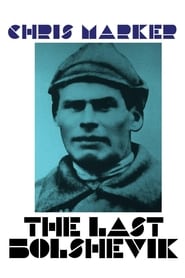
star 6.8The armed forces of the Third Reich, particularly the German army, are presented as an efficient system of bodies and machines at the seventh Nazi Party Rally that occurred in Nuremberg in 1935.The Last Bolshevik
1994
The Last Bolshevik
1994
star 7.3A documentary on Soviet filmmaker Aleksandr Medvedkin, examining his tumultuous career, the rediscovery of his masterpiece Happiness, and Russia's struggles over the course of the 20th Century.Two Years at Sea
2011
Two Years at Sea
2011
star 6.2Inspired by the themes of Knut Hamsun’s ‘Pan’, Ben Rivers ventures deep into the remote forests of Aberdeenshire to document the routine of Jake Williams - a man seen in all seasons, living reclusively, surviving frugally, and passing the time with strange projects.