Top Rated Documentary Movies on Tub Tv - Page 315
All Services
Free Services
 Netflix
 Amazon Prime Video
 Apple iTunes
 Apple TV Plus
 Disney Plus
 Google Play Movies
 Paramount Plus
 Hulu
Hulu
 HBO Max
 YouTube
 fuboTV
 Peacock
 Peacock Premium
 Amazon Video
 The Roku Channel
 AMC+
AMC on Demand
AMC+
AMC on Demand
 Kocowa
 Hoopla
 The CW
 Vudu
Vudu
 Starz
Starz
 Showtime
 PBS
PBS
 Pantaflix
 FXNow
FXNow
 Tubi TV
 Kanopy
 Comedy Central
 Crunchyroll
 Microsoft Store
 Redbox
 Sun Nxt
 ABC
ABC
 DIRECTV
 Crackle
 Fandor
 Plex
Plex
Netflix
Amazon Prime Video
Apple iTunes
Apple TV Plus
Disney Plus
Google Play Movies
Paramount Plus
Hulu
HBO Max
YouTube
fuboTV
Peacock
Peacock Premium
Amazon Video
The Roku Channel
AMC+
AMC on Demand
Kocowa
Hoopla
The CW
Vudu
Starz
Showtime
PBS
Pantaflix
FXNow
Tubi TV
Kanopy
Comedy Central
Crunchyroll
Microsoft Store
Redbox
Sun Nxt
ABC
DIRECTV
Crackle
Fandor
Plex

Chamonix, Le Village
1901
Danse espagnole de la Feria Sevillanos
1900
star 5.3A girl in a Sevillian dress dances to the sound of music played a couple of men at the "Féria Sevillanos" [sic] during the Exposition Universelle de Paris - though she does not look a real Sevillian dancer.Champs de Mars
1900
Champs de Mars
1900
star 5.4Shows all the prominent buildings on this thoroughfare, ending with a close view of the base of the Eiffel Tower, with the Trocadero Palace in the background.Palace of Electricity
1900
star 5.3A panoramic shot, making a full circle, at the 1900 Paris Exposition. It begins and ends looking at the front of the Palace of Electricity. As it pans, first we see a workman hosing down the promenade. Men and women walk past, all wearing hats. We see the base of the Eiffel Tower, which the Palace faces. A couple strolls. A mother and daughter walk passed, father is slightly ahead wearing a boater. Three men in uniform walk toward the camera as it comes to a stop facing the Palace.To Fly!
1976
The Pyramids (Overview)
1897
star 5.2A view of the Great Sphinx with two of Giza's pyramids in the background. A caravan passes the scene.The White Darkness
2002
A Counter-History of the Internet
2013
star 7.8Documentary about freedom defense movements on Internet.The Last Mogul
2005
Pravda
1970
Pravda
1970
star 5.6Filmed clandestinely in Czechoslovakia on 16mm. It's one of the films Godard made with the Groupe Dziga Vertov - a Marxist film about the political situation after the '68 revolution.Blood of Havana
2010
Blood of Havana
2010
star 5.2Shot on a Digital Harinezumi, the film features a disturbing and monstrous character walking the streets of Havana to meet people. The reading of a poetic, funny and false prophecy about communism and a new revolution coincides with a minimal and repetitive soundtrack.The First Sleigh-Ride
1897
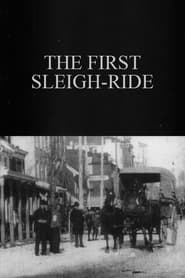
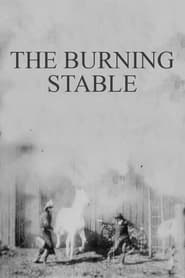
star 3.6“This subject taken just after the recent first fall of snow, shows two enthusiastic horsemen indulging in a "brush" with their respective horses and cutters.” (Maguire & Baucus)The Burning Stable
1896
The Burning Stable
1896
star 3.9A burning wagon is dragged from the barn by the firemen, and four horses are rescued from the flames by the stablemen. Thick volumes of smoke pour from the doors and windows. (Edison catalog)Amy Muller
1896
Amy Muller
1896
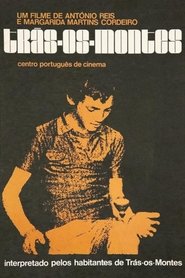
star 4.4Vaudeville dancer Amy Muller performs a portion of her stage routine, which features dancing on her toes. She dances on one toe for part of the performance. Later, she also twirls and does cartwheels.Trás-os-Montes
1976
Trás-os-Montes
1976
star 6.8The first feature in António Reis and Margarida Cordeiro’s trilogy is a journey through this almost mythical region of north-east Portugal, a tapestry of micronarratives where past, present and future become intertwined.San Francisco: Aftermath of Earthquake
1906
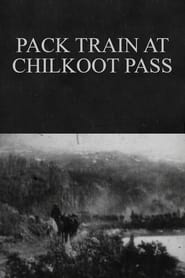
star 5.4Footage shot not long after the 1906 earthquake in San Francisco is edited together so that more than one scene and more than one vantage are included. We see fire raging. We see burned-out buildings, piles of rubble, and buildings with only one wall standing. People stand and watch; others walk purposely through the debris. A carriage passes; the camera pans the desolation. A horse-drawn cart is laden with a family's remaining possessions. A sign hangs outside one building: "A little disfigured but still in business. Men Wanted."Pack Train at Chilkoot Pass
1898
star 4.1During the Alaska gold rush, one way to reach the Klondike was over the Chilkoot Pass. A stationary camera is placed to see a ways down the curving trail. A pack train comes into view and passes in front of us, led by a man on horseback. Eight loaded mules follow, then another cowboy on horseback and a man walking, then eight more laden mules, another cowboy, then nine more mules, a cowboy, and still the pack train stretches as far as the eye can see. A solitary man watches from atop a hillock.Pixo
2009
Pixo
2009
star 8.2The film discusses the cultural impact of “pichação”, a Brazilian form of graffiti, on the streets of São Paulo and its international influence as one of the main cornerstones of Street Art.Lenny Cooke
2013
Lenny Cooke
2013
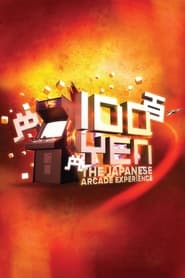
star 6.8In 2001, Lenny Cooke was the most hyped high school basketball player in the country, ranked above future greats LeBron James, Amar’e Stoudemire, and Carmelo Anthony. A decade later, Lenny has never played a minute in the NBA. In this quintessentially American documentary, filmmaking brothers Joshua and Benny Safdie track the unfulfilled destiny of a man for whom superstardom was only just out of reach.100 Yen: The Japanese Arcade Experience
2012
star 6.2Imagine a world where video games reign supreme. Five story buildings filled with arcade cabinets, old and new, inundate the streets. Welcome to downtown Tokyo, Japan. A place where the arcades of the 80s and 90s not only still exist, but thrive and have evolved into an elaborate, unmatchable gaming experience. 100 Yen is a historical documentary about the evolution of arcades and the culture surrounding it - from the birth of arcades to the game centers that still thrive today. With a predominant focus on the three major arcade genres, Shooting games, Fighting games and Rhythm games, 100 Yen explores the culture and evolution of arcades through the past and present. Featuring interviews with industry professionals, game programmers and designers, casual gamers and gaming icons from Japan, Canada, and the USA.