Top Rated Documentary Movies on Tub Tv - Page 332
All Services
Free Services
 Netflix
 Amazon Prime Video
 Apple iTunes
 Apple TV Plus
 Disney Plus
 Google Play Movies
 Paramount Plus
 Hulu
Hulu
 HBO Max
 YouTube
 fuboTV
 Peacock
 Peacock Premium
 Amazon Video
 The Roku Channel
 AMC+
AMC on Demand
AMC+
AMC on Demand
 Kocowa
 Hoopla
 The CW
 Vudu
Vudu
 Starz
Starz
 Showtime
 PBS
PBS
 Pantaflix
 FXNow
FXNow
 Tubi TV
 Kanopy
 Comedy Central
 Crunchyroll
 Microsoft Store
 Redbox
 Sun Nxt
 ABC
ABC
 DIRECTV
 Crackle
 Fandor
 Plex
Plex
Netflix
Amazon Prime Video
Apple iTunes
Apple TV Plus
Disney Plus
Google Play Movies
Paramount Plus
Hulu
HBO Max
YouTube
fuboTV
Peacock
Peacock Premium
Amazon Video
The Roku Channel
AMC+
AMC on Demand
Kocowa
Hoopla
The CW
Vudu
Starz
Showtime
PBS
Pantaflix
FXNow
Tubi TV
Kanopy
Comedy Central
Crunchyroll
Microsoft Store
Redbox
Sun Nxt
ABC
DIRECTV
Crackle
Fandor
Plex

Bauhaus Spirit: 100 Years of Bauhaus
2018
star 6Founded in 1919 by Walter Gropius, Bauhaus was supposed to unite sculpture, painting, design and architecture into a single combined constructive discipline. It is a synthesis of liberated imagination and stringent structure; cross-medial concepts that embellish and enrich our existence, illumination and clarity, order and playfulness. But Bauhaus was never just an artistic experiment. Confronted with the social conditions of that particular time, as well as the experience of WWI, the movement concerned itself with the political and social connotations of design from the very outset. Hence, Bauhaus history is not just the history of art, but also the history of an era that stretches from the early 20th century to the modern day.Island of the Hungry Ghosts
2019
star 6Christmas Island, Australia is home to one of the largest land migrations on earth—that of forty million crabs journeying from jungle to sea. But the jungle holds another secret: a high-security facility that indefinitely detains individuals seeking asylum.Breaking Point: The War for Democracy in Ukraine
2017
star 7.4The film looks at people transformed by a democratic revolution, who give up their normal lives to fight a Russian invasion, in a war which has killed 10,000 and displaced 1.9 million Ukrainians.trustWHO
2018
trustWHO
2018
star 8Is the WHO sick? The filmmaker and mother Lilian Franck reveals clandestine influences by the tobacco, pharmaceutical and nuclear industries on the organization. She shows a frightening portrayal of our present society, in which governmental politics is becoming obsolete. "Of all the forms of inequality, injustice in health care is the most shocking and inhumane." - Martin Luther KingHammer Horror: The Warner Bros. Years
2018
star 7.4The untold story of Hammer at Warner Bros, and the relationship that produced some of the British company's finest films.Ryuichi Sakamoto: async at the Park Avenue Armory
2018
star 7.2A live performance film capturing an intimate concert by composer, pianist and music producer Ryuichi Sakamoto in New York City. The performance marked the first public unveiling of Sakamoto’s new opus, async, hailed as one of the best albums of 2017 by Rolling Stone and Pitchfork.Victory Day
2018
Victory Day
2018
star 6.2Every year, on the 9th of May, people gather in Treptower Park in Berlin. They come dressed in their best outfits or in Soviet military uniform. They carry flags, banners and posters. They lay flowers at the monument to the Soviet soldier; they sing, dance and drink. They celebrate the victory of the Soviet Union over Nazi Germany.The film is a direct reportage from Treptower Park 72 years after the victory.The Endless Film
2018
The Endless Film
2018
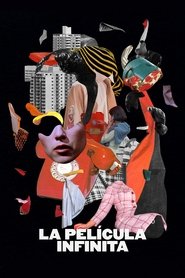
star 5.6Based on the remains of never-completed Argentine features from the archives of the film museum in Buenos Aires. The film is, as it were, a parallel film history: an essay like a cinematographic Frankenstein, that blows new life into images that once seemed unsuccessful and pointless.Foreman
2017
Foreman
2017
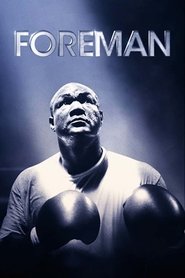
star 5.6Cast as America’s Villain in the famed Rumble in the Jungle against Muhammad Ali, George Foreman lost one of the greatest fights in sports history. Immediately after the defeat, "Big George" fell into a spiral that made him abandon boxing and spend 10 years becoming an ordained minister following a near death experience. 20 years later on and into his 40’s, Foreman began an improbable climb back to the summit of world boxing becoming the heroic figure he’d always been destined to be, and writing one of the greatest underdog stories ever told.A Tour of the Inferno: Revisiting 'Platoon'
2001
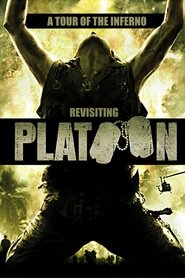
star 8.5A documentary about the making of Oliver Stone's Vietnam War film, Platoon (1986).Playing in the Park
1929
Playing in the Park
1929
star 4.6This 1929 home movie, shot by longtime Corpus Christi resident Antonio Rodríguez Fuentes, may well represent some of the earliest produced by a Mexican-American filmmaker about the Mexican-American community in Texas. In the footage, Fuentes captures his wife Josefina and four of their children playing in a park in Corpus Christi. Josefina also takes a turn behind the camera to document her husband with the children.Fourth of July Parade
1929
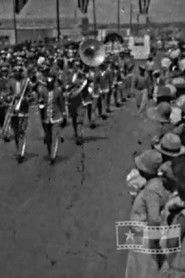
star 4.8This home movie, shot by longtime Corpus Christi resident Antonio Rodríguez Fuentes, captures the Fourth of July parade through downtown Corpus Christi in 1929. The footage provides insight into the early construction of parade floats, with many adopting a boxy appearance and featuring limited decoration. Fuentes and his wife Josefina were active members of the city's Mexican-American society, participating in several community organizations.Obscuro Barroco
2018
Obscuro Barroco
2018
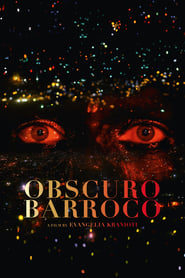
star 6.5A stream of consciousness from Brazil’s underground flows straight into the heart of the city’s street carnival. In between the masks and the make-up, the young, naked and new bodies and a spectacular firework display, people come into view who have undergone a transformation that makes it difficult to clearly ascribe them to any gender.Ex-Shaman
2018
Ex-Shaman
2018
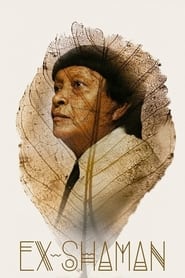
star 6.6Ever since their first contact with the Western world in 1969 the Paiter Suruí, an indigenous people living in the Amazon basin, have been exposed to sweeping social changes. Smartphones, gas, electricity, medicines, weapons and social media have now replaced their traditional way of life. Illness is a risk for a community increasingly unable to isolate itself from the modernization brought by white people or the power of the church. Ethnocide threatens to destroy their soul. With dogged persistence, Perpera, a former shaman, is searching for a way to restore the old vitality to his village.Return
2017
Return
2017
star 7.1Two journeys take place in two different periods. One is a train journey across two continents. The other follows an old family photograph back to life during wartime. The rhythmic swaying of the train reveals a forgotten memory.Last Days in Shibati
2018
Last Days in Shibati
2018
star 7.1Shibati, the last old area of Chongqing, the biggest city in China, is about to disappear. Zhou Hong, 7 years old, little prince of the streets, and Mrs Xue Lian, 70, godmother of the migrant workers, have to leave their beloved life in this charming neighborhood, to be rehoused in one of the thousands anonymous towers of the faraway suburb.Our New President
2018
Our New President
2018
star 6.5The story of Donald Trump's election told entirely through Russian propaganda. By turns horrifying and hilarious, the film is a satirical portrait of Russian meddling in the 2016 election that reveals an empire of fake news and the tactics of modern day information warfare.Heiress of the Wind
2017
Heiress of the Wind
2017
star 7.3The rise and fall of the Sandinista revolutionary dream estranged a daughter from her parents. Thirty years later, the daughter takes a camera to tell their story and, indirectly, the story of Nicaragua.The Ronda Rousey Story: Through My Father's Eyes
2019
star 5.7This documentary chronicles former Olympian and UFC champion Ronda Rousey's ascent to iconic status in the world of mixed martial arts.Harry Styles at the BBC
2017
star 8.5The BBC has supported Harry since the beginning of his career as a solo artist and his time in One Direction. In a BBC Music exclusive, Harry Styles performs new tracks from his number one debut album as a solo artist, alongside covers of classic songs. He's accompanied by his band and performs in front of a live studio audience. Nick Grimshaw talks to Harry about his extraordinary career in music to date, his future ambitions and his debut acting role in Dunkirk. Harry and Grimmy also have some fun with some very special friends as they take time away from the studio to spend a day out in Manchester.