Top Rated Documentary Movies on Tub Tv - Page 473
All Services
Free Services
 Netflix
 Amazon Prime Video
 Apple iTunes
 Apple TV Plus
 Disney Plus
 Google Play Movies
 Paramount Plus
 Hulu
Hulu
 HBO Max
 YouTube
 fuboTV
 Peacock
 Peacock Premium
 Amazon Video
 The Roku Channel
 AMC+
AMC on Demand
AMC+
AMC on Demand
 Kocowa
 Hoopla
 The CW
 Vudu
Vudu
 Starz
Starz
 Showtime
 PBS
PBS
 Pantaflix
 FXNow
FXNow
 Tubi TV
 Kanopy
 Comedy Central
 Crunchyroll
 Microsoft Store
 Redbox
 Sun Nxt
 ABC
ABC
 DIRECTV
 Crackle
 Fandor
 Plex
Plex
Netflix
Amazon Prime Video
Apple iTunes
Apple TV Plus
Disney Plus
Google Play Movies
Paramount Plus
Hulu
HBO Max
YouTube
fuboTV
Peacock
Peacock Premium
Amazon Video
The Roku Channel
AMC+
AMC on Demand
Kocowa
Hoopla
The CW
Vudu
Starz
Showtime
PBS
Pantaflix
FXNow
Tubi TV
Kanopy
Comedy Central
Crunchyroll
Microsoft Store
Redbox
Sun Nxt
ABC
DIRECTV
Crackle
Fandor
Plex

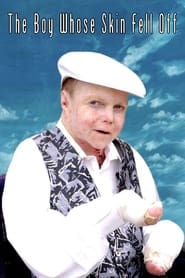
The Boy Whose Skin Fell Off
2004
star 7.5A year ago, 36-year-old Jonny Kennedy died. He had a terrible genetic condition called Dystrophic Epidermolysis Bullosa (EB) - which meant that his skin literally fell off at the slightest touch, leaving his body covered in agonizing sores and leading to a final fight against skin cancer. In his last months Jonny decided to work with filmmaker Patrick Collerton to document his life and death, and the result was a film, first broadcast in March, that was an uplifting, confounding and provocatively humorous story of a singular man. Not shying away from the grim reality of EB, the film was also a celebration of a life lived to the full.Christo's Valley Curtain
1974
star 6.6Oscar nominated documentary about the largest man-made curtain in the world as "sculpture".Oblivion
2008
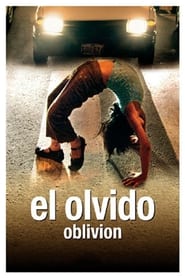
Oblivion
2008
star 4.9Heddy Honigmann returns to her birthplace of Lima, Peru to reacquaint herself with a place and people dear to her heart. It is about a forgotten city, a forgotten history and a forgotten people. With irony as their loved weapon for survival, they have to forget as well, in order not to give way to cynicism, hatred and grief. It is about remembering the old days when life - despite class differences, corruption and violence - was still good: waiters, bartenders and shopkeepers who are fighting a losing battle and have lost everything. It is also about the children who manage to survive by mastering the art of street life and who reveal the country in it's true colours. Just like the dogs they share the streets with, they have no good memories to forget.Brush of Baphomet
2009
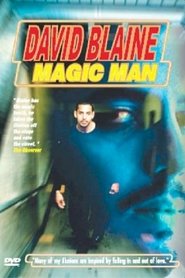
David Blaine: Magic Man
1998
star 6.8In Magic Man, Blaine is shown traveling across the country, entertaining unsuspecting pedestrians in New York City, Atlantic City, Dallas, San Francisco, Compton, and the Mojave Desert recorded by a small crew with handheld cameras. Jon Racherbaumer commented, "Make no mistake about it, the focus of this show, boys and girls, is not Blaine. It is really about theatrical proxemics; about the show-within-a-show and the spontaneous, visceral reactions of people being astonished."Fist Fight
1964
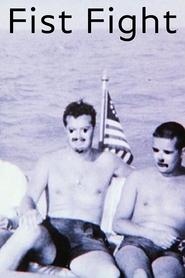
Fist Fight
1964
star 4.6Breer's extraordinary autobiographical film combines personal and family photos with intense colors, textures and geometric abstractions. Originally presented as part of Karlheinz Sotckhausen's 1964 premiere of Originale. - Harvard Film ArchiveDry Wood
1973
Dry Wood
1973
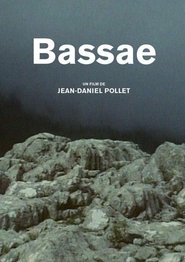
star 6.1Featuring the stories and music of seminal Cajun musicians "Bois Sec" Ardoin and Canray Fontenot, Dry Wood is a short, vibrant documentary portrait of life, food, music and festivity in the Louisiana Delta from the singular Les Blank. Preserved by the Academy Film Archive in 1999.Bassae
1964
Bassae
1964
star 7.9"I was interested by the fact that some old guy, after the Parthenon’s glamour, devoted himself in a much smaller temple, where there was no white marble, no nothing. All Greek temples are dedicated to Apollo etc, and this particular one was not dedicated to anyone and is in a place where there never was a city nearby, in a kind of wasteland, in a ditch. But, just by going up a bit –you are in the centre of Peloponissos- on a clear day, you can see the sea on both your left and right. I went back there, at least six, seven or eight times, as if I wanted to think or find myself. So, at the temple in Bassae, I made a short 10 minute film and I was lucky enough to encounter two days of clouds and mist between the columns." —ecofilms.gr (Jean-Daniel Pollet, Tours d’horizons, Editions de l’oeil 2005)An Image
1983
An Image
1983
star 5.1"Four days spent in a studio working on a centerfold photo for Playboy magazine provided the subject matter for my film. The magazine itself deals with culture, cars, a certain lifestyle. Maybe all those trappings are only there to cover up the naked woman. Maybe it’s like with a paper-doll. The naked woman in the middle is a sun around which a system revolves: of culture, of business, of living!" (Harun Farocki, Zelluloid, no. 27, Fall 1988)This Is America Part 2
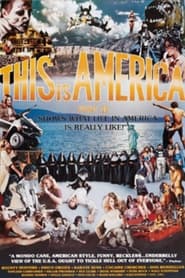
1980
star 4.8The sequel to This is America, aka Jabberwalk. This film goes inside the real America circa 1980 - a world of punks, orgies and worm-eating hicks! Romano Vanderbes back on the film making side and Norman Rose back on narrating duty for the second of the This Is America trilogy. Things kick off slightly louder this time with a performance by The Dictators doing a version of America the Beautiful while the titles role, then right into piece about punk star Jello Biafra of the Dead Kennedy's running for mayor of San Francisco. Then back into a more This Is America feeling segment about a crazy fat bloke called Captain Sticky. Among some of the other more interesting segments we get a look at underground vagrants, a piranha attack, martial arts nuns, a family of worm eaters, a drug abusing church and ends with a death row electrocution.Baldwin's Nigger
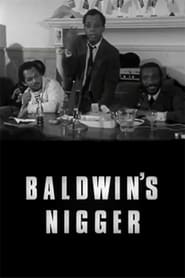
1968
Baldwin's Nigger
1968
star 6.6James Baldwin and Dick Gregory discuss the Civil Rights Movement in 1960s Great Britain.My Fathers, My Mother and Me
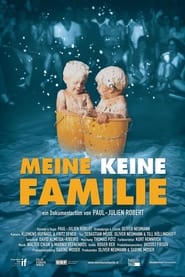
2012
star 4.3Communal property, free sexuality, dissolution of the nuclear family - these were the basic principles of the Friedrichshof, the largest commune in Europe founded by the Viennese Actionist Otto Muehl in the 1970's. Because of these principles Paul-Julien Robert, who was born into this commune, for a long time didn't know who was his biological father.Attenborough: 60 Years in the Wild
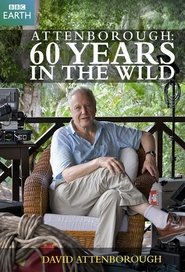
2012
star 6.6Over three very personal films, Sir David Attenborough looks back at the unparalleled changes in natural history that he has witnessed during his 60-year career.Homo Sapiens 1900
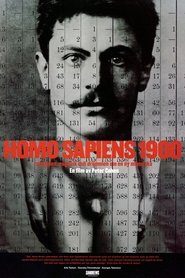
1998
Homo Sapiens 1900
1998
star 6.9Homo Sapiens 1900 is a 1998 documentary directed by Peter Cohen, about various eugenics methods that were in practice in Europe during the first part of the 20th century. Eugenics is to be the scientific credo of the 20th century. The man credited with its invention, Francis Galton, says it is based on the concept that the evolution of man is crippled by the ill-conceived - those unfit to breed. The study of eugenics thus would concern itself with distinguishing the weed from the good flowers.The World at Their Feet
1970
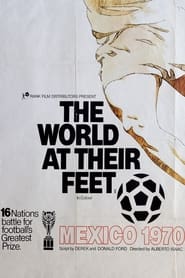
star 6.8The 1970 finals saw the emergence of probably the greatest team the world has ever seen, in the all-conquering form of Brazil. Pelé was playing in his last finals and his touch, vision and goal prowess combined with Jairzinho's amazing feat of scoring in every round, propelled the Brazilians to an irresistible 4-1 final victory over an overwhelmed Italy.A Trip Down Memory Lane
1966
star 5.9A Trip Down Memory Lane is a 1965 experimental collage film by Arthur Lipsett, created by editing together images and sound clips from over fifty years of newsreel footage. The film combines footage from a beauty contest, religious procession, failed airflight, automotive and science experiments, animal experimentation, skyscraper construction, military paraphernalia, John D. Rockefeller and scenes of leisure, Richard Nixon and scenes of war, blimps and hot air balloons, and a sword swallower. Lipsett envisioned his film as a kind of cinematic time capsule for future generations.The Economics of Happiness
2011
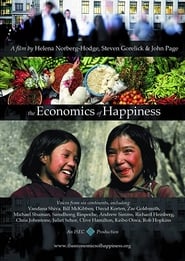
star 7.2'The Economics of Happiness' features a chorus of voices from six continents calling for systemic economic change. The documentary describes a world moving simultaneously in two opposing directions. On the one hand, government and big business continue to promote globalization and the consolidation of corporate power. At the same time, all around the world people are resisting those policies, demanding a re-regulation of trade and finance - and, far from the old institutions of power, they're starting to forge a very different future. Communities are coming together to re-build more human scale, ecological economies based on a new paradigm - an economics of localization.Lopez Street
2013
Lopez Street
2013
star 6.3In the eyes of a foreigner practically any street of Mexico City’s Centro Histórico holds potential for a film. Life on the street deserves more than just the natural condition of observer anyone could have, it demands an extra attention. In a 100-meter radius, the sociological exuberance of the events going on is simply impossible to ignore. The street is a mise en scène in itself.The Same River Twice
2003
The Same River Twice
2003
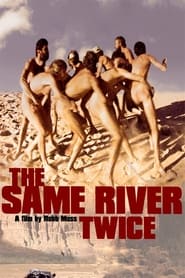
star 4.6From peyote to prozac, a sensitive portrait of five former hippies now approaching middle age.The Burly Man Chronicles
2004
star 7This mammoth documentary takes us through the making of both The Matrix Reloaded and The Matrix Revolutions. On top of seeing many pre-production and production meetings, we are also invited on the sets for both films, and get an idea of how difficult it was to accomplish the nearly impossible.