Top Rated History Movies on Tub Tv - Page 228
All Services
Free Services
 Netflix
 Amazon Prime Video
 Apple iTunes
 Apple TV Plus
 Disney Plus
 Google Play Movies
 Paramount Plus
 Hulu
Hulu
 HBO Max
 YouTube
 fuboTV
 Peacock
 Peacock Premium
 Amazon Video
 The Roku Channel
 AMC+
AMC on Demand
AMC+
AMC on Demand
 Kocowa
 Hoopla
 The CW
 Vudu
Vudu
 Starz
Starz
 Showtime
 PBS
PBS
 Pantaflix
 FXNow
FXNow
 Tubi TV
 Kanopy
 Comedy Central
 Crunchyroll
 Microsoft Store
 Redbox
 Sun Nxt
 ABC
ABC
 DIRECTV
 Crackle
 Fandor
 Plex
Plex
Netflix
Amazon Prime Video
Apple iTunes
Apple TV Plus
Disney Plus
Google Play Movies
Paramount Plus
Hulu
HBO Max
YouTube
fuboTV
Peacock
Peacock Premium
Amazon Video
The Roku Channel
AMC+
AMC on Demand
Kocowa
Hoopla
The CW
Vudu
Starz
Showtime
PBS
Pantaflix
FXNow
Tubi TV
Kanopy
Comedy Central
Crunchyroll
Microsoft Store
Redbox
Sun Nxt
ABC
DIRECTV
Crackle
Fandor
Plex

Dreyfus
1930
Dreyfus
1930
star 5.6In late nineteenth century Alfred Dreyfus, a French army officer of Jewish heritage, is falsely accused of espionage. Found guilty of treason he is drummed out of the army and sent to prison on Devil's Island.The Descendant of the Snow Leopard
1984
star 7.5The Russian Descendant of the Snow Leopard is based on a famous Kirghizian folktale. Apparently the Kirghizian folks had plenty of time to tell this story: to print a full synopsis would result in a novelette. Essentially, the story involves a proud group of highland hunters called the Snow Leopards, who in order to survive a brutal winter must request help from the Lowland people. The price for this assistance is the hand of the Snow Leopard's daughter, who is promised in marriage to a wealthy Lowland trader. During the Springtime wedding celebration, the trader becomes fascinated by a stranger who wins all the athletic contests. This "male" contestant turns out to be a woman, who has arrived to seek freedom for her imprisoned husband. The subsequent romance between the trader and the beautiful stranger results in disaster and bloodshed for both the Snow Leopards and the Lowlanders.Bashi-Achuki
1956
Bashi-Achuki
1956
star 5.3The 17th century rebellion in Kakheti masterminded by Bidzina Cholokashvili gets about the whole Georgia. An Imeretian youth nicknamed as Bashi-Achuk is a real exterminator of the Persians. He attacks the Persian escort and sets free the Georgian women who were supposed to be locked up in the Shah’s harem. Bashi-Achuk’s twin sisters are among the rescued captives. Abdushahil, a Persian warrior who was defeated by Bashi-Achuk in wrestling, falls in love with Mzisa, Bashi-achuk’s sister. Mzisa brings Abdushahil to the camp of the Georgian rebels. Abdushahil learns that he is a Georgian too. As a child he was kidnapped and brought up in Persia. Abdushahil’s army gives up and the Georgians win the battle.The Swimmer
1981
The Swimmer
1981
star 2.7The tale of a 20th century family line of swimmers who all attempt to swim some near-impossible distance in the Black Sea.Whom God Forgives
1957
Whom God Forgives
1957
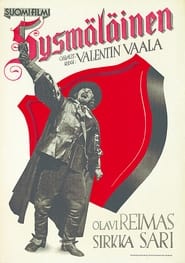
star 4.8Set in rural South of Spain in the 19th century, tells the story of group of outlaws, from very different origins, trying to survive, hiding from the law enforcement officers in caves in a hilly area, and their struggle against the evil mining company that exploits the poor people of their home village.Sysmäläinen
1938
Sysmäläinen
1938
star 4In 17th century Finland young Arvid is forced to marry Brita but their ways soon part when their respective fathers move to different places. Years roll by and Arvid grows up into a handsome and respected Thirty Years' War veteran known for his excellent fencing skills. However, he has fallen madly in love with a local maiden who does not reciprocate his advances, not to mention that his forced marriage to Brita is still valid.Long Dark Night
2004
Long Dark Night
2004
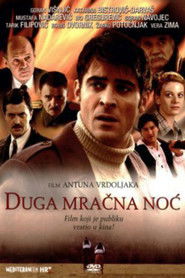
star 6.5"Long Dark Night" follows the life of the fictional character Iva Kolar: his experiences as a Croatian University student, his role as a Partisan fighting Hitler's troops during W.W. II, his involvement in his nation's post-war government, and his eventual downfall.March of Happiness
1999
March of Happiness
1999
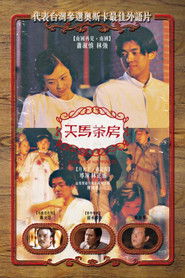
star 5.81945-1947, Taiwan. A teenage couple were deeply in love despite objections from the girl’s family. Their tragic story is played out in travelling troupes, tea-houses and western-style cafes, with the backdrop of Japanese occupation and the 28 February Incident.Richelieu: The Purple and the Blood
2014
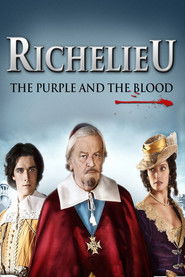
star 6.2In the Kingdom of France from 1640 is the old with his body ailing Cardinal Richelieu, powerful man under Louis XIII, faced with the machinations of his tipped designated successor, the Marquis de Cinq-Mars.The Long Winter
1999
The Long Winter
1999
star 7.2In 1838, François-Xavier Bouchard fights beside his Québec countrymen and the English minority.Death Scream
1975
Death Scream
1975
star 6.6Loosely based on the true story of the killing of Kitty Genovese: A young woman's murder is witnessed by fifteen of her neighbors who do nothing to help and refuse to cooperate with the police.Along the Sungari River
1947
star 6Unfortunate events beset a poor Chinese girl as she escapes from invading Japanese forces, narrowly avoids being raped, and seeks solace in a neighboring village.The Ballad of the Masterthief Ole Hoiland
1970
star 4Ballad of the Masterthief Ole Hoiland (Norwegian: Balladen om mestertyven Ole Høiland) is a 1970 Norwegian drama film directed by Knut Andersen, and starring a broad cast of notable Norwegian actors, headed by Per Jansen as Ole Høiland. Ole Høiland was an actual Norwegian Robin Hood-figure in the early 19th century. He steals from the rich and gives to the poor, enjoying numerous affairs with attractive women along the way. The story culminates in the ambitious burglary of Norges Bank, Norway's central bank.Battle on Shangganling Mountain
1956
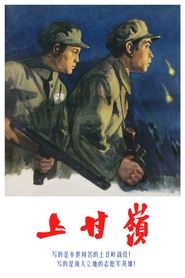
star 6.2The film follows a group of Chinese People's Volunteer Army soldiers who are holding Triangle Hill for several days against US forces. Short of both food and water, they hold their ground until the relief troops arrive. The movie portray the battle as a Chinese victory over an American invasion, and the People's Volunteer Army soldiers were shown as Chinese war heroes."The Freethinker
1994
The Freethinker
1994
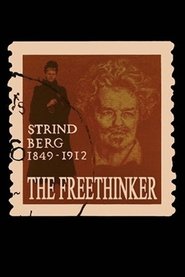
star 6.7The film portrays the Swedish playwright, novelist, poet, essayist and painter August Strindberg's life 1849-1912. Through his extensive correspondence and literary production, from the supposed first work, the drama "The Free Thinker" (1869), to the posthumously published "The Occult Diary" (published 1977 ). But also his three wives, Siri von Essen, Frida Uhl and Harriet Bosse, and the children Karin, Greta and Hans are given space in the film. The unpublished first drama "The Free Thinker", depicts a young man forced to break with family and tradition to follow his conscience and ideals, becomes a prophecy about the author's own life.China, My Sorrow
1989
China, My Sorrow
1989
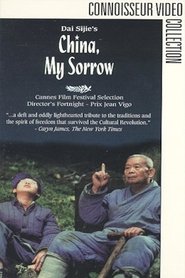
star 6.2In August 1966, the Cultural Revolution in full swing, 13-year-old Tian Ben is arrested for playing a pop record; he's sent to a remote mountain camp in Niu-Peng. There he's called "Four Eyes" and, with about 16 other older boys and men, he's made to carry muck up a mountainside, make bricks, saw logs, and sing daily to Chairman Mao of his faults. There's camaraderie among the five youths, especially with a young pickpocket named Baimao, and Tian is also drawn to a silent monk who cares for him when he falls ill and the others expect him to die. The camp is remote, so there are no fences or walls. Tian longs to escape.Last Eunuch In China
1987
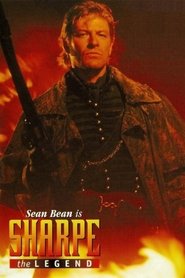
Sharpe: The Legend
1997
Sharpe: The Legend
1997
star 5Several years after the battle of Waterloo, a former soldier from Shoreditch sits in a London inn reminiscing about the brave and determined officer who took him to hell and back. The narrator is Rifleman Cooper, and the officer whose fame he recalls is the legendary Richard Sharpe.Caligari: When Horror Came to Cinema
2014
star 6.7On February 26, 1920, Robert Wiene's world-famous film The Cabinet of Dr. Caligari premiered at the Marmorhaus in Berlin. To this day, it is considered a manifesto of German expressionism; a legend of cinema and a key work to understand the nature of the Weimar Republic and the constant political turmoil in which a divided society lived after the end of the First World War.Sergey Lazo
1968