Top Rated History Movies on Tub Tv - Page 235
All Services
Free Services
 Netflix
 Amazon Prime Video
 Apple iTunes
 Apple TV Plus
 Disney Plus
 Google Play Movies
 Paramount Plus
 Hulu
Hulu
 HBO Max
 YouTube
 fuboTV
 Peacock
 Peacock Premium
 Amazon Video
 The Roku Channel
 AMC+
AMC on Demand
AMC+
AMC on Demand
 Kocowa
 Hoopla
 The CW
 Vudu
Vudu
 Starz
Starz
 Showtime
 PBS
PBS
 Pantaflix
 FXNow
FXNow
 Tubi TV
 Kanopy
 Comedy Central
 Crunchyroll
 Microsoft Store
 Redbox
 Sun Nxt
 ABC
ABC
 DIRECTV
 Crackle
 Fandor
 Plex
Plex
Netflix
Amazon Prime Video
Apple iTunes
Apple TV Plus
Disney Plus
Google Play Movies
Paramount Plus
Hulu
HBO Max
YouTube
fuboTV
Peacock
Peacock Premium
Amazon Video
The Roku Channel
AMC+
AMC on Demand
Kocowa
Hoopla
The CW
Vudu
Starz
Showtime
PBS
Pantaflix
FXNow
Tubi TV
Kanopy
Comedy Central
Crunchyroll
Microsoft Store
Redbox
Sun Nxt
ABC
DIRECTV
Crackle
Fandor
Plex

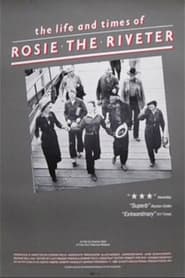
The Life and Times of Rosie the Riveter
1980
star 6Documentary about women's experiences of labour, in factories, mines and dockyards, in the USA during the second World War and how it affected their work and career aspirations once they were encouraged to give up such employment in peacetime.Burnface
2010
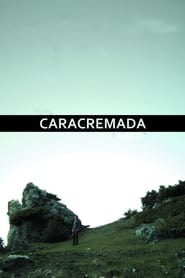
Burnface
2010
star 5.2"Caracremada" ("Burnface" in Catalan), a nickname given by the Spanish Civil Guard to Ramon Vila Capdevila, reflects about the libertarian resistance against Franco's regime through the last active guerrilla fighter. In 1951 the CNT ordered the retreat of its militants; however Ramon Vila remained in the woods of inland Catalonia where he restarted the fight operating on his own.The Video Diary of Ricardo Lopez
2000
star 6Intimate portrait of the social outcast Ricardo Lopez, chronicling the last days of his life in 1996 as he creates and sends a letter bomb rigged with sulfuric acid to Icelandic singer Björk and heads home to record his own suicide on video.The Real Robin Hood
2010
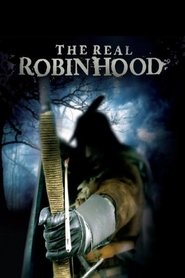
The Real Robin Hood
2010
star 5.7Was there really a Robin Hood? Did he steal from the rich and give to the poor? This History Channel program revisits the popular legend of the valiant folk hero, revealing Robin's true origins as a composite of multiple figures from the distant past, reviewing their amazing exploits, and seeking insights from historians as well as cast members of the 2010 adventure film "Robin Hood" and its director, Ridley Scott.Landmine Warfare
1963
Landmine Warfare
1963
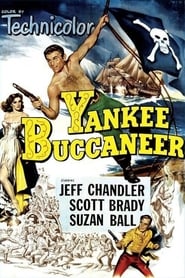
star 6.3In the Japanese war, a village on the edge of Chinese-controlled territory faces constant attacks. The leaders and the people of the village and other nearby villages join together to form a militia and plant land-mines to halt the Japanese.Yankee Buccaneer
1952
Yankee Buccaneer
1952
star 5.8A United States Navy ship in the first half of the 19th century, under the command of Captain David Porter, is expecting to put ashore after a year on the seas; but the arrival of one of Porter's ex-students, the willful and independent Lieutenant David Farragut, brings a new mission: to disguise the ship and crew as a pirate ship and help the Navy locate the criminals who have been robbing America's merchant fleet. But as Farragut's disobedience threatens the safety of the crew, they stumble upon an international conspiracy.The Suitcase of Dreams
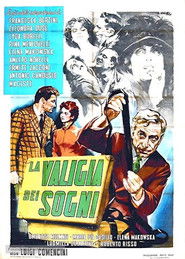
1953
star 6.7A former silent film actor who has saved old movies of his time from destruction uses them to set up recreational performances at schools. After an accidental fire and the risk of prison, he meets a rich producer who helps him to build a film museum.Man of Music
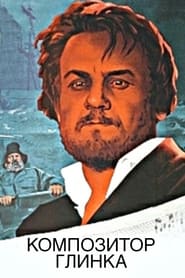
1952
Man of Music
1952
star 4.3The young composer Mikhail Glinka performs his new work at a soiree at earl Vielgorsky's house. However, the public is accustomed to Western music, and reacts coldly to the creation of the composer. This makes him very sad, but soon he decides to go learn the art of music in Italy. After returning from Italy, he is full of desire to write national Russian opera. Vasily Zhukovsky proposes a subject: a feat of Ivan Susanin. Tsar Nicholas I change the name of the opera to A Life for the Tsar and assigns a librettist - Baron Rosen. Acquaintance with the future co-author shocked Glinka: Rosen speaks Russian with a noticeable German accent. The premiere was successful, but Glinka was still not entirely happy with the libretto: "False words were written by Rosen". When Nicholas I learned that Ruslan and Lyudmila was written on Pushkin's subject, he sees it as sedition. The bitter experience of the composer brighten his supporters.Taita Boves
2010
Taita Boves
2010
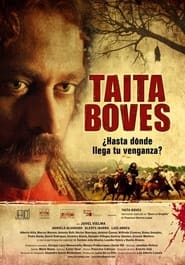
star 5.8TAITA BOVES chronicles a thirst for revenge that devastated a country. It tells the true story of Jose Tomás Boves, a cruel man who became a legend during the Venezuelan War of Independence, the most violent in the Americas. He went from seafarer to pirate, horse smuggler to prosperous merchant, prisoner to military chief. Spanish by birth, he spearheaded a grass roots troop of slaves, mulattoes, Indians and mestizos that crushed Simón Bolívar and his patriot army. Respectfully referred to as "Taita" by them, he fought for the underprivileged and the poorest of the poor, and curtailed three centuries of order in this colonial region. This film is about his passions and power, his loves and misadventures, and a bloody saga that rocked Venezuela.Time of Darkness
1991
Time of Darkness
1991
star 2.3In Middle-Age Russia, a christian preacher arrives, proposing a new order. He threatens those who take part in a pagan festival with the flames of hell. But when strange crimes start to happen, local leaders decide to investigate.The Desert of Forbidden Art
2011
star 4.7How does art survive in a time of oppression? During the Soviet rule artists who stay true to their vision are executed, sent to mental hospitals or Gulags. Their plight inspires young Igor Savitsky. He pretends to buy state-approved art but instead daringly rescues 40,000 forbidden fellow artist's works and creates a museum in the desert of Uzbekistan, far from the watchful eyes of the KGB. Though a penniless artist himself, he cajoles the cash to pay for the art from the same authorities who are banning it. Savitsky amasses an eclectic mix of Russian Avant-Garde art. But his greatest discovery is an unknown school of artists who settle in Uzbekistan after the Russian revolution of 1917, encountering a unique Islamic culture, as exotic to them as Tahiti was for Gauguin. They develop a startlingly original style, fusing European modernism with centuries-old Eastern traditions.Wallis & Edward
2005
Wallis & Edward
2005
star 5.1In 1936, Edward VIII abdicated in order to marry the woman he loved, Wallis Simpson, a twice divorced American. These events caused a scandal around the world and Wallis has since been demonised as the woman who stole the King of England. Wallis and Edward is the first time that the events have been considered from Wallis's point of view. The drama follows the beginning of their affair whilst Edward was Prince of Wales and Wallis was still married to Ernest Simpson.General Orders No. 9
2011
General Orders No. 9
2011
star 6.8One last trip down the rabbit hole before it gets paved over. A deep geography. What is above and what is below. What came before and what will come after. Agrarian fantasies, sacrificial rites, and excavations. A story told with maps, dreams, and prayers. A map lesson in three parts. A history of the State of Georgia - or Anywhere.Squadron of Flying Hussars
1981
star 5.8A story about a colonel Denis Davydov - hero of the 1812 war.Slavery by Another Name
2012
star 7.2A documentary that recounts the many ways in which American slavery persisted as a practice many decades after its supposed abolition.The Law in These Parts
2011
star 6.8Can justice truly be served in the occupied territories given the current system of law administered by Israel for Palestinians? This documentary explores the history of Israel's military legal system in the Occupied Palestinian Territories of the West Bank and Gaza Strip.One of the Hollywood Ten
2002
star 5.5Herbert Biberman struggles as a Hollywood writer and director blacklisted as one of The Hollywood Ten in the 1950s.Primo Levi's Journey
2006
Primo Levi's Journey
2006
star 5.9In February, 1945, Primo Levi (1919-1987) and other Auschwitz survivors set off for home. The journey took more then eight months. Sixty years later, a film crew retraces Levi's steps. Levi's words, mainly from "The Truce" (1963), tell us what he experienced. In turn, we see Poland's hollow post-war factories, nationalism in the Ukraine, Soviet-style Communism in Belarus, the abandoned town of Prypiat (Chernobyl), poverty and emigration from Moldavia, Italian factories in Romania, and on across Hungary and Slovakia to Munich where Levi's rage found no listeners. Then home to Turin. An aged Mario Rigoni Stern remembers his friend. What has changed? Some issues of the war remain unsettled.The Surprising History of Sex and Love
2002
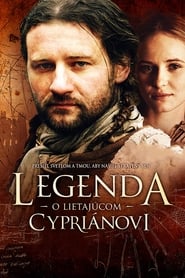
star 8The Surprising History of Sex and Love is a documentary presented by Terry Jones, looking at the different and surprising attitudes to sex and love throughout history. The documentary traces the story of changing social and religious attitudes to sex through a broad swathe of history. Starting with the place of ’sacred sex’ in the ancient world and ending with a discussion of the contemporary relationship between sex, marketing and prurience, the film offers some kind of map of how we got from there to here, and indicates that changes in sexual attitudes are connected with issues of power and control.Legenda o lietajúcom Cypriánovi
2010
star 3.6Historic adventurism movie inspirited by legend about mystery monk, alchemist and healer who made the flying machine according to lost book wrote by Leodardo DaVinci in 18th century.