Top Rated History Movies on Tub Tv - Page 324
All Services
Free Services
 Netflix
 Amazon Prime Video
 Apple iTunes
 Apple TV Plus
 Disney Plus
 Google Play Movies
 Paramount Plus
 Hulu
Hulu
 HBO Max
 YouTube
 fuboTV
 Peacock
 Peacock Premium
 Amazon Video
 The Roku Channel
 AMC+
AMC on Demand
AMC+
AMC on Demand
 Kocowa
 Hoopla
 The CW
 Vudu
Vudu
 Starz
Starz
 Showtime
 PBS
PBS
 Pantaflix
 FXNow
FXNow
 Tubi TV
 Kanopy
 Comedy Central
 Crunchyroll
 Microsoft Store
 Redbox
 Sun Nxt
 ABC
ABC
 DIRECTV
 Crackle
 Fandor
 Plex
Plex
Netflix
Amazon Prime Video
Apple iTunes
Apple TV Plus
Disney Plus
Google Play Movies
Paramount Plus
Hulu
HBO Max
YouTube
fuboTV
Peacock
Peacock Premium
Amazon Video
The Roku Channel
AMC+
AMC on Demand
Kocowa
Hoopla
The CW
Vudu
Starz
Showtime
PBS
Pantaflix
FXNow
Tubi TV
Kanopy
Comedy Central
Crunchyroll
Microsoft Store
Redbox
Sun Nxt
ABC
DIRECTV
Crackle
Fandor
Plex

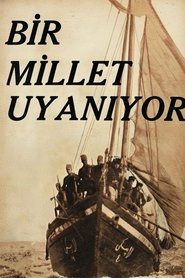
Bir Millet Uyanıyor
1932
Bir Millet Uyanıyor
1932
star 7.3The events begin on March 15, 1920. The captain Davut, who belongs to the Kuvva-i Milliye in Anatolia, and the commander Tilki join the alliance that first presses the Akbas Ammunition and transfers the ammunition to the Kuvva-i Milliye on a received code.Jánošík
1936
Jánošík
1936
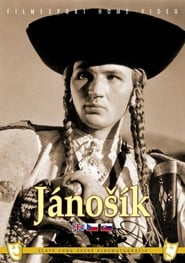
star 5Jánošík has been topic of many Slovak and Polish legends, books and films. According to the legend, he robbed nobles and gave the loot to the poor. The legend were also known in neighboring Silesia, the Margraviate of Moravia and later spread to the Kingdom of Bohemia. The actual robber had little to do with the modern legend, whose content partly reflects the ubiquitous folk myths of a hero taking from the rich and giving to the poor. However, the legend was also shaped in important ways by the activists and writers in the 19th century when Jánošík became the key highwayman character in stories that spread in the north counties of the Kingdom of Hungary (present Slovakia) and among the local Gorals and Polish tourists in the Podhale region north of the Tatras.Sternstunde ihres Lebens
2014
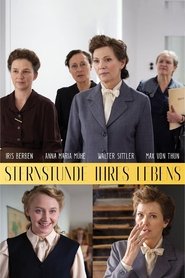
star 7Bonn 1948. The member of parliament and lawyer Elisabeth Selbert fights tirelessly for the inclusion of the sentence "Men and women have equal rights" in the Basic Law of the future Federal Republic of Germany. Despite the opposition she encounters during sessions in the Parliamentary Council , there is _she does not stop and stubbornly sticks to her plan . Selbert experiences a grandiose triumph when her application is included in the new Basic Law under Article 3, Paragraph 2 . In doing so , she lays the foundation for what has now been a 65-year political and social debate on the subjectEqual rights.The Stolen Battle
1972
The Stolen Battle
1972
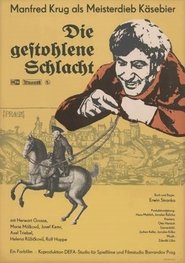
star 6.5In 1757, the second year of the Seven Years' War, Frederick II the Great stands at the gates of Prague. He has been trying to take the city for weeks, as the enemy commander Duke Charles of Lorraine is inside. Frederick has just defeated him, but the tide could soon turn against the Prussians, as new Austrian troops are approaching. None other than the famous master thief Andreas Christian Käsebier is to sneak into Prague to open the gates from the inside. As a reward, the king promises him freedom. Käsebier accepts the offer because he is tempted to steal an entire city. But by chance, Käsebier learns that the king wants to betray him. After a successful battle, he is put back behind bars for life. This doesn't suit the master thief at all, especially as he has just fallen in love with Katka in Prague.Opération Lune: L'épave cachée du Roi-Soleil
2013
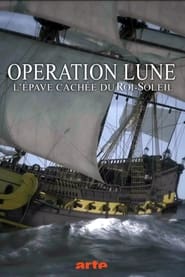
star 5Louis XIV's ship La Lune was wrecked off Toulon in November 1664. The ship was returning from an expedition to the Barbary Coast with nearly one thousand people on board, simple seamen or nobles of the highest rank. Discovered by a submarine in 1993, the wreck lies in 90 metres of water. In a state of magificent preservation, like some underwater Pompei, she will, starting in 2012, be the subject of an exceptional archeological investigation, bringing together history and robotics, the expertise of archeologists and the passion for the deep.Maiden, You Please Me
1969
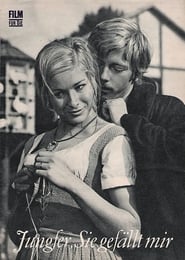
star 3.8A Saxon village in 1792: While the Prussians go against France, the haymaking takes place in the village and the resolute Marthe catches her daughter Ev with the village blacksmith Ruprecht in the hay.Swans of Nepriadva
1980
Emilia Galotti
1958
Emilia Galotti
1958
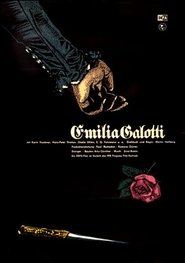
star 5The Prince of Guastalla falls in love with the young citizen Emilia Galotti, who is soon to marry Count Appiani. In order to win Emilia, the prince tries to send the count on an "honorable" journey on his behalf with the help of his chamberlain Marinelli. However, after the Count refuses this offer, Marinelli decides to have the wedding carriage robbed on his own initiative in order to have Emilia abducted to the Prince's nearby pleasure palace. But he has not thought of the prince's mistress, Countess Orsina, and Emilia's shaken father Odoardo, both of whom soon arrive at the castle, one to meet the prince, the other to look after his daughter...Mutig in die neuen Zeiten - Im Reich der Reblaus
2005
star 5.5Austria in the mid-1950s. Seamstress Elfi Redlich and her two children are about to emigrate to America with occupation officer Hal when her husband, missing for eleven years, returns home from Siberia. Factory owner Ulmendorff is deported to Russia on his way to his niece Valerie's wedding as a result of an intrigue by his employee Hasak. Hasak's joy is short-lived, as the Jewish owner of the factory asserts his ownership.La rupture
2013
La rupture
2013
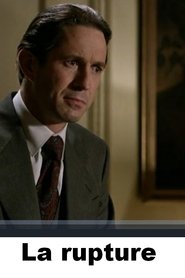
star 6Upon the sudden death of President Georges Pompidou, the French right is taken aback. Who will succeed him? It is finally Valéry Giscard d'Estaing, aged 48, elected with the support of Jacques Chirac, who is then appointed Prime Minister. Their alliance seems strong, but it will quickly crack.Raktha Sakshikal Zindabad
1998
star 5.8Raktha Sakshikal Zindabad is a 1998 Malayalam film directed by Venu Nagavalli. The film stars Mohanlal, Suresh Gopi, Suganya and Murali in lead roles.Oldrich and Bozena
1985
Oldrich and Bozena
1985
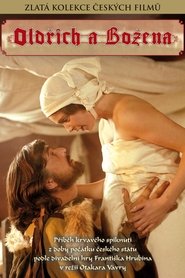
star 2.7At the turn of the 10th and 11th centuries Boleslav's kingdom fell apart in the fratricidal war between the Přemyslovci and the other clans the main profiteer of this being the German emperor. At that time it seemed as if the Czech state and the lineage of its princes was awaiting its end..." It is with these words that the tale of this film begins, whose narrative is based upon the the play by František Hrubín of the same name.A Place Out of Time: The Bordentown School
2009
star 7.3For a seventy-year period, when America cared little about the education of African-Americans, and discrimination was law and custom, The Bordentown School was an educational utopia. An incubator for black pride and intellect, it taught values, discipline, and life skills to generations of black children. This is the story of that remarkable school, as told by Bordentown alumni, historians, and remarkable archival footage. It is also the story of black education in America across three centuries, presenting a nuanced, rarely seen portrait of a separate black space; and a much-needed preface to the growing national discussion about historically black institutions and their role in nurturing identity and accomplishment. What was lost and what was gained in the march toward equality?Adventures of Casanova
1948
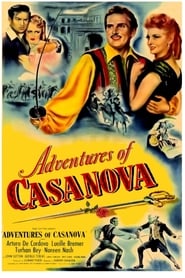
star 5Casanova, a young patriot in 18th-century Sicily, upon learning that his father and sister have been murdered, returns to Palermo and engages in guerilla tactics against the forces of the Governor. Lady Bianca, the Governor's daughter, is in love with one of the patriots, Lorenzo, and desires to escape from the palace. Her lady-in-waiting, Zanetta, enlists the aid of Casanova and he rescues them and takes them to the partisan's camp. The rebels are victorious. Lady Bianca makes plans to marry Lorenzo, and Casanova and Zanetta have similar plans.Alexander The Great
1968
Alexander The Great
1968
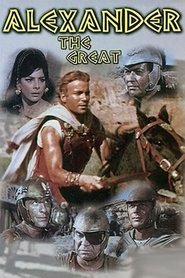
star 5An historical film that follows the life of Alexander the Great, the Macedonian king that united all ancient Greek tribes and led them against the vast Persian Empire. Alexander conquered most of the then-known world and created a Greek empire that spanned all the way from the Balkans to India.Canada Vignettes: Spence's Republic
1978
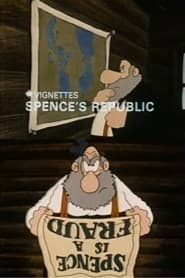
star 4.7An animated vignette about the role of Thomas Spence in the formation and demise of the Republic of Manitoba at Portage la Prairie in 1867-68.Der Judas von Tirol
1933
Der Judas von Tirol
1933
star 5In the year 1810, the Tyrol is suffering under French occupation. A servant, who believes himself oppressed and disenfranchised by the peasants, dreams of being allowed to play Christ in the yearly Passion Play. Instead, he is forced to play Judas and soon the lines of reality blur: he betrays the location of Andreas Hofer, hidden by the farmers, breaks under the weight of his guilt and suffers Judas' fate.The Old and The Young King
1935
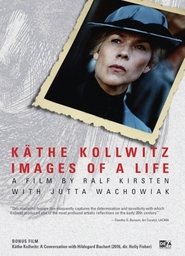
star 5.7The story of the stormy relationship between King Friedrich Wilhelm and his son, who later became known as King Frederick the Great of Prussia.Käthe Kollwitz – Pictures of a Life
1987
star 5Kathe Kollwitz was 47 years old, and already a well established artist in Germany and abroad when Peter, her youngest son, volunteered to join the German army in WWI and was killed two weeks later. This painful tragedy changed Kollwitz's life and art forever.The Strait Story
2005
The Strait Story
2005
star 2.7The year is 1943 and Taiwan is under Japanese colonization. After finishing his studies in Japan, famous Taiwanese sculptor and painter Ching-Cheng Huang receives an offer to teach in Beiping Art School. He decides to visit friends and family back home before leaving for China. He boards the passenger liner "Takachiho Maru" in Kobe, Japan, with his girlfriend, a pianist. Tragically, the luxurious liner is torpedoed by an American submarine and sinks off the coast of Keelung, Taiwan. Decades later, Shou-shou, a fine art restorer with a crippling illness, finds one of Huang's paintings in an exhibition. As she restores the painting, Shou-shou learns about the artist, the stories behind his work and his death at sea. She recreates the story of the painting "Woman in Black", and romantically imagines the ways the artist painted his girlfriend. The more she studies, the more she was inspired by Huang's value of art and of life. Restoring Huang's painting thus becomes Shou-shou's way of ...