Top Rated History Movies on Tub Tv - Page 449
All Services
Free Services
 Netflix
 Amazon Prime Video
 Apple iTunes
 Apple TV Plus
 Disney Plus
 Google Play Movies
 Paramount Plus
 Hulu
Hulu
 HBO Max
 YouTube
 fuboTV
 Peacock
 Peacock Premium
 Amazon Video
 The Roku Channel
 AMC+
AMC on Demand
AMC+
AMC on Demand
 Kocowa
 Hoopla
 The CW
 Vudu
Vudu
 Starz
Starz
 Showtime
 PBS
PBS
 Pantaflix
 FXNow
FXNow
 Tubi TV
 Kanopy
 Comedy Central
 Crunchyroll
 Microsoft Store
 Redbox
 Sun Nxt
 ABC
ABC
 DIRECTV
 Crackle
 Fandor
 Plex
Plex
Netflix
Amazon Prime Video
Apple iTunes
Apple TV Plus
Disney Plus
Google Play Movies
Paramount Plus
Hulu
HBO Max
YouTube
fuboTV
Peacock
Peacock Premium
Amazon Video
The Roku Channel
AMC+
AMC on Demand
Kocowa
Hoopla
The CW
Vudu
Starz
Showtime
PBS
Pantaflix
FXNow
Tubi TV
Kanopy
Comedy Central
Crunchyroll
Microsoft Store
Redbox
Sun Nxt
ABC
DIRECTV
Crackle
Fandor
Plex

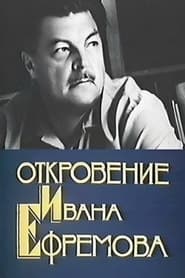
Revelation of Ivan Efremov
1990
star 9About the life and work of the scientist and writer Ivan Efremov.Prehistoric Women
2022
Indisch Zwijgen
2022
Indisch Zwijgen
2022
star 7Three young artists delve into their family past to break the generational silence about the Dutch East Indies history.La grande histoire de la Bretagne
2022
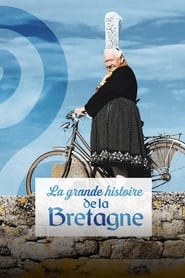
star 7From time immemorial, the Bretons have fought many battles to safeguard their culture, rich in language, music and dance. However, Brittany was for a long time a forgotten land, neglected by the Republic which forbade its language. From the 1960s onwards, the agricultural revolution turned peasant life upside down. Its culture, which had long been supported by Catholic priests, was emancipated in the seventies, carried by a new breath of air that accompanied the Breton angers. The youth then reappropriated their language and culture. From the long years of relegation to their great anger, the Bretons have written a fascinating saga since the end of the 19th century.Great Fire of London - The Untold Story
2011
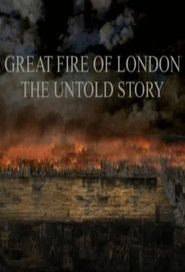
star 8You all know the story about the Great Fire of London. That the fire was started by accident in a bakery on Pudding Lane, and the inferno rapidly engulfed the City of London in September 1666, burnt for four days, destroying everything in its path. But how many of you are aware that at the time many Londoners believed that the fire was started deliberately? And as suspicions grew, London lynch mobs attacked immigrant groups, prompted by a widely-held belief that it was an act of arson committed by a foreign power?Delphyne
0000
Delphyne
0000
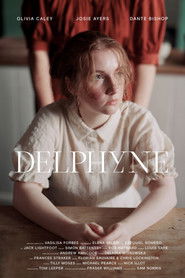
star 7Delphyne (meaning ‘womb’) discusses the stigma around menstruation. Addressing shame and acceptance, taboos around menstrual blood are told through a fabric-themed metaphor, and the conflict between a mother-daughter relationship; to find a shared unity and language to beat the conflict which projects itself in the shame metaphor that they’ve unwound and removed from their life. The historical connotations of staining, feminine purity and the divide between private and public space as well as ownership of the body come into play. The coming of age theme is reflected in reference to her struggle with the self (alter-ego), struggle with the ‘other’ (male influence) and struggle with the home (her Mother).Cent jours
2022
Cent jours
2022
star 6From the first minutes after his inauguration, the newly elected president wants to translate his promises and his campaign project into action. "Change is now", "Change life", "Together everything becomes possible": all campaign slogans promising a break with the past, a change. The first few months were decisive: it was a matter of making a mark, asserting one's style, imposing one's authority and taking the first measures, those that would make a mark on public opinion and set the first lines of the political narrative in history. From 1959 to 2017, the eight successive presidents have acted without delay. Thanks to the many witnesses and actors of these first hundred days, the film retraces the stakes and decisive moments that marked the beginning of each mandate.Tale of The Great Oak
2022
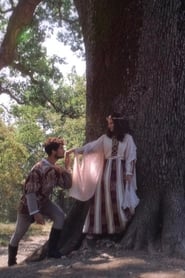
star 4The great oak tree of Scandiano, in the Reggio Emilia hills, is the silent witness of a long history, that of a territory shaped by nature and human activity. From the late Renaissance to the present, revolutions and traditions have alternated, leaving an uninterrupted flow of images imprinted in the memory of the centuries-old tree. Shot using a drone in a 15-minute sequence plan, The Great Oak is the result of a courageous technical challenge, but above all a conceptual one: to overturn the anthropocentric point of view of film narration and offer a more articulate perspective on reality, on the invisible links between living beings and on our role in the world.The Mysterious Edogawa Ranzan
1937
A once-dead man is resurrected by a mysterious old man's spiritual magic to take revenge on those who killed him. An unusual and bizarre historical drama with a vaguely Western atmosphere. Starring the sword-fighting star Kozaburo Ramon, directed by Kenji Shimomura.Jianying Bridge
1985
Padatik
2024
Padatik
2024
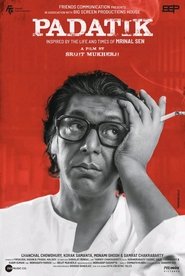
star 9The film follows Mrinal Sen in his early days around the time of India’s independence, where he is a struggling idealist with an all-consuming hunger for cinema but unable to feed himself or his young wife, to 1950s Calcutta, where (alongside Satyajit Ray) he helped start the Indian New Wave cinema movement.1242: Gateway to the West
2025
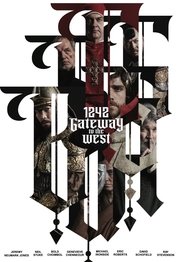
star 5After the Hungarian army was annihilated by the Mongols at the battle of Mohi, only the castle of Esztergom stood in the Mongolians' way of invading the rest of Europe. Batu Khan, the grandson of Genghis Khan, reaches the walls of Esztergom with his invincible troops. The castle's defenders, led by Eusebius, the canon of Esztergom, and a Spanish mercenary, Captain Simon, are preparing for the final battle. The sudden arrival of Cardinal Cesareani, the Papal Legate, coinciding with the Mongol Lunar New Year celebrations and the mystical practices of Eusebius, combine to offer the defenders a small glimmer of hope.The Bright Path
2022
The Bright Path
2022
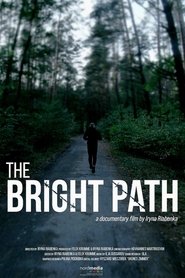
star 7Eastern Ukraine, May 2014. Part of the historic Donbas region falls to pro-Russian separatists. Young journalist Stanislav Aseyev reports for several Ukrainian media outlets from Donetsk, his hometown. In May 2017, he is kidnapped and spends 962 days in detention, mainly in a former cultural center, converted into a prison, called Izolyatsia —or Isolation.Red Children
2016
Red Children
2016
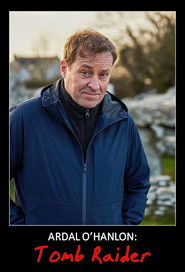
star 8Among the ”Red Guards“ of China’s Cultural Revolution were foreign children, the sons and daughters of both European and American ex-pats who left their home countries to help build Mao’s China. Eventually, Chinese society turned against them and they were persecuted as foreign spies. Some served time in prison, others were sent to labor camps.Ardal O'Hanlon: Tomb Raider
2022
star 8Ardal O’Hanlon explores a 1930s quest to find the first Irish men and women using archaeology, answering his deepest questions about what it means to be Irish.Swimming in Auschwitz
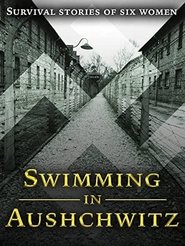
2007
star 6Six Jewish women, from different countries and different backgrounds, found themselves deported to the notorious concentration camp, Auschwitz-Birkenau, during the Holocaust. This film attempts to chronicle that experience through those same female eyes. While subject to the same physical hardships as men, these women do not dwell on that. Instead, they speak of camp families and faith, uplifting one another while trying to remain human. It was this path of spiritual resistance that, while not responsible for their direct survival, led to their ability to survive with healthy minds and spirits despite the constant barrage of their surroundings. Swimming in Auschwitz gives us a perspective of the camp, its surroundings and the Holocaust that we need to understand and remember, so that we never forget.Lost Generation
2020
Lost Generation
2020
star 5Four outnumbered hungarian soldiers hold a stand in the woods, against the soviet army, near the end of the second world war.Top 10 Treasures of Egypt
2019
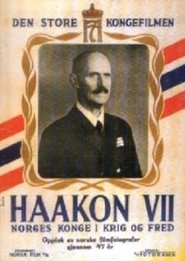
star 10Professor Bettany Hughes takes viewers on a beautiful, bespoke journey across this dramatic country, presenting the definitive countdown of her top ten treasures of Ancient Egypt.Haakon VII – Norges konge i krig og fred
1952
star 6The documentary is a cavalcade of King Haakon VII's life from his arrival in Christiania in the autumn of 1905 until May 17, 1952, the year he turned 80.Israel and the Arabs: Elusive Peace
2005
star 7Israel and the Arabs: Elusive Peace is the name of a three-part British documentary series shown in October 2005 on BBC Two about the attempts to settle the Israeli–Palestinian conflict after the 2000 Camp David Summit. The series was produced by Norma Percy, who had produced The Death of Yugoslavia before. Like her previous series, Israel and the Arabs: Elusive Peace relies extensively on in-depth interviews with key players involved in this issue, such as Ehud Barak, Bill Clinton, and Colin Powell.