Top Rated War Movies on Tub Tv - Page 110
All Services
Free Services
 Netflix
 Amazon Prime Video
 Apple iTunes
 Apple TV Plus
 Disney Plus
 Google Play Movies
 Paramount Plus
 Hulu
Hulu
 HBO Max
 YouTube
 fuboTV
 Peacock
 Peacock Premium
 Amazon Video
 The Roku Channel
 AMC+
AMC on Demand
AMC+
AMC on Demand
 Kocowa
 Hoopla
 The CW
 Vudu
Vudu
 Starz
Starz
 Showtime
 PBS
PBS
 Pantaflix
 FXNow
FXNow
 Tubi TV
 Kanopy
 Comedy Central
 Crunchyroll
 Microsoft Store
 Redbox
 Sun Nxt
 ABC
ABC
 DIRECTV
 Crackle
 Fandor
 Plex
Plex
Netflix
Amazon Prime Video
Apple iTunes
Apple TV Plus
Disney Plus
Google Play Movies
Paramount Plus
Hulu
HBO Max
YouTube
fuboTV
Peacock
Peacock Premium
Amazon Video
The Roku Channel
AMC+
AMC on Demand
Kocowa
Hoopla
The CW
Vudu
Starz
Showtime
PBS
Pantaflix
FXNow
Tubi TV
Kanopy
Comedy Central
Crunchyroll
Microsoft Store
Redbox
Sun Nxt
ABC
DIRECTV
Crackle
Fandor
Plex

The Sky Is Falling
2000
The Sky Is Falling
2000
star 5.31943, an estate north of Firenze. The weight of the world is on the shoulders of Penny, who's about 10. An orphan, she must watch over her little sister when they go to live with her aunt and uncle. Penny's a Catholic, and worries about her uncle's soul. He's Jewish, progressive and a free thinker, a fair boss, and devoted to his family. He can be stern, so Penny also worries that she'll never please him and that he won't love her. Then, after the Allied forces land in Sicily and the Germans begin their retreat, Penny must worry about her uncle's life. She tries logic and appeals to human decency. Can a child keep the sky from falling?Contact
1985
Contact
1985
star 5.5A platoon of British paratroopers on border patrol in South Armagh face a series of tense encounters.A Time Out of War
1954
A Time Out of War
1954
star 6.4Black and White UCLA Student Film, Preserved by the Academy Film Archive. During the American Civil War, two Union soldiers and a Confederate solider fire at each other from across a brook. The two sides negotiate a one-hour truce, from which they develop a bond. Based on the short story "Pickets" (1897) by Robert W. Chambers, it was the winner of an Academy Award for Best Short Subject (Two Reel) film in 1955. The film is on the National Film Registry for its cultural significance in 2007.The Deserter and the Nomads
1968
star 6.7An apocalyptic story of three wars in three film tales encompassing the end of the WWI,WWII, as well as a vision of the world destroyed by nuclear weapons. This film was honored at the film festivals in Venice and Sorrento. Immediately after that the copy with Italian subtitles was locked in a safe as evidence of the anti-communist activities of the director, who used real footage of the Soviet invasion.Beginning of an Unknown Era
1967
star 5.4Two young directors adapted the short stories of two Russian authors whose works had been banned for decades, and so their film ended up in the censor’s vault as well – for twenty years. Both tales look back to the post-revolutionary era: 'Angel' (Olesha) speaks tragically of the brutality and destruction of the time, and 'The Homeland of Electricity' (Platonov) captures its haunting grotesquery.Operation Bikini
1963
Operation Bikini
1963
star 3.6The film takes place aboard an American submarine in the Pacific during World War II. The sub's commander is ordered to stop and pick up an underwater demolition team led by Lt. Hayes, whose mission is to locate and destroy a US submarine sunken in a lagoon off Bikini Atoll before the Japanese are able to raise it and capture the advanced radar system on board.The Nail in the Boot
1931
The Nail in the Boot
1931
star 6.4Banned in the Soviet Union for its "negative" content and never released, Kalatozov was forced to retreat from filmmaking for seven years because of this film. The film sets out to illustrate the old adage, "For want of a nail, the battle was lost," showing how the inferior quality of something so trivial as a nail in a soldier's boot leads inexorably to the capture of an armored train. Kalatozov had intended to demonstrate the crucial and universal importance of efficiency in Soviet industry, but the government decided that his fable gave a negative impression of the Red Army's capabilities.Convoy
1940
Convoy
1940
star 5.4A tale of life on board a Royal Navy cruiser assigned to protect the vital convoys between America and England during WWII.Delta Force One: The Lost Patrol
2000
star 4.9An elite commando unit must rescue a captured peacekeeping force from a ruthless international arms dealer.Inchon
1981
Inchon
1981
star 3.4Gen. Douglas MacArthur leads a Korean War campaign, and the war tests a married couple's relationship.Valley of Peace
1956
Valley of Peace
1956
star 6.4When the planes bombed a Slovene town, a Slovene boy and a German girl set on a journey towards the valley, in which there is no war. On their way a black American pilot, who jumped of a shoot-down plane, joins them. Although American planes have killed the boy's parents, he accepts the pilot with enthusiasm. The children communicate with him in German and the valley of peace seems like the last paradise place of refuge. The Slovene boy, the German girl, and the American pilot represent a symbolic triangle of peace in this adventure happening in the middle of the War of Liberation.The Young Guard
1948
The Young Guard
1948
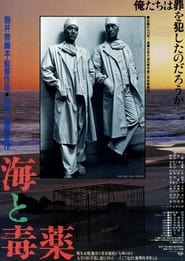
star 5.1In 1942, local teenagers are organizing the underground resistance in the city of Krasnodon during the Nazi occupation of Russia. The teens manage to outsmart the Nazis in their fight, and their activity lifts the spirits of the surviving citizens.The Sea and Poison
1986
The Sea and Poison
1986
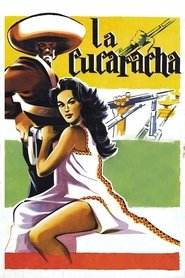
star 6.9Two interns and a nurse are interrogated by American MPs for their involvement in an atrocity during the war: the vivisections of a downed American air crew.La Cucaracha
1959
La Cucaracha
1959
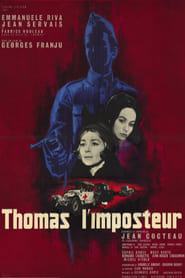
star 6.3The Mexican Revolution serves as a backdrop to a torrid love triangle composed of three freedom fighters: a colonel, a widow, and a fiery female soldier.Thomas the Impostor
1965
Thomas the Impostor
1965
star 6.3In the First World War, when Paris is expected to fall to the Germans, the attractive widow, Princesse de Bormes, organises a convoy of cars to evacuate the wounded from the front, and bring them back to her villa in Paris to recuperate. The authorities will not give them passes until an innocent 16-year-old boy, Guillaume Thomas de Fontenoy, joins them and is mistaken as the nephew of the popular General de Fontenoy. The Princess is enraptured by Thomas and her daughter, Henriette, falls in love with him. However Thomas feels impelled to see more of the action of the war.Tender Comrade
1944
Tender Comrade
1944
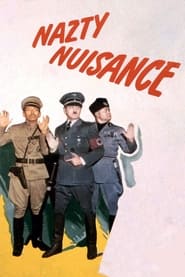
star 6Jo Jones, a young defense plant worker whose husband is in the military during World War II, shares a house with three other women in the same situation.Nazty Nuisance
1943
Nazty Nuisance
1943
star 3.7Germany's Adolf Hitler, with his Axis-stooges, Italy's Mussolini and Japan's Suki Yama, although he tried to avoid taking them, is on his way, via submarine, to a tropical country to negotiate a treaty with the High Chief Paj Mab. However, an American P.T-boat crew is already there and have some plans for schickenbit-grubber and his buddies.The Home Front
1943
The Home Front
1943
star 6.2A homesick Pvt. Snafu learns that his family are almost as committed to the war efforts as himself.Na Wewe
2010
Na Wewe
2010
star 6.4Na Wewe is a 2010 Belgian short film directed by Ivan Goldschmidt, set in Burundi in 1994 or thereabouts. There is a civil war on, a genocidal conflict opposing Hutus and Tutsis. The film follows an attack by rebels of a minibus transporting ordinary passengers -- but who is a Hutu and who is a Tutsi? The film was nominated for an Oscar for Best Live Action Short Film.Frieda
1947
Frieda
1947
star 5.1An RAF pilot who was shot down during WWII returns home to his English village with his new bride. The trouble is that she is the German lady who helped him escape.