Top Rated War Movies on Tub Tv - Page 123
All Services
Free Services
 Netflix
 Amazon Prime Video
 Apple iTunes
 Apple TV Plus
 Disney Plus
 Google Play Movies
 Paramount Plus
 Hulu
Hulu
 HBO Max
 YouTube
 fuboTV
 Peacock
 Peacock Premium
 Amazon Video
 The Roku Channel
 AMC+
AMC on Demand
AMC+
AMC on Demand
 Kocowa
 Hoopla
 The CW
 Vudu
Vudu
 Starz
Starz
 Showtime
 PBS
PBS
 Pantaflix
 FXNow
FXNow
 Tubi TV
 Kanopy
 Comedy Central
 Crunchyroll
 Microsoft Store
 Redbox
 Sun Nxt
 ABC
ABC
 DIRECTV
 Crackle
 Fandor
 Plex
Plex
Netflix
Amazon Prime Video
Apple iTunes
Apple TV Plus
Disney Plus
Google Play Movies
Paramount Plus
Hulu
HBO Max
YouTube
fuboTV
Peacock
Peacock Premium
Amazon Video
The Roku Channel
AMC+
AMC on Demand
Kocowa
Hoopla
The CW
Vudu
Starz
Showtime
PBS
Pantaflix
FXNow
Tubi TV
Kanopy
Comedy Central
Crunchyroll
Microsoft Store
Redbox
Sun Nxt
ABC
DIRECTV
Crackle
Fandor
Plex

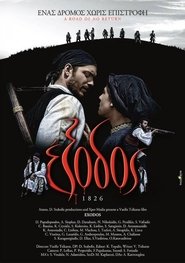
Exodus 1826
2017
Exodus 1826
2017
star 5.3Captain Michos Floros returns to Samarina to gather more men and lead them to Messolonghi, joining General Makris's existing forces. Thus, with the help of his friend Elias Manakas and 25 other men, they set off on a long journey to meet Zisis Hatzimati and the rest of their compatriots in Messolonghi. On March 31, 1826, they began their difficult journey through the mountains. At the same time, the women in the village tried to learn from Eleni Florou the real reason for their men's sudden departure. Ibrahim Pasha and the Turkish commander of Arta, Nihat Servan, prepare their final attack on Messolonghi.The Children of Villa Emma
2016
star 5.2According to true events, the moving drama "The Children of Villa Emma" tells of a dangerous escape that took place during the Second World War. In 1942/1943, the Italian village of Nonantola was indeed a refuge for 73 Jewish children who wanted to escape the merciless access of the National Socialists on their way to the "Promised Land" of Palestine. Director Nikolaus Leytner describes the dangerous journey as an exciting test, presented by a talented young cast.Hear the Silence
2016
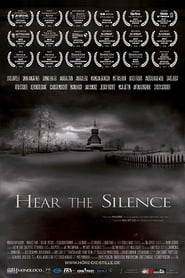
Hear the Silence
2016
star 5.21941, Ukraine. A group of German soldiers occupy a small town populated exclusively by women and children of German descent, way behind enemy lines. There's tension from the beginning, that always threatens to erupt in violence from both sides.Gunpowder
1985
Gunpowder
1985
star 5.9At the end of September 1941, Soviet artillery troops in besieged Leningrad realize that pretty soon they will fire their last shot, and after that the defense of the city will be doomed. The film is based on a true event: a small group of fearless soldiers transported a large supply of gunpowder through enemy lines to Leningrad.Pink Panzer
1965
Pink Panzer
1965
star 7.4The next-door neighbor neglects to return the Pink Panther's lawn mower, resulting in a feud that escalates into all-out war.A Nightingale Falling
2014
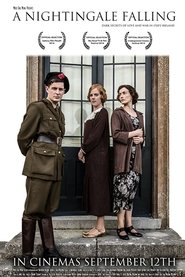
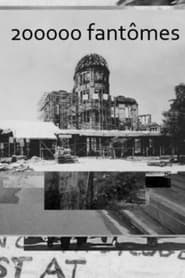
star 5.4Set against a backdrop of a turbulent, war-torn Ireland in the early 1920s, this is a story of three people and the unfolding events from a crucial time in their extraordinary and tragic lives.200,000 Phantoms
2007
200,000 Phantoms
2007
star 7.4In 1914, the Czech architect Jan Letzel designed in the Japanese city of Hiroshima Center for the World Expo, which has turned into ruins after the atomic bombing in August 1945. “Atomic Dome” – all that remains of the destroyed palace of the exhibition – has become part of the Hiroshima memorial. In 2007, French sculptor, painter and film director Jean-Gabriel Périot assembled this cinematic collage from hundreds of multi-format, color and black and white photographs of different years’ of “Genbaku Dome”.Oh Islam
1961
Oh Islam
1961
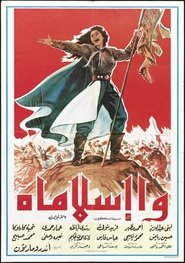
star 6.2Set in the 14th century. Under their leader Timur, the Tartar hordes invade the Middle East and take over areas as widespread as Persia, Azerbaijan, Egypt, and Syria. A lowly woman from a harem (Lubna Aziz) rises to lead the Egyptians against the invaders.Above and Beyond
2015
Above and Beyond
2015
star 7.5In 1948, a group of World War II pilots volunteered to fight for Israel in the War of Independence.Mercenaries' Trap
1982
Mercenaries' Trap
1982
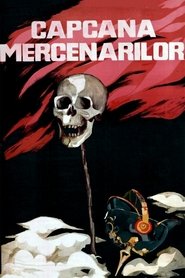
star 7.3The movie is based on a true story from the end of WWI, in Transylvania. A nobleman who owned some land in Transylvania returns home to find a part of his fortune burned to ashes during late 1918 when power was trasfered from AustroHungary to Romania. Looking for revenge, he ordered the killing of innocent Romanian peasants from a neighbouring village, which he suspected to be guilty for the losses he suffered. A Romanian officer from Romanian Transylvanian Volunteers Corp, decides to help the villagers to face the menace of the noblemanAllegro with Fire
1979
William Kelly's War
2014
William Kelly's War
2014
star 5.8When WW1 breaks out, farm boys, Billy (Josh Davis) and Jack Kelly (Mathew John Davis), along with their cousin, Paddy (Lachie Hume), sign up, and are shipped out to serve in Europe. With Billy a dead-eye shot with a rifle, the boys are soon set up as a sniper team, mowing down Germans and Turks like nobody’s business. They become heroes, but back home, the family farm is being circled by a gang of cattle thieves, meaning that even when the war ends, the blood is set to keep flowing.Bordering on Bad Behavior
2014
star 5.5Baz, a Lebanese Australian soldier, accidentally enters a top secret Israeli communications base. Knowing he is in the wrong place at the wrong time, Baz surprises Bob, an American soldier, with a punch in the face and Ari, an Israeli soldier, with a chokehold. Once the two enemies are tied up, Baz tries to leave, but the door to the base, which has closed behind him, has a time mechanism that will keep it locked for the next six hours. Trapped and convinced that once the door is reopened they could all be executed, the three are forced to confront each other. This will allow them to overcome personal prejudices and give life to a friendship with dramatic but also hilarious consequences.The Leg
1991
The Leg
1991
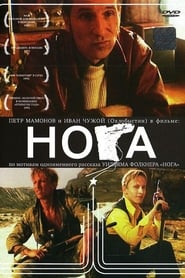
star 3.4The film's protagonist Valera - cheerful guy from Moscow, who at age 19 learned a whole hell of war in Afghanistan, where he lost a leg. Returning from the war, he had no idea what a nightmare for him is just beginning.Jungle Heat
1985
Jungle Heat
1985
star 3.5Towards the end of the Vietnam war, the US is running low on drivers for their supplies so they bring in a new lot of recruits and have to train them to survive in the dangers of wartorn Vietnam. The recruits are trained briefly by an American officer but are quickly handed off to their South Vietnamese officers and are made to go out into the dangers of Vietnam without getting the protection they need by the Americans who are more concerned with withdrawing their own troops instead of protecting the South VietnameseLotna
1959
Lotna
1959
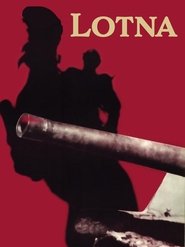
star 5.4Set in the beginning of Wold War II, when the Polish cavalry still fought with lances against German troops. LOTNA is about a white thoroughbred horse that passed through various hands in a military outfit.In Praise of Older Women
1997
star 5.4In the turmoil of the Spanish Civil War, a young man comes of age sexually, through a string of relationships with a wide range of mature, older women.The Great Martian War 1913–1917
2013
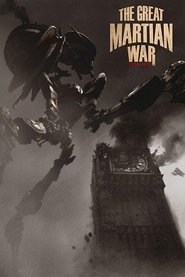
star 6.3Documentary-drama recounting the Martian War of 1913–1917. Europe was on tenterhooks in the 2nd decade of the 20th century, everyone was expecting a Great War between the major European powers. But then, in 1913, something crashed into the forests of SW Germany. Troops were sent to investigate but were wiped out. Martian fighting machines began making their way across Western Europe and the countries of Europe combined forces to resist them. With aspects taken from ‘The War of the Worlds’ by H.G. Wells and from WWI itself, this dramatisation presents a documentary style look at events as they unfolded and the effect they had of our world today. Lots of references to real events including the mass attacks and defeats as men were thrown against machines on the Western front, the Christmas truce and the Angel of Mons, America's isolationism and late entry into the conflict, the worldwide Spanish flu epidemic that killed more people than the war, and many other things.Death Mills
1945
Death Mills
1945
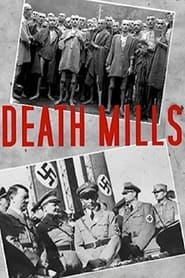
star 6.5Originally made with a German soundtrack for screening in occupied Germany and Austria, this film was the first documentary to show what the Allies found when they liberated the Nazi extermination camps: the survivors, the conditions, and the evidence of mass murder. The film includes accounts of the economic aspects of the camps' operation, the interrogation of captured camp personnel, and the enforced visits of the inhabitants of neighboring towns, who, along with the rest of their compatriots, are blamed for complicity in the Nazi crimes - one of the few such condemnations in the Allied war records.