Top Rated War Movies on Tub Tv - Page 345
All Services
Free Services
 Netflix
 Amazon Prime Video
 Apple iTunes
 Apple TV Plus
 Disney Plus
 Google Play Movies
 Paramount Plus
 Hulu
Hulu
 HBO Max
 YouTube
 fuboTV
 Peacock
 Peacock Premium
 Amazon Video
 The Roku Channel
 AMC+
AMC on Demand
AMC+
AMC on Demand
 Kocowa
 Hoopla
 The CW
 Vudu
Vudu
 Starz
Starz
 Showtime
 PBS
PBS
 Pantaflix
 FXNow
FXNow
 Tubi TV
 Kanopy
 Comedy Central
 Crunchyroll
 Microsoft Store
 Redbox
 Sun Nxt
 ABC
ABC
 DIRECTV
 Crackle
 Fandor
 Plex
Plex
Netflix
Amazon Prime Video
Apple iTunes
Apple TV Plus
Disney Plus
Google Play Movies
Paramount Plus
Hulu
HBO Max
YouTube
fuboTV
Peacock
Peacock Premium
Amazon Video
The Roku Channel
AMC+
AMC on Demand
Kocowa
Hoopla
The CW
Vudu
Starz
Showtime
PBS
Pantaflix
FXNow
Tubi TV
Kanopy
Comedy Central
Crunchyroll
Microsoft Store
Redbox
Sun Nxt
ABC
DIRECTV
Crackle
Fandor
Plex

The Master Plan
1954
The Master Plan
1954
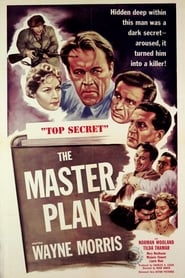
star 6Following WW II, a U.S. army officer stationed in West Germany is assigned with keeping classified information away from the Communists. Unfortunately, Red spies know that he suffers from sudden black-outs and use this to hypnotise him, and make it appear that he is a traitor.Roman Rapido
1983
Roman Rapido
1983
star 2A story of bravery and heroism during Japanese invasion and post Japanese era.Absent Without Leave
1993
Absent Without Leave
1993
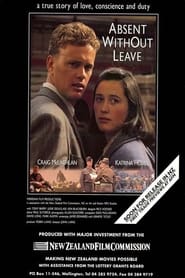
star 7In 1942 Wellington, Daisy Edwards, 16 and pregnant, relies totally on her just-wed husband, Ed, who is little older than she. Ed is suddenly drafted into the army and is to be sent overseas to battle while Daisy is sent to her father in Auckland. When Ed's leave is cancelled at the last minute he takes the dangerous decision to go absent without leave to be with Daisy on her journey home. As a deserter, Ed is hunted, captured and imprisoned. Life inside is bad enought without the worry of what is going on outside. The film is based upon a true story.Listen to the Voices of the Sea
1950
star 7This film is strongly anti-war film. The film is based on the collection of writings by Japanese student soldiers who died during World War II. The film is located to Burma. It shows the everyday problems of soldiers in contrast of their ideas and the cynicism of their commanders. Soldiers are also victims of military bullying by their commanders.Bread & Roses
1993
Bread & Roses
1993
star 8Based upon the life of activist and trade unionist (and later MP) Sonja Davies. The film covers her life up to 1956, when, at age 33, she was elected to the Nelson Hospital Board. During this period she develops strong socialist beliefs, marries and divorces, at age 17 trains as a nurse, has a romance (and a child) with an American marine who is killed in WWII action. She battles tuberculosis and marries a former boyfriend when he returns from the war. She becomes part of a women's ill-fated campaign to save the Nelson railway line from closure and begins to be elected to political bodies.The True Story of Lili Marlene
1944
star 6The Eighth Army famously adopted a German song in the Western Desert. The Crown Film Unit traces the journey of Lili Marlene from its composition in post-WW1 Hamburg, via Radio Belgrade and the Afrika Korps, through victory in Tunisia and Sicily, to an imagined post-war East End, full of light, music and bananas for sale.Parachute Nurse
1942
Meghmallar
2014
My Home Village
1949
My Home Village
1949
star 4This was the first feature film to be produced after the liberation of North Korea. It gives a pictures of boundless joy and emotion of the Korean people who are now liberated from the colonial yoke of Japanese imperialism thanks to the glorious anti-Japanese struggle organized and led by the great leader Comrade Kim Il-Sung. Unable to endure the insult of the landlord, Gwan Pil gives vent to his rage. Because of this, the Japanese imperialists deprive him of his tenant land and put him in jail where he gains class consciousness under the influence of a KPA operative.The Fallen of World War II
2015
star 8This interactive infographic short documentary examines the human losses of the Second World War between 1939 and 1945 and the decline in battle deaths in the years since that most terrible war of human history. The 19-minute data visualization uses cinematic storytelling techniques to provide viewers with a fresh and dramatic perspective of a pivotal moment in history. The film follows a linear narration, but it allows viewers to pause during key moments to interact with the charts and dig deeper into the numbers.The Third Blow
1948
The Third Blow
1948
star 2On April 1944, Joseph Stalin orders the Red Army to liberate the Crimea from the German occupiers. The Wehrmacht's local commanders beg Hitler to allow them to retreat from the vulnerable position, but he refuses. After a fierce battle, the Soviet forces destroy the German and Romanian units defending the peninsula and retake Sevastopol.On The Docks
1972
On The Docks
1972
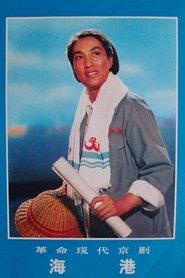
star 5Adaptation of a lesser known to Western world, yet wildly popular Peking Opera developed during the Cultural Revolution under the leadership of Jiang Qing.Shajiabang
1974
Shajiabang
1974
star 4The story of this model work unfolds during the Anti-Japanese War and takes place in the market town of Shajiabang (沙家浜), by Lake Yangcheng in Jiangsu Province. Shajiabang has become a center of guerrilla warfare against the Japanese after its liberation by the New Fourth Army. The company political instructor Guo Jianguang and seventeen other sick and wounded soldiers are recuperating in the town from their wounds. The Japanese troops, however, are bent on exterminating all New Fourth Army personnel from the area. Guo and his men have taken refuge in the nearby marshes.The Last Winter
1976
The Last Winter
1976
star 6Germans come amid snow and winter. In the village only people remained are women, that fight until wounded partisans, sheltered in the village, will retreat deeper and snow will cover their tracks. Face to face with the Germans and their control of the village, women, led by mother Shano and mother Mara, depart to make a pile of wood, but actually bring bread and food to the partisans.Real Man's Film
2012
Real Man's Film
2012
star 7In the Balkans, every generation has its war. Sons are continuing fights started by their fathers. There are rifles and pistols in every hand. Concentration of arms has reached a critical point. Even the smallest incident would be disastrous to this fragile peace. Watching children playing with toy guns makes you wonder: what are we leaving to the next generation?The Guns of Loos
1928
The Guns of Loos
1928
star 7Set against the backdrop of the shell crisis of 1915 at home and the Battle of Loos on the Western Front, two soldiers, one the manager of Grimlaw’s munitions factory are tested in their rivalry for Diana, a red cross nurse (Madeleine Carroll in her first film role).The W Plan
1930
The W Plan
1930
star 7A tense WWI spy thriller in which Colonel Duncan Grant (British star Brian Aherne, in his first talking role), parachutes into Germany to gather intelligence on the enemy’s secret ‘W Plan’ and to assist Allied POWs in digging escape tunnels.Who Knows the Pain
1979
Who Knows the Pain
1979
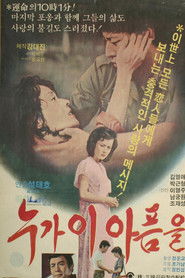
star 7Seong Ji-yeon, a female officer of the North Korean army, is discovered by southern forces on a snow covered mountain. She suffers from severe frostbite so she is taken to a military hospital. There she falls in love with a doctor, Captain Lee. However, when he is sent to the front, she is sent to try to survive the hardships of a POW camp.Yeong-Gu And Daeng-Chil 3 - Yeong-Gu Rambo
1990
star 2Bumbling simpleton Yeong-koo is back, this time he enlists in the military and joins the special forces to take on an enemy robot.Abenko Green Beret
1982
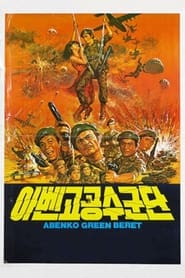
Abenko Green Beret
1982
star 4Abengo Corps is under the direct control of headquarters of Gen. Douglas MacArthur. In order to conceal the Inchon Landing Operation, Abengo is assigned to the Wonsan Landing Operation as a decoy mission. With the operation soon at hand, the members of this operation go on a special vacation to Busan. Among them is Il-gyu. He meets with Bae Su-na, a refugee, and they spend a passionate, touching night of love together. The members perform their duties as ordered. Lieutenant Colonel Koh receives a coded message from the headquarters. Koh realizes that his men are a diversion for the Inchon Landing Operation. Lieutenant Koh is angered and resentful. And Lieutenant Sung is chosen to enter the battle instead of Lieutenant Colonel Koh. During the January 4 Retreat, Lieutenant Sung meets Su-na, who has had Il-gyu's son. Lieutenant Sung helps her out.