Top Rated Animation TV Shows - Page 369
All Services
Free Services
 Netflix
 Amazon Prime Video
 Apple iTunes
 Apple TV Plus
 Disney Plus
 Google Play Movies
 Paramount Plus
 Hulu
Hulu
 HBO Max
 YouTube
 fuboTV
 Peacock
 Peacock Premium
 Amazon Video
 The Roku Channel
 AMC+
AMC on Demand
AMC+
AMC on Demand
 Kocowa
 Hoopla
 The CW
 Vudu
Vudu
 Starz
Starz
 Showtime
 PBS
PBS
 Pantaflix
 FXNow
FXNow
 Tubi TV
 Kanopy
 Comedy Central
 Crunchyroll
 Microsoft Store
 Redbox
 Sun Nxt
 ABC
ABC
 DIRECTV
 Crackle
 Fandor
 Plex
Plex
Netflix
Amazon Prime Video
Apple iTunes
Apple TV Plus
Disney Plus
Google Play Movies
Paramount Plus
Hulu
HBO Max
YouTube
fuboTV
Peacock
Peacock Premium
Amazon Video
The Roku Channel
AMC+
AMC on Demand
Kocowa
Hoopla
The CW
Vudu
Starz
Showtime
PBS
Pantaflix
FXNow
Tubi TV
Kanopy
Comedy Central
Crunchyroll
Microsoft Store
Redbox
Sun Nxt
ABC
DIRECTV
Crackle
Fandor
Plex

Hoop Days
2003
Moby Dick Five
1980
Moby Dick Five
1980
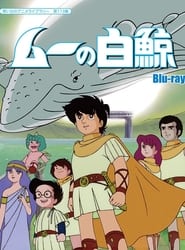
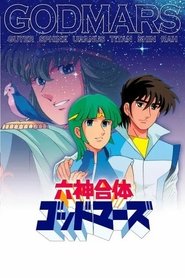
star 8.2In ancient times, the continents of Atlantis and Mu fought a war, and Atlantis lost. After losing the war, Atlantis transformed itself into a small planet and timeslipped to the present-day to try to take over the world again. But five warriors from Mu assemble on Easter Island, and together with giant cyborg white whale that houses the brain of the ancient queen of Mu, fight Atlantis off at various famous ruins around the world.Sammy
2000
Sammy
2000
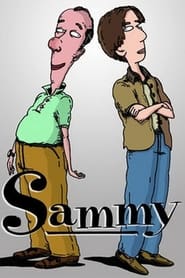
star 4.5Sammy is an American animated television series that aired from August 8 until August 15, 2000. Inspired by Spade's own family tree, the show turns on James Blake, a TV star who's absentee free-loading father Sammy resurfaces after James makes it big.Onegai My Melody
2005
Onegai My Melody
2005
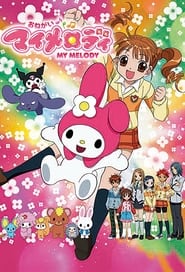
star 4.8My Melody arrives on Earth much to the surprise of her rivals, Kuromi and Baku. Together with one of the junior high school students, Yumeno Uta, they decide to protect the dreams of the people with the help of magic.Strange Steel Fairy Rouran
2012
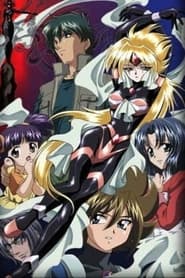
star 7When the secret occult society, Shiromorishuua, sends a huge monster to attack Tokyo, ASY, a peace-keeping organization in Japan, retaliates with a Gousen (metal faery). ASY's Gousen annihilates the creature after driving it into open ocean. Although successful, a surprise attack follows. A girl, floating in midair and glowing with radiance, strikes with a beam of light. This girl is "Rouran." She knows neither her identity, her origins, nor why whenever she senses the Gousen or Kyoushi (reanimated corpses) she transforms into an avenging angel. As Rouran worries about her mysterious existence, Tetsuya kindly watches over her in Tokyo Arcadia, a settlement of expatriates and dissidents.Mecha-Doc
1984
Mecha-Doc
1984
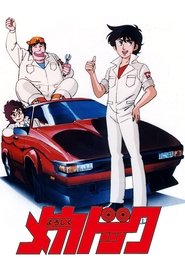
star 5Mechadoc is a powerful race car obtained from a simple economy car, which is able to race on any ground.The Adventures of Captain Pugwash
0000
star 4.5The rights to Captain Pugwash were purchased by The Britt Allcroft Company, which since 1997 has issued a number of digital and part computer-animated cartoon films based on the Pugwash character, set on the island of "Montebuffo", "somewhere in the Spanish Main". Peter Hawkins did not provide the voices, HIT Entertainment instead employing a full cast with James Saxon in the title role.Magical Mako
1970
Magical Mako
1970
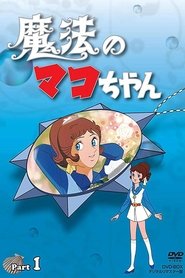
star 6Mahō no Mako-chan is a Japanese anime series by Toei Animation. The story is loosely based on the Hans Christian Andersen tale The Little Mermaid. The series has been dubbed into various languages including French, Spanish, Polish and Italian. It is also often known as Mako the Mermaid, Mako-chan’s Magic, Syrenka Mako and Magical Mako-chan. Mahō no Mako-chan aired in 1970 via Nippon Educational TV, which is now TV Asahi.The Adventures of Paddy the Pelican
1950
star 1.5The Adventures of Paddy the Pelican is an animated miniseries that first aired on ABC (US) in 1950. The show is notorious for a variety of factors including its unprofessional voice acting, simplistic animation, and inconsistent appearances of the title character.Onegai! Samia-don
1985
Onegai! Samia-don
1985
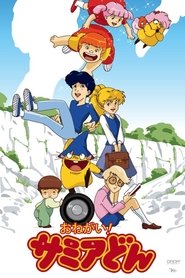
star 6.5Please! Psammea-don is a Japanese anime that was broadcast from 2 April 1985 to 4 February 1986 with a total of 78 episodes produced. This anime is based on the 1902 novel Five Children and It by English author Edith Nesbit. The anime differs from the novel in revolving around four children rather than five. Three of the children are siblings while the fourth is their friend and neighbor. The four children encounter the Psammead who, in the anime, is depicted as being yellow with a blue hat, and more of a grumpy and lazy being than mischievous. In Latin America, the series was known as Samed, el duende mágico and in France and Quebec as Sablotin. In the Arab world, it was known as Moghamarat Samid.Cococinel
1992
Cococinel
1992
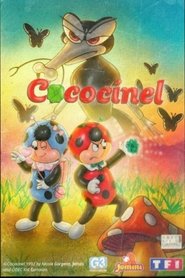
star 7"Cococinel" follows the adventures of Cococinel, a ladybug who becomes a superheroine thanks to a magical clover. In the second season, her sister Babicinel joins her with her own amulet. Together, they face villains like Hylobie, who controls minds with black butterflies. Babicinel falls in love with Cocometeo, while Cococinel is cold and distant. The rivalry with the bee Levallois adds tension. Both sisters balance their superhero lives with school life.Michel Vaillant
1989
Michel Vaillant
1989
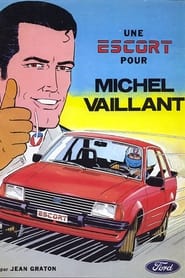
star 8In 1967, French TV broadcast a dramatised adaptation of the series, Les Aventures de Michel Vaillant. 13 episodes in total, it featured stories written and filmed around the real life World Sportscar Championship, documenting Henri Grandsire driving an Alpine 110, interspersed with dramatic interludes acted by Grandsire himself. Episodes offer close up rare contemporary footage of races and cars that year at the Rallye Du Nord, Magny Cours, Nürburgring, Monza, Targa Florio, Le Mans, Monaco, Rouen-Les-Essarts, Sebring and Reims.Steam Detectives
1998
Steam Detectives
1998
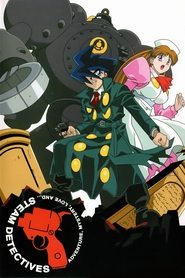
star 9.5The Streets here are continually enshrouded in white mist. Steam rises from everywhere, obscuring the streets and buildings. Because coal was the only fuel available, this city developed an incredibly advanced steam technology. Unfortunately, evil-doers take advantage of this white fog to commit countless crimes and continually baffle the police. At night, the white mist shrouds the darkness, intimidating everyone. People Call this city enveloped in mist, STEAM CITY.The Mouse Factory
1972
The Mouse Factory
1972
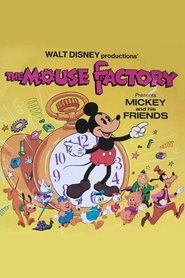
star 8.5The Mouse Factory is an American syndicated television series produced by Walt Disney Productions and created by Ward Kimball, that ran from 1972 to 1974. It showed clips from various Disney cartoons and movies, hosted by celebrity guests, including Johnny Brown, Charles Nelson Reilly, JoAnne Worley and many more, visiting the Disney studio and interacting with the walk-around Disney characters from the Disney Theme Parks. It was later re-run on the Disney Channel in the 1980s and '90s. The theme played over the previews of each episode was a fast instrumental version of "Whistle While You Work" from Snow White and the Seven Dwarfs. The song played over the end credits is "Minnie's Yoo Hoo", the theme song from the original Mickey Mouse Clubs that met in theaters starting in 1929. However, due to low ratings, the series was canceled after its second season.Getter Robo Go
1991
Getter Robo Go
1991
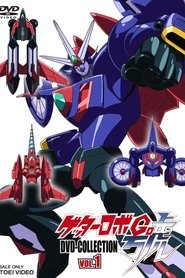
star 5Getter Robo Go, also known as Venger Robo or Venger Robot Go outside of Japan, is a Japanese mecha anime and manga series created by Go Nagai and Ken Ishikawa.Deadly!
2006
Deadly!
2006
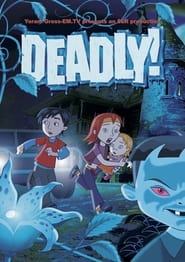
star 6.5Deadly was an Australian children's television cartoon series which first screened on the Nine Network in 2006. It was produced by Yoram Gross Productions and financed by the Film Finance Corporation Australia. The series is based on the Deadly novel series written by Morris Gleitzman and Paul Jennings. The story follows the adventures of Sprocket and Amy, trying to escape and meddle with the plans of the Brats.Quaq Quao
1978
Quaq Quao
1978
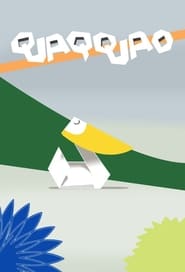
star 8.5Quaq Quao was an Italian animated television series for children based on the adventures of a duck. The series consisted of 26 episodes of 5 minutes duration. It was filmed using stop-motion with origami figures and was written and directed by Francesco Misseri with music by Piero Barbetti. Quaq Quao was produced by L + H Films in 1978. It was first broadcast in Italy in 1980