Top Rated Drama TV Shows on Pantaflix - Page 203
All Services
Free Services
 Netflix
 Amazon Prime Video
 Apple iTunes
 Apple TV Plus
 Disney Plus
 Google Play Movies
 Paramount Plus
 Hulu
Hulu
 HBO Max
 YouTube
 fuboTV
 Peacock
 Peacock Premium
 Amazon Video
 The Roku Channel
 AMC+
AMC on Demand
AMC+
AMC on Demand
 Kocowa
 Hoopla
 The CW
 Vudu
Vudu
 Starz
Starz
 Showtime
 PBS
PBS
 Pantaflix
 FXNow
FXNow
 Tubi TV
 Kanopy
 Comedy Central
 Crunchyroll
 Microsoft Store
 Redbox
 Sun Nxt
 ABC
ABC
 DIRECTV
 Crackle
 Fandor
 Plex
Plex
Netflix
Amazon Prime Video
Apple iTunes
Apple TV Plus
Disney Plus
Google Play Movies
Paramount Plus
Hulu
HBO Max
YouTube
fuboTV
Peacock
Peacock Premium
Amazon Video
The Roku Channel
AMC+
AMC on Demand
Kocowa
Hoopla
The CW
Vudu
Starz
Showtime
PBS
Pantaflix
FXNow
Tubi TV
Kanopy
Comedy Central
Crunchyroll
Microsoft Store
Redbox
Sun Nxt
ABC
DIRECTV
Crackle
Fandor
Plex

Merhamet
2013
Merhamet
2013
star 7.4A successful lawyer meets her lost childhood love after 13 years of deserting her poor hometown and abusive family. That encounter forces her to reconcile with her traumatic past and search for her lost family and their tragic fate.The Phantom of the Opera
1990
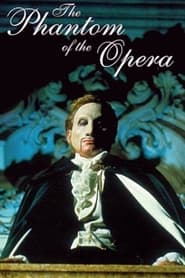
star 7.2Count de Chagnie has discovered Christine's singing talent on a market place and sent her to his friend Carriere, the director of the Parisian opera. However just when she arrives Carriere's dismissed. His arrogant successor refuses to let a woman of low birth sing in his opera, but graciously employs Christine as gadrobiere for his wife Charlotta, who's installed as first singer. He also fights the phantom, an unknown guy who lives since many years in the catacombs below the opera and was granted privileges by Carriere. However the phantom knows how to defend himself and at the same time helps Christine to her career. The Phantom of the Opera is a 1990 NBC two-part drama television miniseries. It is adapted from Arthur Kopit's book for his then-unproduced stage musical Phantom, which is based loosely on Gaston Leroux's novel.Cuando quiero llorar no lloro
0000
star 7.5Cuando quiero llorar no lloro was a Spanish language TV series produced by Colombia's R.T.I.. It debuted in April 1991 and concluded in August 1991. It was the subject of much controversy at the time was a huge success which inspired two remakes; Victorinos produced also by R.T.I for Telemundo and Tres Milagros produced by Teleset for RCN TV. It is based on the novel of the same name by Miguel Otero Silva.Bunheads
2012
Bunheads
2012
star 7.4Michelle, a Las Vegas showgirl, impulsively marries a man, moves to his sleepy coastal town, and takes an uneasy role at her new mother-in-law's dance school.Tsubasa RESERVoir CHRoNiCLE
2005
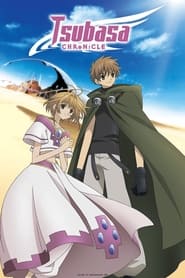
star 6.8Syaoran fights to gather the scattered soul of his beloved princess Sakura, whose memories were sent adrift across space and time.Aftershock: Earthquake in New York
1999
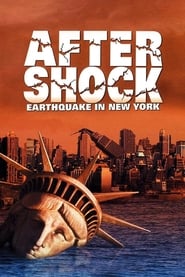
star 7Without warning, an earthquake rips through the "City That Never Sleeps," turning it into a vulnerable state of chaos: skyscrapers topple, subways are buried in the rubble, countless lives are lost and loved ones are torn apart. As turmoil reigns in the screaming streets, Mayor Bruce Lincoln and former Fire Chief Thomas Ahearn race against time to enact a city-wide emergency plan.Ghost Hunt
2006
Ghost Hunt
2006
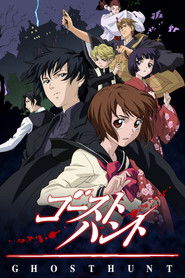
star 8Telling ghost stories is a favorite past time of Mai Taniyama and her friends—that is, until she meets 17-year-old Kazuya Shibuya, the man sent by Shibuya Psychic Research Center to investigate paranormal activity at a supposedly haunted school. When Mai gets caught in a dangerous situation, she is rescued by Kazuya's assistant. Saving her lands the assistant incapacitated, and Kazuya demands that Mai become his assistant, instead...Chosen
2013
Chosen
2013
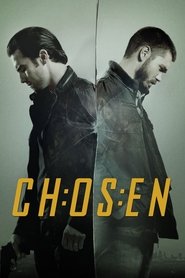
star 6.8Ian Mitchell is a lawyer and father who one day receives a box containing a gun and a picture of a stranger, along with instructions to kill the pictured person. He is subsequently attacked by another stranger, and discovers that he has been chosen by a mysterious organization known as The Watchers to participate in a lethal game.Fallen
2007
Fallen
2007
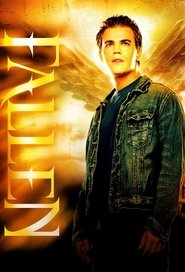
star 6.7The phenomenal journey of Aaron Corbett, an 18-year-old Nephilim (half-angel/half human), as he struggles to come to terms with his role as The Redeemer and is drawn into a world where angels walk among us.The Forsyte Saga
2002
The Forsyte Saga
2002
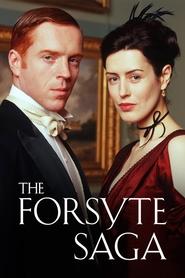
star 7.9Epic series spanning three generations of the upwardly mobile Forsyte family at the turn of the 20th century.Gute Zeiten, schlechte Zeiten
1992
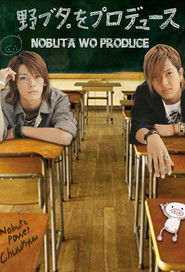
star 5.7Gute Zeiten, schlechte Zeiten is a long-running German television soap opera, first broadcast on RTL in 1992. The programme concerns the lives of a fictional neighborhood in Germany's capital city Berlin. Over the years the soap opera tends to have an overhaul of young people in their late teens and early twenties; targeting a young viewership.Producing Nobuta
2005
Producing Nobuta
2005
star 7.6A popular high schooler and his oddball friend help a shy girl get rid of her bullies by attempting to make her the most popular girl in school.The Hunger
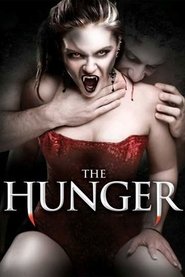
1997
The Hunger
1997
star 5.9The Hunger is a British/Canadian television horror anthology series, co-produced by Scott Free Productions, Telescene Film Group Productions and the Canadian pay-TV channel The Movie Network. Though it shares a title with the feature film The Hunger the series has no direct plot or character connection to the film, and was created by Jeff Fazio. Originally shown on the Sci Fi Channel in the UK, The Movie Network in Canada and Showtime in the US, the series was broadcast from 1997 to 2000, and is internally organized into two seasons. Each episode was based around an independent story introduced by the host; Terence Stamp hosted each episode for the first season, and was replaced in the second season by David Bowie. Stories tended to focus on themes of self-destructive desire and obsession, with a strong component of soft-core erotica; popular tropes for the stories included cannibalism, vampires, sex, and poison.Have Gun, Will Travel
1957
star 7.3Have Gun – Will Travel is an American Western television series that aired on CBS from 1957 through 1963. It was rated number three or number four in the Nielsen ratings every year of its first four seasons. It was one of the few television shows to spawn a successful radio version. The radio series debuted November 23, 1958. The television show is presently shown on the Encore-Western channel. Have Gun – Will Travel was created by Sam Rolfe and Herb Meadow and produced by Frank Pierson, Don Ingalls, Robert Sparks, and Julian Claman. There were 225 episodes of the TV series, 24 written by Gene Roddenberry. Other contributors included Bruce Geller, Harry Julian Fink, Don Brinkley and Irving Wallace. Andrew McLaglen directed 101 episodes and 19 were directed by series star Richard Boone.Baa Baa Black Sheep
1976
Baa Baa Black Sheep
1976
star 7.6The dramatized World War II adventures of US Major Gregory "Pappy" Boyington and his Marine Attack Squadron 214, AKA The Black Sheep Squadron.Waking the Dead
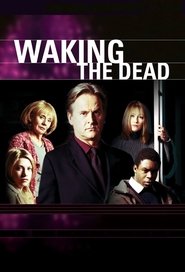
2001
Waking the Dead
2001
star 7.2A detective team apply new techniques to old crimes as they solve cold cases.My Fair Princess
1998
My Fair Princess
1998
star 7.7Centers around the legend of Princess Huanzhu during the reign of the Qianlong Emperor of the Qing Dynasty.Girlfriends
2000
Girlfriends
2000
star 7.3The series revolves around the friendship of four African-American women in different phases of their lives. They explore the many trials and tribulations that most women face today such as relationships, family, friends and other current issues that will interest most women. Whether it’s getting over a divorce, finding a career, or looking for true love, Girlfriends delivers along with comedy and wit.Buried Hearts
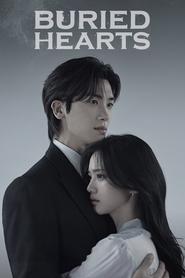
2025
Buried Hearts
2025
star 8.2Seo Dong-ju, who hacked a political slush fund worth two trillion won, risks it all for revenge.Even Given the Worthless "Appraiser" Class, I'm Actually the Strongest
2025
star 6.9In a world where heroes are born, not made, Ein’s god-given gift is the weakest: the power to appraise things. Treated cruelly by his peers, Ein spends his days in self-abasement—until he meets Yuri, the spirit of the World Tree. Yuri and her protector, Ursula, bless Ein with the Spirit Eye, unlocking new strength. As his abilities grow, Ein embarks on a journey to uncover his true purpose.